69% of Americans Want to Seize Half of AI Firms—The Backlash Is Now a Live Policy Threat

🕒 Published on Zendoric: July 13, 2026 · 00:21
A new survey finds most Americans back forcing AI companies to hand 50% of their equity to a public fund, and Bernie Sanders has already written the bill. Driven by record AI-linked layoffs, the distributional fight over AI has stopped being theoretical.
📚 Go deeper

The best starting book if you're not technical: a Wharton professor explains how to work WITH AI — when to delegate, when to supervise, when to keep i
As an Amazon Associate, Zendoric earns from qualifying purchases; the price does not change for you. · all our recommended books →
The numbers are striking. A Verasight survey of 1,690 adults, reported by CNBC on 12 July, found 69% of US adults support forcing AI companies to transfer 50% of their equity into a public sovereign wealth fund. The same survey found 81% want the government empowered to block risky AI systems before release, and 89% want AI firms legally required to publish safety-testing results. The context is a labour shock: per Challenger, Gray and Christmas, tech accounted for nearly a third of US layoffs in the first half of 2026, with 139,156 tech cuts through June (up 83% year-on-year), and AI cited as the explicit reason in 101,743 announcements—about 23% of all tracked job cuts, and the single most-cited reason for four straight months.
The policy is no longer hypothetical. Senator Bernie Sanders introduced the American AI Sovereign Wealth Fund Act in June, which per the Associated Press would levy a one-time 50% stock tax on AI companies with over $200 million in annual AI revenue, building a roughly $7 trillion fund managed by a Senate-confirmed commission—potentially paying about $1,000 a year to each American. Crucially, the fund would hold voting shares, letting the commission influence corporate decisions it deems harmful, and firms would have to split AI from non-AI lines. The article notes the bill won't pass cleanly in a Republican-controlled Congress, but also that the Trump White House has reportedly floated its own version of AI-linked public ownership—meaning the idea has crossed the partisan line that usually kills such proposals.
This is our long-running employment thesis arriving in politics. We've argued the near-term impact of AI is real and unevenly distributed—back-office and routine white-collar roles most exposed—and here it is showing up in layoff data and, downstream, in a public appetite for radical redistribution. Notably, the article's own cited forecast is more measured than the mood: Goldman's Joseph Briggs estimates ~15 million workers (9%+ of the labour force) could be displaced over roughly a decade, but expects the yearly unemployment hit to stay under a percentage point if job creation picks up modestly. The gap between that gradualist economics and the electorate's urgency is the political tension of the moment.
Our reading: the honest short-term truth is that the gains from AI are concentrating while the disruption is being felt broadly, and voters have noticed. Whether or not you like Sanders's specific mechanism—and seizing equity from Nvidia, OpenAI or Anthropic would tangle courts for years—the underlying instinct is legitimate: if AI delivers the abundance its champions promise, the question of who owns that abundance cannot be an afterthought. The long-term optimistic case for AI (health, longevity, freeing people to do what they love) is only politically survivable if the transition shares its upside. The risk we'd flag is regulating the panic rather than the problem: equity confiscation priced into every Series C could chill exactly the innovation that produces the surplus worth distributing. The smarter path lies in the survey's less dramatic findings—mandatory safety disclosure, pre-release review of high-risk systems, and broad-based ways to share gains—evidence-based governance over cathartic expropriation. Either way, the era of treating AI's distributional politics as a footnote is over.
📚 Go deeper
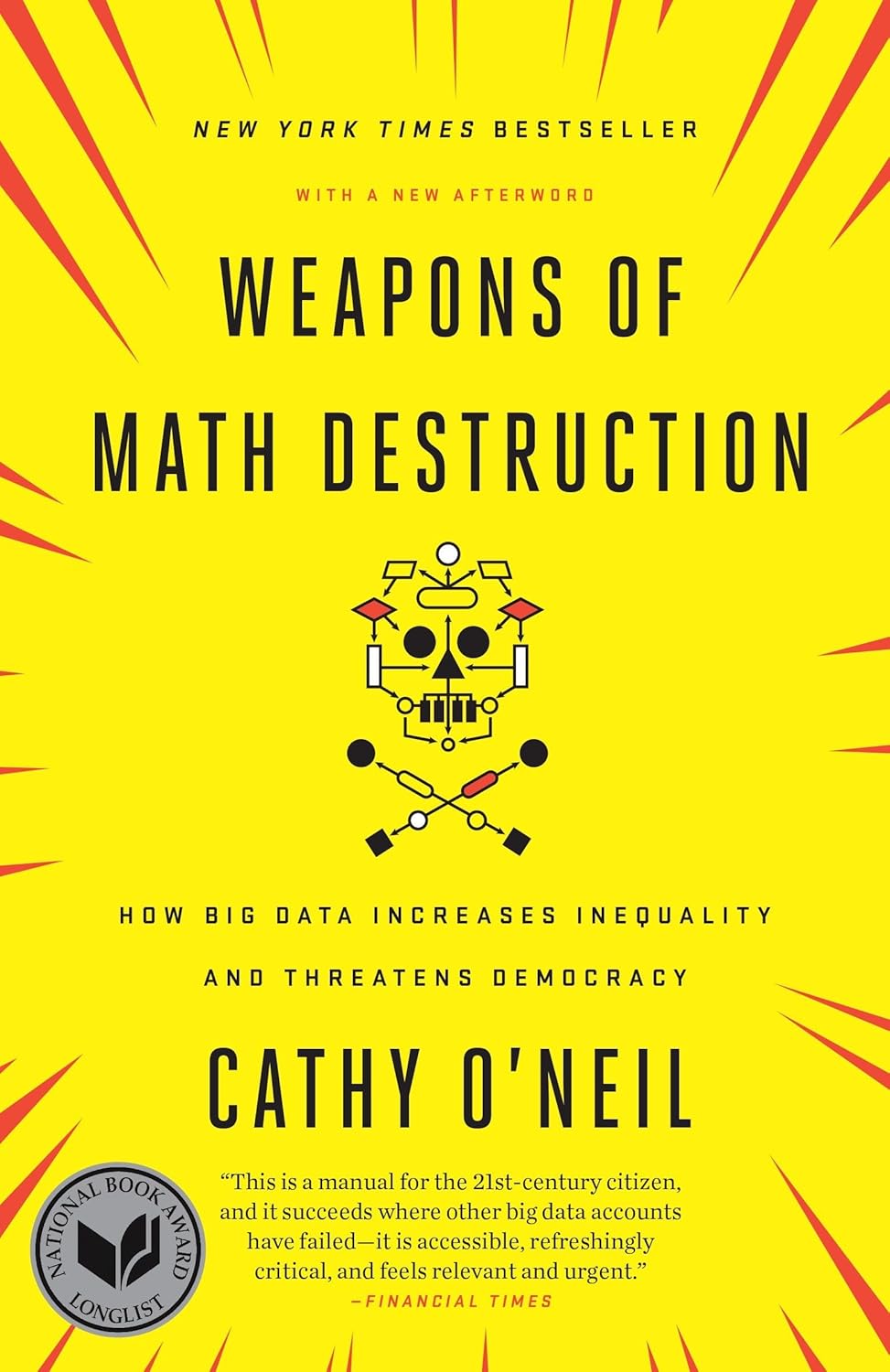
How opaque algorithms decide who gets credit, a job or parole — and why they tend to punish the same people.

The definitive piece of investigative journalism on OpenAI: 260+ interviews, the clash between safety and speed, and the attempted firing of Sam Altma
As an Amazon Associate, Zendoric earns from qualifying purchases; the price does not change for you. · all our recommended books →
🔗 Related on Zendoric
- 69% of the U.S. already wants to expropriate half of AI companies: layoffs have politicized abundance · 2026-07-13
- Rehiring after AI layoffs is not a contradiction: it is the sign that workforce cuts moved faster than learning · 2026-06-27
- Rock Hill puts its house in order before the school year: why revising AI policy is now a matter of school governance · 2026-06-24