India wants agentic AI to monitor insurance in real time, not after the fraud

🕒 Published on Zendoric: July 13, 2026 · 00:21
✨ AI-generated · how it's made
A senior digital governance official in Karnataka argues that AI agents should do the dirty work of Indian insurance —KYC, document verification, fraud detection— to curb mis-selling and speed up claims. The promise is seductive; the evidence of real deployment, still scarce.
📚 Go deeper
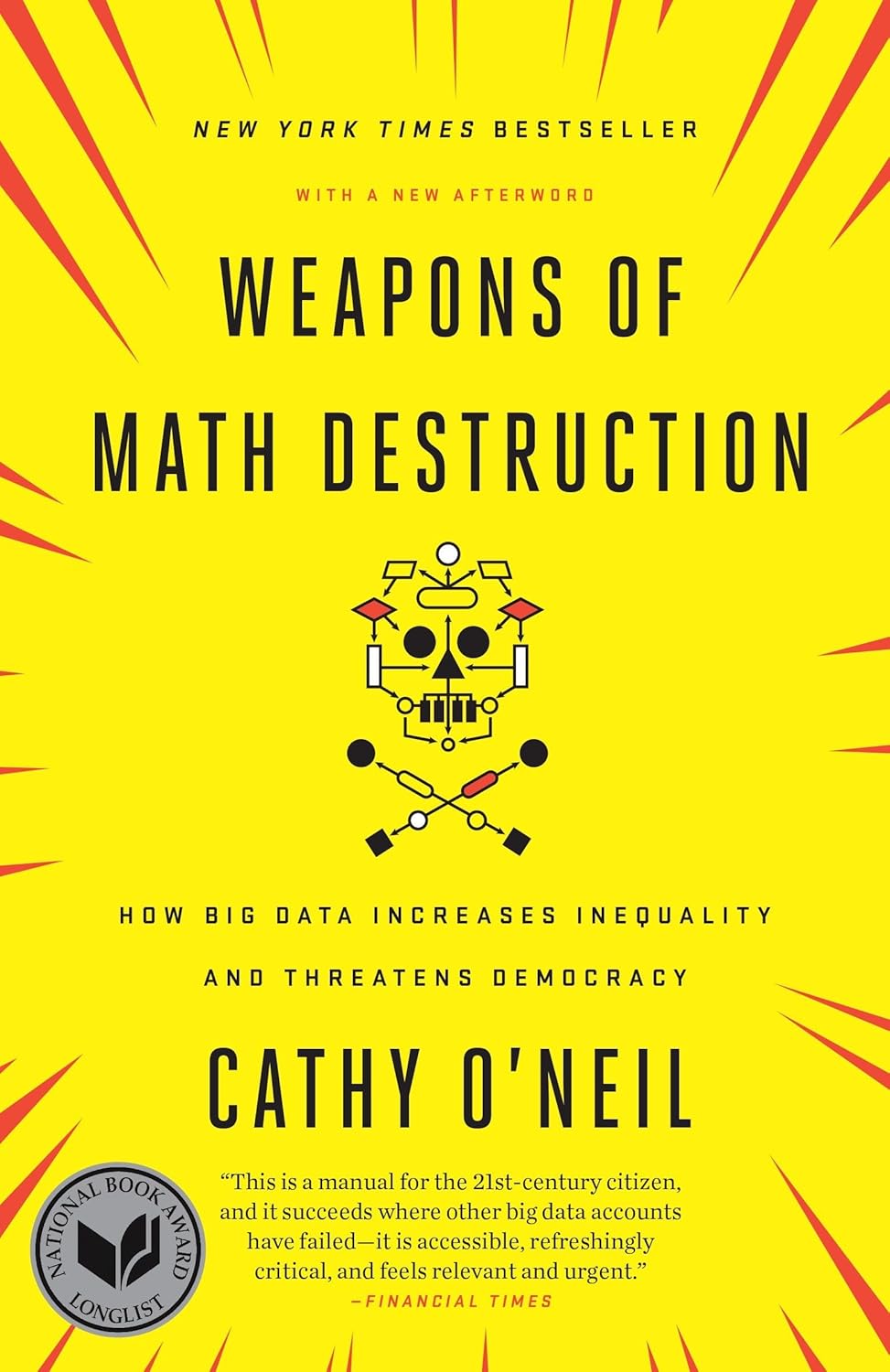
How opaque algorithms decide who gets credit, a job or parole — and why they tend to punish the same people.
As an Amazon Associate, Zendoric earns from qualifying purchases; the price does not change for you. · all our recommended books →
By BW Disrupt · July 12, 2026.
At the BW Festival of Fintech 2026 in New Delhi, Saurabh Bhattacharya, deputy chief executive of Karnataka's Centre for Smart Governance — a public body that advises on digital governance — laid out a simple thesis: much of the manual work of Indian insurance (document verification, underwriter support, claims assessment, KYC and anti-money-laundering checks) can be delegated to AI agents capable of reading structured and unstructured data, while the final decision remains in human hands. The contextual figure that lends weight to the argument: according to data from the Bima Bharosa complaints portal, mis-selling — selling policies that don't fit the customer's needs — remains one of the most frequent grounds for complaints in the sector. Bhattacharya also points to a regulatory paradigm shift: moving from retrospective, periodic audits to continuous verification, transaction by transaction, with regulatory compliance built into the process itself rather than checked afterward.
It's worth situating this precisely: this is not the announcement of a deployment with savings figures, a specific vendor or an insurer that has implemented it and is measuring results. It is the intervention of a digital governance official at an industry conference, with a reasonable diagnosis but no operational evidence yet. That doesn't invalidate it — India carries insurance penetration well below the global average, and expanding coverage is, as Bhattacharya rightly notes, a fundamental lever for economic activity, because financial protection is what allows people and small businesses to take on entrepreneurial risk without fear of ruin — but it does require reading the announcement as a policy direction, not as a verified result.
What is recognizable, and fits what we have been observing in banking and insurance in other geographies, is the logic of the transformation: it is not about replacing the agent or the adjuster, but about automating the administrative work and leaving expert judgment — assessing a complex claim, deciding on a borderline fraud case — in human hands. It is the same pattern we have seen in the financial sector: fewer hands devoted to paperwork and routine verification, more profiles focused on risk, data and compliance. The interesting difference here is the regulatory approach: if compliance becomes continuous rather than periodic, the regulator stops chasing infractions already committed and begins operating with near-real-time visibility over transactions. It is a powerful idea — and not exclusive to Indian insurance; it fits the broader trend of moving quality control into the workflow itself rather than into a subsequent audit — but also one that demands robust governance over the agents themselves: who audits the automated auditor, what happens when the fraud-detection system gets it wrong, and how it is guaranteed that reviews of medical records or financial operations respect the insured's privacy.
Our read: this is, at bottom, a story of a regulated and emerging sector trying to skip stages. In mature markets, the automation of insurance back-office work has been under way incrementally for years; India, with a still-small base of the insured and a regulator willing to experiment, could turn its lack of technological legacy into an advantage and build continuous compliance from the design stage, not as a patch. If it works, the result fits squarely with the underlying thesis we hold: the abundance AI promises comes not only from curing diseases or discovering materials, but also from the fact that millions of people without insurance today can protect themselves tomorrow because the cost of verifying, underwriting and paying claims collapses. The short-term risk is also the usual one — fewer administrative jobs, more concentration of value in those who design and oversee these systems — and it's best not to leave it out of the picture just because the speaker is coming from a place of institutional optimism. The prudent thing, meanwhile, is to wait for figures from real deployments to appear before assuming that Indian insurance already monitors fraud in real time.
📚 Go deeper

Algorithms in justice, medicine, cars and art, explained with British humor and mathematical honesty.

The best starting book if you're not technical: a Wharton professor explains how to work WITH AI — when to delegate, when to supervise, when to keep i
As an Amazon Associate, Zendoric earns from qualifying purchases; the price does not change for you. · all our recommended books →
🔗 Related on Zendoric
- Zero trust was designed for humans: agentic AI forces us to watch the data, not just the identity · 2026-07-11
- Agentic AI comes to chip design to ease the engineer shortage, not to replace them · 2026-07-22
- Agentic AI reaches Latin America's family-run small businesses: the challenge isn't the technology, it's governance · 2026-07-28