Ditto replaces the swipe with a matchmaking algorithm: AI as a response to the loneliness epidemic

🕒 Published on Zendoric: July 13, 2026 · 00:21
✨ AI-generated · how it's made
A startup born in Berkeley uses AI to pair up college students through surveys, not by swiping photos, and even designs their date plan for them. The weightiest fact isn't technological but social: loneliness is now treated as a public health problem.
📚 Go deeper
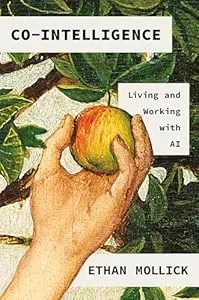
The best starting book if you're not technical: a Wharton professor explains how to work WITH AI — when to delegate, when to supervise, when to keep i
As an Amazon Associate, Zendoric earns from qualifying purchases; the price does not change for you. · all our recommended books →
By FOX40 · July 12, 2026. Ditto, founded in 2024 by former UC Berkeley students, offers a fundamental variation on the Tinder model that has dominated digital matchmaking since 2012: instead of swiping through profiles, the user answers a survey and it is the AI that decides who they should date. Every Wednesday it generates the matches, coordinates a shared opening in their schedules and, on top of that, drafts an itinerary for the date. Born on a campus, the company says it already operates at universities across the country, including nine in California. According to its own website, it has organized more than 12,000 dates and 92% of those matched request a second date; these are figures only Ditto has made public and are best read as marketing claims, not as data audited by a third party.
The context matters as much as the product. The former U.S. Surgeon General, Vivek Murthy, called loneliness an "epidemic" in a May 2023 advisory and called for public investment comparable to that devoted to smoking or obesity. Ditto appropriates that diagnosis almost to the letter: its message is not "find a partner faster" but rather "we've spent twenty years connecting in a primitive way," and AI promises to bring back something resembling the human matchmaking that existed before the apps. It is a smart positioning because it turns a dating startup into a supposed answer to a public health problem, far more fertile ground for the narrative than "just another dating app."
Our read: this fits a pattern we already see in other verticals — AI as an agent that not only recommends but orchestrates the entire experience (matching, scheduling and even designing the plan). It's the same "agent on top of the platform" move we're seeing in shopping, travel or personal management, now applied to something as human as courtship. In the short term, there are real reasons for caution: the success data is reported by the company itself without external verification, the model depends on surveys whose design we don't know, and it delegates to an algorithm a decision — who is worth getting to know — that until now was the terrain of intuition and chance. One might also ask whether automating even the date's itinerary doesn't further reduce the very spontaneity it was supposed to restore in the face of the swipe. And there is an underlying risk that is not exclusive to Ditto: the more aspects of social life we delegate to proprietary systems, the more we depend on those systems prioritizing our wellbeing over their retention metrics.
But the long-term thesis points in another direction. If loneliness is, as Murthy says, a public health problem comparable to tobacco, a tool that reduces the friction of generating real encounters — not just endless chat conversations — is exactly the kind of AI application that interests us most: technology that frees up time and reduces the cognitive load of social tasks so that people can devote their energy to what really matters, the bond itself. If these tools mature with transparency about their data and without capturing the user's attention as an end in itself, the promise of abundance we champion — more time, less friction, better quality of life — has here a modest but revealing testing ground: not everything AI reorders has to do with productivity or employment; it can also be simply about helping us get to know one another better. It remains to be seen, of course, whether Ditto manages to scale beyond the university niche where it was born or ends up as just another curiosity against already established giants in the sector.
📚 Go deeper
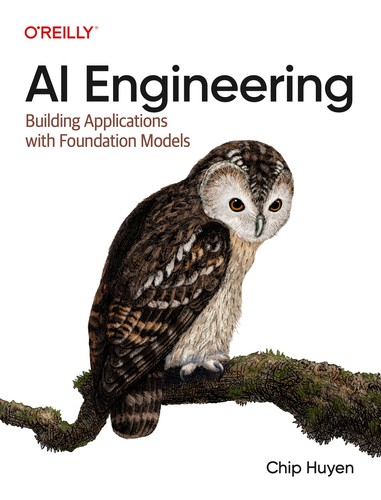
The reference manual for building products on top of AI models: prompts, RAG, fine-tuning, agents, evaluation and deployment.
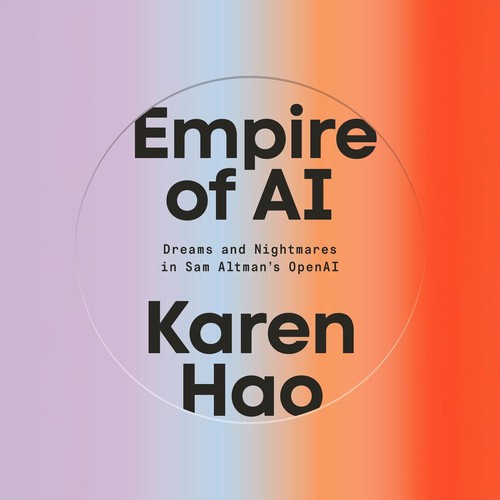
The definitive piece of investigative journalism on OpenAI: 260+ interviews, the clash between safety and speed, and the attempted firing of Sam Altma
As an Amazon Associate, Zendoric earns from qualifying purchases; the price does not change for you. · all our recommended books →
🔗 Related on Zendoric
- Lapsi Health embeds its clinical AI into medical records via Redox: the plumbing matters more than the algorithm · 2026-07-28
- New York bans generative AI for 600,000 younger students — a pause with a clock, not a verdict · 2026-09-02
- Cloning a voice no longer takes hours of recording: why older adults are the easy target for fraudulent AI · 2026-07-02