The browser built into Claude Code isn't a convenience: it's the agent taking control of the browser
🕒 Published on Zendoric: July 13, 2026 · 00:21
✨ AI-generated · how it's made
Anthropic puts a sandboxed browser inside Claude Code so the agent can navigate, fill out forms and test apps without leaving the IDE. The detail that matters isn't the keyboard shortcut: it's where the battle between OpenAI and Anthropic is shifting.
📚 Go deeper
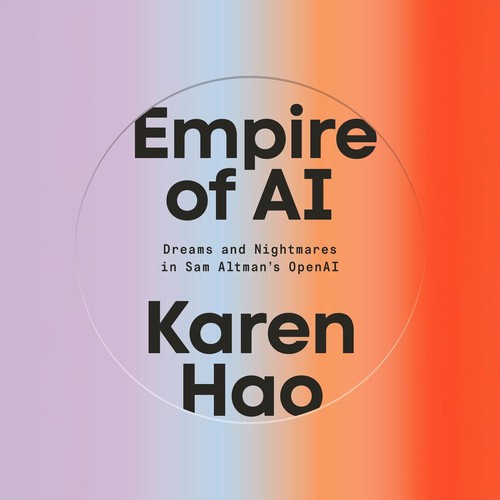
The definitive piece of investigative journalism on OpenAI: 260+ interviews, the clash between safety and speed, and the attempted firing of Sam Altma
As an Amazon Associate, Zendoric earns from qualifying purchases; the price does not change for you. · all our recommended books →
By MLQ.ai · July 12, 2026.
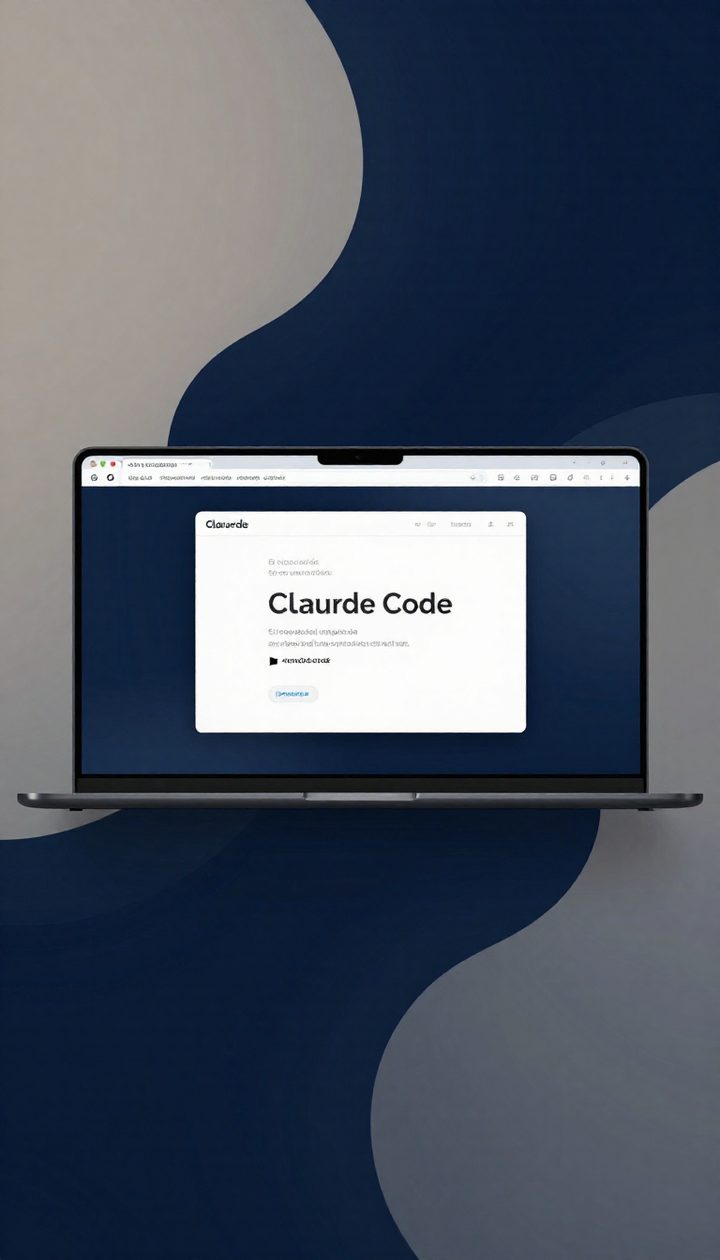
Anthropic has added a built-in browser to the Claude Code desktop app, accessible with Cmd+Shift+B (or Ctrl+Shift+B on Windows), as part of the "week 28" update (versions 2.1.202 to 2.1.206). It is not just any browser: it is a sandboxed tab, with no saved sessions or personal history, that Claude can pilot on its own to open documentation, review design references or interact with pages just as it already does with previews of a local server. It renders real JavaScript and CSS —it is not a glorified curl— so the agent can click, fill out forms and extract data from the page just as a person would.
The security design is the most revealing part of the announcement. Any write action on an external site goes through automatic classifiers, and sensitive actions —buying something, creating an account— require explicit user approval. The first time Claude tries to act on a specific domain, the system asks whether it is allowed once, always, or denied, and those rules are saved and revocable. In plan mode, read-only calls (screenshots, console text, reading the page) run without friction; anything that changes the site's state needs permission. For enterprises, there are whitelists and the option to disable the entire browser, which shows that Anthropic knows it is handing an autonomous agent a capability with a real risk surface: purchase errors, irreversible actions, or simply an agent doing something the developer did not intend.
This browser is different from Anthropic's Chrome extension, launched the previous week, which does share the user's sessions and is designed to automate tasks in authenticated apps such as Gmail or Google Docs. The separation is deliberate: a sandboxed, memoryless channel for development and testing, and another with persistent state for automating everyday tasks. It is a layered security design pattern that we will likely see replicated across the rest of the industry.
And it is in fact already being replicated: the launch comes right after OpenAI discontinued its standalone ChatGPT Atlas browser in favor of a browser embedded in its own desktop application. Two rival labs arriving at the same design within weeks is no coincidence; it is market convergence: the shared conclusion is that an isolated browser as a standalone product does not compete well against embedding browsing inside the tool where the user (or the agent) is already working.
Our read is that this fits with a thesis we have been maintaining about the current phase of agentic AI: the fight is no longer only about who has the smartest model, but about who controls the "plumbing" —the distribution, the integration, the agent standards— that decides how those models touch the real world. An embedded, permission-governed browser is exactly that kind of infrastructure: it turns Claude Code from an assistant that suggests code into an agent that can complete an entire cycle —read documentation, test the interface it has just built, fill out a test form, verify the result— without the developer having to mediate at every step. In the short term, that means more governance friction (permissions, whitelists, classifiers) because delegating actions on the open web multiplies the ways to fail; no serious company can afford for its agent to buy something or create an account by mistake, and Anthropic seems to have understood this well with this layered approval system.
In the long term, however, this kind of seemingly minor technical detail is exactly the brick with which the abundance we defend as our horizon is built: the more mechanical tasks —testing, verifying, filling in, checking— an agent can execute reliably and under supervision, the more time it frees up for the developer to focus on what truly requires human judgment: designing the architecture, deciding what to build, not how to test it. Claude Code's pace of iteration in recent weeks —Sonnet 5 as the default model, the Chrome extension, the Linux beta, and now this browser, all within a couple of weeks— suggests that Anthropic is treating the product not as a coding tool, but as an agent platform that needs hands and eyes on the entire digital world. That is the terrain where the competition with OpenAI is really being fought, and where it will foreseeably continue to be fought over the coming quarters.
📚 Go deeper
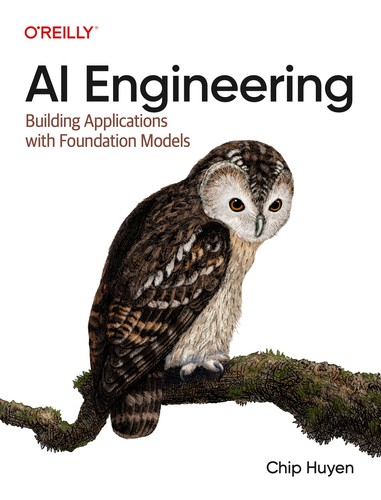
The reference manual for building products on top of AI models: prompts, RAG, fine-tuning, agents, evaluation and deployment.
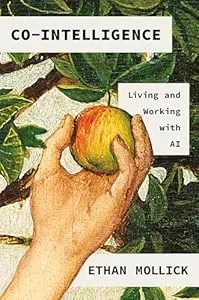
The best starting book if you're not technical: a Wharton professor explains how to work WITH AI — when to delegate, when to supervise, when to keep i
As an Amazon Associate, Zendoric earns from qualifying purchases; the price does not change for you. · all our recommended books →
🔗 Related on Zendoric
- Claude Code no longer reads the web, it sees it: the built-in browser and the race to control the coding agent · 2026-07-14
- OpenAI unveils ChatGPT Work, its new agentic 'super app', and intensifies the rivalry with Anthropic · 2026-07-11
- Cursor develops 'Sand', a general AI agent to take on Anthropic's Claude Cowork · 2026-07-14