Tech layoffs and AI: the data points to the opposite of what CEOs say

🕒 Published on Zendoric: July 13, 2026 · 00:21
A study by Ramp and Revelio Labs covering 22,000 U.S. companies finds that those investing most in AI grow their headcount by 10%, while laggards cut it. The 'we're laying off because of AI' narrative doesn't hold up against real spending and employment data.
📚 Go deeper

The best starting book if you're not technical: a Wharton professor explains how to work WITH AI — when to delegate, when to supervise, when to keep i
As an Amazon Associate, Zendoric earns from qualifying purchases; the price does not change for you. · all our recommended books →
By The Jerusalem Post · July 12, 2026.
The first quarter of 2026 closed with some 81,700 layoffs in the tech sector globally, the worst start to a year since 2023, just as Alphabet, Microsoft, Meta and Amazon plan to jointly invest around $700 billion in AI infrastructure this year. The apparent contradiction —there is money to spare, yet employees are surplus— has for months fueled the narrative that algorithmic automation is emptying out payrolls. A study published in late June by the fintech Ramp and the workforce-analysis firm Revelio Labs, authored by economists Ara Kharazian, Ryan Stevens and Lisa Simon, puts that narrative under pressure: by cross-referencing real corporate spending data (card and supplier payments on Ramp's platform, used by some 22,000 U.S. companies) with Revelio Labs' monthly workforce records, the authors find that companies that adopted AI most intensively increased their headcount by 10% in the two years after implementation, while those that adopted it little or not at all cut theirs by 0.6% on average.
The most uncomfortable figure for the dominant discourse is the breakdown by experience level: among companies with intensive AI adoption, entry-level employment —the kind that is theoretically most vulnerable to automation— grew by 12%. By department, sales leads with 10.3% growth, followed by administration (7.8%), engineering (7.3%), junior engineering (6.3%), customer service (6.3%) and data (5.6%); finance and marketing grow more moderately, and operations is the only area without significant growth. Ramp, valued at around $44 billion and with more than 60% of its products' code written by its own AI agent ('Inspect'), reports internal AI-tool adoption of 99.5% and, as the article notes, is not among the companies that have cut headcount by this route. Asked by the outlet Walla Money, Tal Aspir, partner and head of the AI lab at consultancy BDO, sums up the study's thesis: AI functions as a tool of empowerment, not replacement, and requires additional staff to operate it; those who fall behind on the learning curve are the ones at risk of being left out, not the workforce as a whole.
These numbers should be treated with the rigor any correlation study deserves: that AI-intensive companies hire more does not necessarily prove that AI is the direct cause of that hiring, just as the original article —with a headline that speaks of a 'dirty trick' and hints at the possibility of class-action lawsuits— attributes the reverse causality (that companies use AI as an excuse) to the study authors' own interpretation, not to a judicially established fact. That said, the pattern of real spending versus public discourse is revealing: if AI money is going mostly to expanding capacity —sales, engineering, customer service— rather than replacing staff, then much of the layoffs announced in 2026 are probably a response to cost adjustments, overstaffing inherited from pandemic-era hiring, or corporate restructurings, with AI serving as convenient narrative cover before investors and public opinion. Blaming an algorithm generates less union and reputational friction than admitting a cut for profitability.
This fits with something we have been maintaining at Zendoric about tech employment: the problem is not that AI eliminates work indiscriminately, but that it redefines which work matters and for whom. Here the study adds an important nuance to that thesis: even entry-level employment, the kind that most frightens those starting their careers, grows at the companies that invest most in AI, provided the organization is willing to train that staff to operate the new tools. The hard short-term transition does not disappear —there will still be layoffs, uncomfortable reconversions and companies that do replace routine tasks with agents— but the dominant mechanism appears to be the reallocation of capacity toward those who know how to use AI, not its outright disappearance. In the long term, that is precisely the logic that underpins our fundamental thesis: the more the repetitive is automated, the more human and economic resources are freed up for higher-value tasks, and that surplus is, ultimately, the material from which abundance is built. The recommendation that closes the study itself for young people seeking jobs in tech goes in that direction: don't avoid the companies that invest most in AI; seek them out.
📚 Go deeper
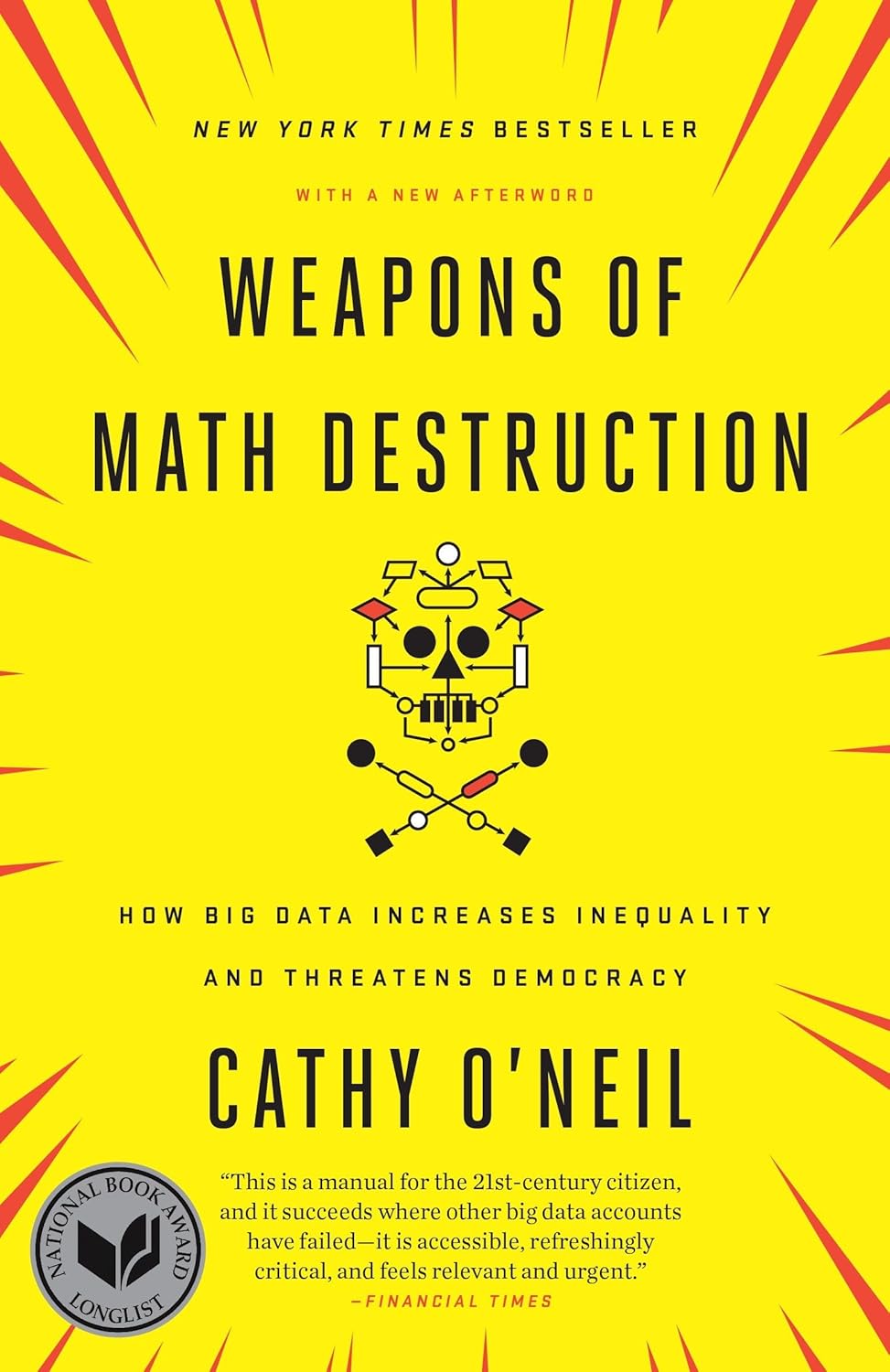
How opaque algorithms decide who gets credit, a job or parole — and why they tend to punish the same people.

AI as an extractive industry: the lithium, the energy, the underpaid data-labeling work and the bodies behind the cloud.
As an Amazon Associate, Zendoric earns from qualifying purchases; the price does not change for you. · all our recommended books →
🔗 Related on Zendoric
- Rehiring after AI layoffs is not a contradiction: it is the sign that workforce cuts moved faster than learning · 2026-06-27
- AI early adopters create net jobs: the data point that contradicts the dominant narrative · 2026-07-01
- Microsoft's Layoffs Amid AI Spending: The Capital-for-Labor Swap Made Visible · 2026-07-02