Egypt taps Intel to bring AI into its military industry: dual-use is no longer just a US and China affair

🕒 Published on Zendoric: July 12, 2026 · 00:14
✨ AI-generated · how it's made
Egypt's Ministry of Military Production is negotiating a technology alliance with Intel to bring embedded AI, data centers and Edge AI to its affiliated factories, with drones and smart cameras in the package. It is a sign that AI-driven civil-military fusion is now spreading to middle powers.
📚 Go deeper

Semiconductors as the oil of the 21st century: history, espionage, and why an island of 23 million people underpins the entire AI economy.
As an Amazon Associate, Zendoric earns from qualifying purchases; the price does not change for you. · all our recommended books →
By Daily News Egypt · July 11, 2026. Egypt's Ministry of Military Production, through its Minister of State Salah Gamblat, has announced a new strategy to modernize its affiliated companies through digital transformation, industrial software and artificial intelligence. The announcement follows a meeting with an Intel delegation to explore cooperation on embedded AI for production lines, integrated industrial software systems, server technology for data centers, Ethernet networks, Edge AI solutions and, explicitly, AI applications for drones, smart cameras and 'AI Box' units. According to the ministry, the initiative falls under directives from President Abdel Fattah Al-Sisi to localize advanced technology and deepen domestic manufacturing, and both parties agreed to continue coordinating technically to design a long-term cooperation roadmap.
What matters here is not the size of the deal —for now there are no figures, no signed contracts and no timelines, just an exploratory meeting and language of intent— but the nature of the counterpart and the recipient. It is not a civilian startup nor a generic industry ministry negotiating with a semiconductor giant: it is the very ministry that oversees the country's defense companies. And the catalog of technologies on the table —production, yes, but also drones and smart cameras— is explicitly dual-use. This fusion of civilian manufacturing and military capability through AI is a pattern we have seen before in the US-China standoff: there, the debate is whether chip export controls slow down or speed up Chinese military technological autonomy. What this Egyptian episode shows is that the same script —chips and AI as a lever for industrial-military modernization— is now being replicated in the middle powers of the Middle East, with US players such as Intel willing to be the technology partner.
For Intel, the interest is understandable: having lost undisputed leadership in frontier AI to Nvidia and the hyperscalers' own accelerators, diversifying into emerging industrial and government markets —where the value lies not in training the largest model but in deploying embedded inference, servers and networks in factories— is as real a growth avenue as consumer data centers. For Egypt, joining the wave of industrial digitalization with a top-tier partner fits its stated ambition to become a regional technology hub, something we have already seen in the country's other recent moves in energy and digital infrastructure.
Our read: this is not an announcement of weaponry or of a specific new military capability, and it should not be overstated as such —it is, literally, a meeting and a statement of intent. But it is an early indicator of an underlying trend worth watching: AI infrastructure (chips, edge computing, computer vision, data centers) is becoming the standard component of any industrial modernization strategy, and when the customer is a ministry of military production, the line between factory efficiency and surveillance or defense capability blurs almost by design. In the short term, the pattern to follow is not how much superintelligence is at stake, but who governs access to these dual-use capabilities and under what safeguards they are transferred to third countries; that is where the real risk lies, not in a hypothetical qualitative leap by the machines. In the long term, if these same smart-manufacturing and automation capabilities are also deployed in Egypt's civilian economy —as the ministry itself promises when it speaks of a 'knowledge-based digital economy'— they fit the underlying thesis that the diffusion of AI, even when born in the military sphere, ultimately pushes toward more productivity and shared industrial abundance. The key, as always, will be whether that promise of modernization translates into skilled local employment or simply into technological dependence on a foreign partner.
📚 Go deeper

The story of NVIDIA and Jensen Huang: how a video-game card company ended up making the most coveted resource on the planet.
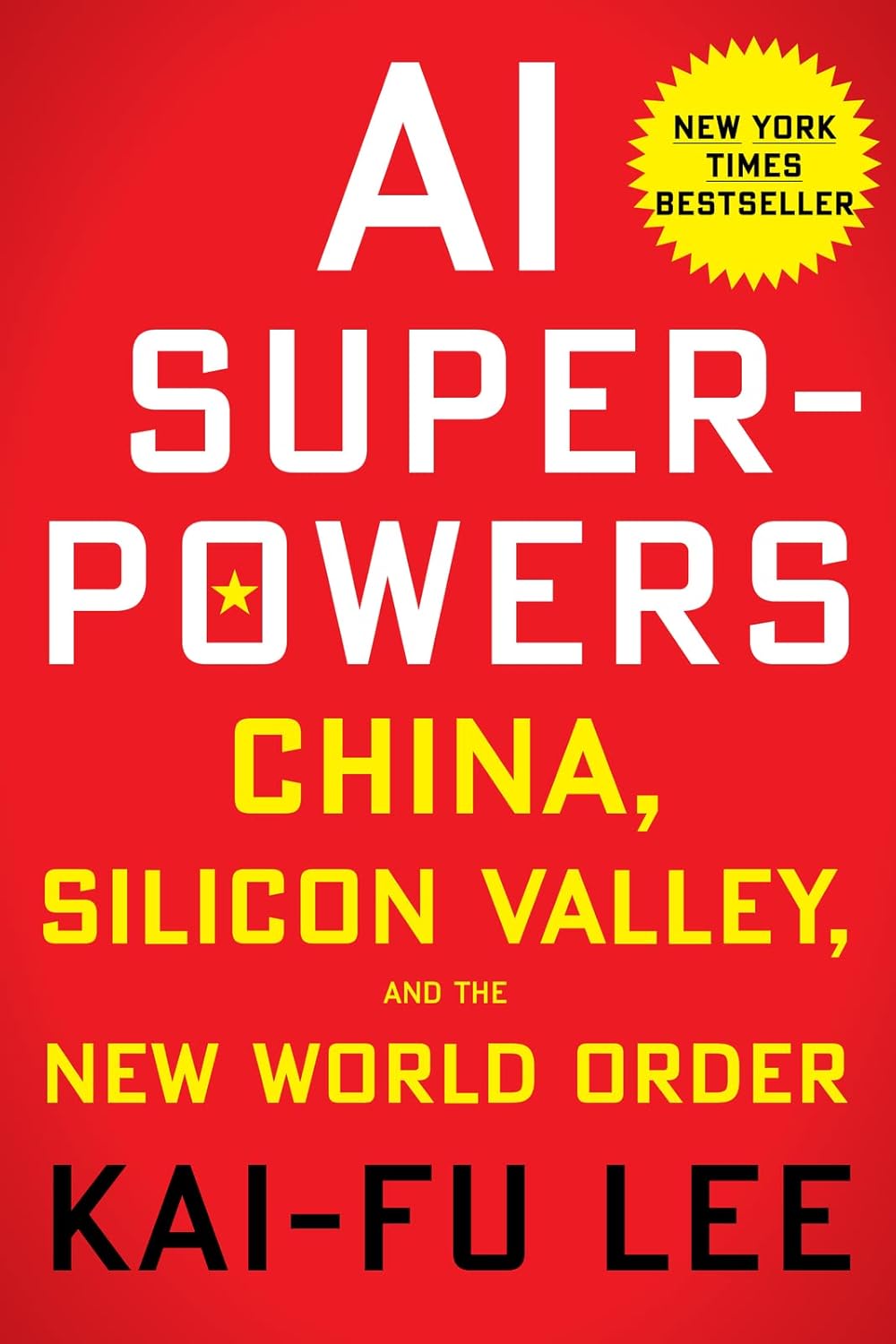
China vs.
As an Amazon Associate, Zendoric earns from qualifying purchases; the price does not change for you. · all our recommended books →
🔗 Related on Zendoric
- AI glasses in exams: when cheating beats the top 5 of the class, the assessment system has a bigger problem · 2026-06-28
- The Pentagon centralizes command of its drones: military AI enters its industrial phase · 2026-07-02
- China issues a security alert over an alleged 'backdoor' in Anthropic's Claude Code · 2026-07-09