IIT Madras uses VR and AI to detect childhood learning difficulties before they show up in grades

🕒 Published on Zendoric: July 12, 2026 · 00:14
A 15-minute virtual reality headset and an AI model predict with 95% accuracy whether an 11-to-12-year-old needs academic support, before the school report card reveals it. The key is not whether it gets it right, but how it reaches the answer.
📚 Go deeper
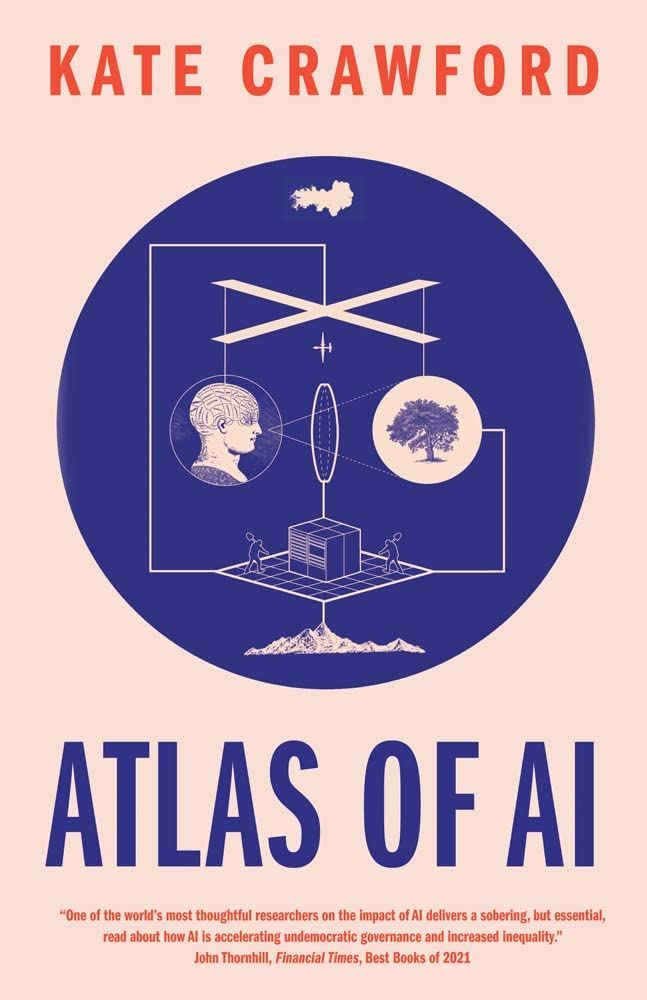
AI as an extractive industry: the lithium, the energy, the underpaid data-labeling work and the bodies behind the cloud.
As an Amazon Associate, Zendoric earns from qualifying purchases; the price does not change for you. · all our recommended books →
We'll send you a confirmation email (double opt-in). Privacy.
By The Times of India · July 12, 2026.
Researchers at the Indian Institute of Technology Madras (IITM) have developed a system combining virtual reality and artificial intelligence capable of estimating, with "reasonable accuracy," whether an 11- or 12-year-old child needs academic support, weeks or months before that problem becomes visible in grades. The difference from a conventional exam is the object of measurement: it does not assess whether the answer is correct, but how it is reached —reaction time, number of attempts and type of errors— while the child solves brief tasks (simple math, reading a clock, counting dots, forming words from scrambled letters) within a virtual environment of about 15 minutes. The study, published in the journal Child Neuropsychology and led by researcher Mridula T V and professor M Manivannan (director of IITM's experiential technology center XTIC), was tested with 120 schoolchildren. Using teacher assessments as a reference, the best-performing model —a Random Forest— classified students into three bands (below average, average, above average) with 95% accuracy, and response time turned out to be a particularly strong indicator of how comfortable each child felt with the material, beyond whether they got it right.
The design is no accident: according to Manivannan, the system is deliberately "frugal," designed so it can be used in schools of the Global South and not only in research laboratories. The tasks are based on Jean Piaget's theory of cognitive development, which places ages 11-12 as the key moment of transition from concrete to abstract thinking. The team is already considering a second phase: incorporating facial microexpressions and involuntary movements to detect signs of dyslexia, dyscalculia or ADHD, always according to what the research team itself states as an objective, not yet as a demonstrated capability.
This kind of project fits into a broader trend we have been observing in the relationship between AI and education: the value lies not in replacing the teacher, but in giving them a signal they do not have today. A report card is, by design, a late indicator: it certifies a learning gap after it has consolidated over weeks or months. A system that captures the process —the doubt, the failed attempt, the hesitation— shifts detection backward in time, to the moment when it is still cheap to intervene. It is the same logic beginning to appear in preventive medicine: not predicting the final diagnosis, but the patterns that precede it.
Our reading is that the greatest value of this work is not the accuracy figure —95% against a teacher's assessment, a useful but limited reference and potentially subjective in itself— but the insistence on "frugal" design. Much of the conversation about educational AI centers on frontier models and paid platforms in wealthy markets; here the explicit aim is the opposite: a cheap, replicable tool designed for education systems with limited resources, which is precisely where undetected learning gaps carry the highest social cost. If it truly connects with our underlying thesis, that of an AI that broadens access to goods that are scarce today —in this case, early and personalized educational diagnosis— the most promising path does not run through more compute, but through cheap sensors and lightweight models well trained on concrete behavioral data.
That said, it is worth being honest about the short-term limitations. The sample is 120 children in a specific context, and extrapolating to millions of classrooms in the Global South demands something that the system's own "frugality" does not solve on its own: VR headsets, however cheap, remain a piece of hardware that many resource-limited schools do not have, and their real deployment will depend on infrastructure, teacher training and public funding, not just the algorithm. And the stated ambition of using facial microexpressions to flag dyslexia, dyscalculia or ADHD is, for now, a roadmap of the research team, not a validated capability; labeling a child with a learning disorder based on an AI model demands a level of clinical evidence far higher than classifying their academic level into three bands, and it deserves that scrutiny before reaching a classroom.
What this project does illustrate well is where the next wave of AI applied to childhood is pointing: not chatbots that answer questions, but silent measurement systems that give adults —teachers, families, public health systems— information that did not exist before, in time to act. That is, ultimately, the long-term promise that sustains our optimism: a society where detecting and correcting a learning difficulty at age 11 no longer depends on the luck of having a good, observant teacher, and becomes something systematic and accessible for any child, in any school.
📚 Go deeper
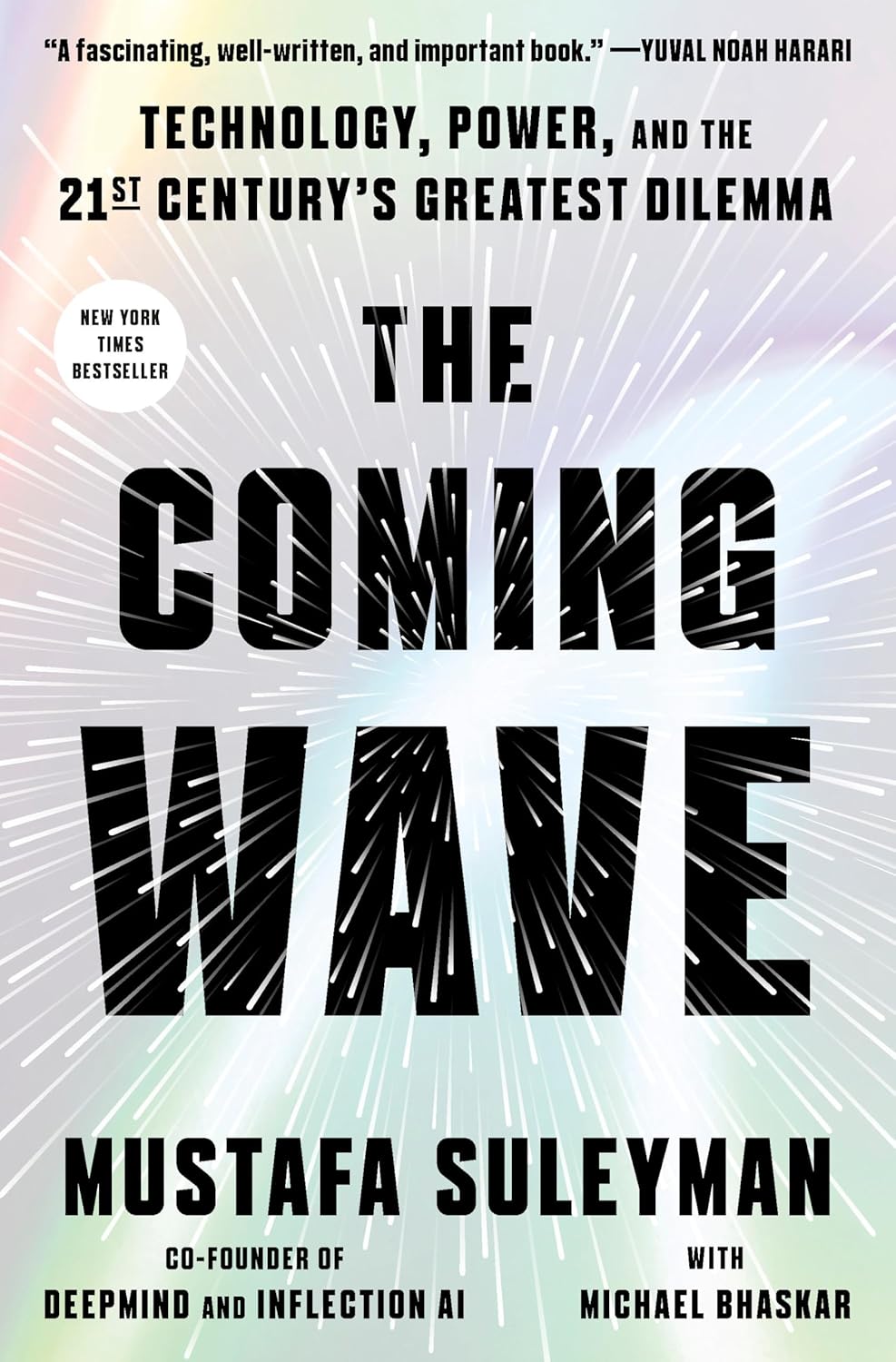
DeepMind co-founder on the dilemma of containing technologies that do not want to be contained.

The only novel on the list, by a Nobel laureate: an artificial friend observes humans with a blend of lucidity and innocence no essay achieves.
As an Amazon Associate, Zendoric earns from qualifying purchases; the price does not change for you. · all our recommended books →
🔗 Related on Zendoric
- A 'Viennese School' of agentic programming? The question is worth more than the answer · 2026-06-25
- AI glasses in exams: when cheating beats the top 5 of the class, the assessment system has a bigger problem · 2026-06-28
- Anthropic's Strongest Model and the Quiet Discipline of Pulling It Back · 2026-06-30
Sources & references
Get the analysis by email · free
One email a day analysing the AI essentials. Free, no spam, unsubscribe anytime.
We'll send you a confirmation email (double opt-in). Privacy.