When ChatGPT Plays War Oracle: The Clickbait Problem That Misreads What AI Actually Does

🕒 Published on Zendoric: July 12, 2026 · 00:14
A viral article asks ChatGPT which Latin American countries would "fall first" in a World War III, and dresses the answer up as an AI "study." It's a revealing case of how the most powerful technology of our era gets flattened into a fortune-telling parlor trick — and why that matters.
📚 Go deeper

The definitive piece of investigative journalism on OpenAI: 260+ interviews, the clash between safety and speed, and the attempted firing of Sam Altma
As an Amazon Associate, Zendoric earns from qualifying purchases; the price does not change for you. · all our recommended books →
The story is simple and telling: a media outlet prompted ChatGPT to name which Latin American nations would be "defeated first" in a hypothetical World War III, then packaged the model's reply as a geopolitical "study conducted by Artificial Intelligence." The output ranks Colombia (as a historic U.S. ally), Venezuela (over its ties to Russia and Iran and its oil), Brazil (São Paulo and Rio as economic and military targets) and Mexico (over its proximity to U.S. bases) among the most exposed. The reasoning offered — strategic alliances, natural resources, logistical corridors — is generic geopolitics anyone could recite. The framing, not the content, is the news here.
Let's be precise about what happened, because the article isn't. ChatGPT did not conduct a "study." A large language model produced fluent text by recombining patterns from its training data in response to a speculative prompt. It has no classified intelligence, no predictive model of conflict, no access to force deployments or diplomatic back channels. Ask it the same question twice and you may get different countries. What reads as analysis is plausible-sounding narrative — and dressing it as an authoritative forecast is a category error that the headline actively encourages.
This matters more than one clickbait piece. We are watching a bad habit calcify: the transfer of unearned authority from "a person guessed" to "the AI determined." The same rhetorical move that turns a chatbot's improvisation into a "study" is what launders horoscopes, stock tips and health advice into false certainty. When the output is about which cities might be bombed first, the stakes of that laundering stop being trivial. It normalizes treating a probabilistic text generator as an oracle precisely in the domains — war, security, geopolitics — where confident-sounding fabrication does real damage.
Our reading: this is the short-term friction of a genuinely transformative technology finding its footing in public discourse. The failure isn't the model — it's the incentive to use a reasoning tool as a crystal ball because prophecy gets clicks. The optimistic long view still holds: the same systems being trivialized here are, in serious hands, accelerating drug discovery, decoding biology and compressing research that once took decades. But that future depends on the culture around the tools maturing faster than the hype. The discipline we should demand is boring and non-negotiable — attribute claims to their source, separate a model's speculation from verified fact, and reserve the word "study" for something that actually is one. AI's promise is to help us understand reality better, not to manufacture authoritative-sounding fictions about wars that haven't happened. Treating it as a war oracle isn't using the technology; it's wasting it.
📚 Go deeper
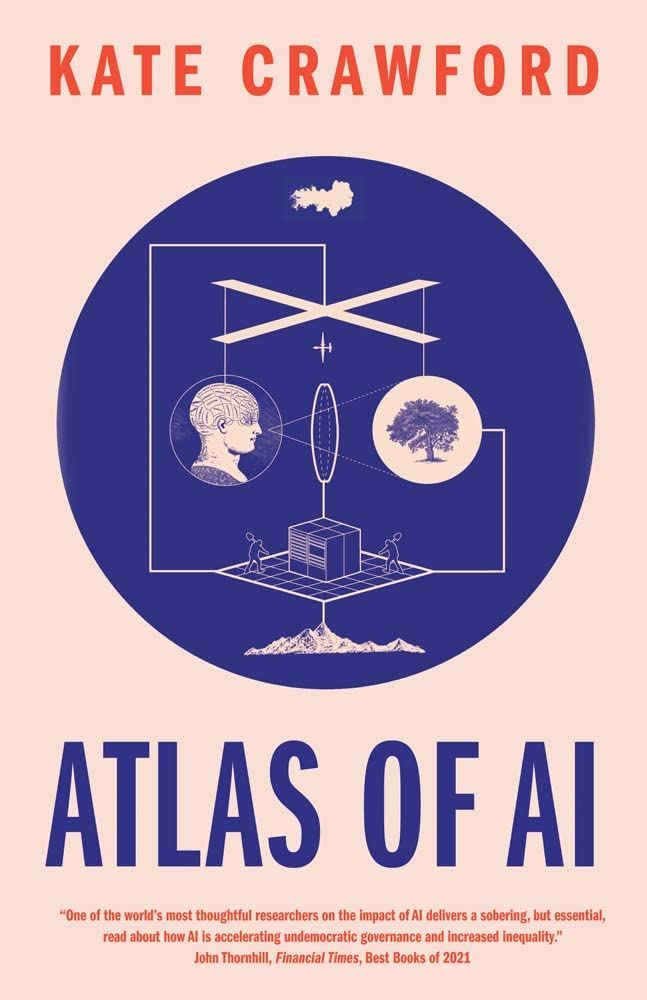
AI as an extractive industry: the lithium, the energy, the underpaid data-labeling work and the bodies behind the cloud.
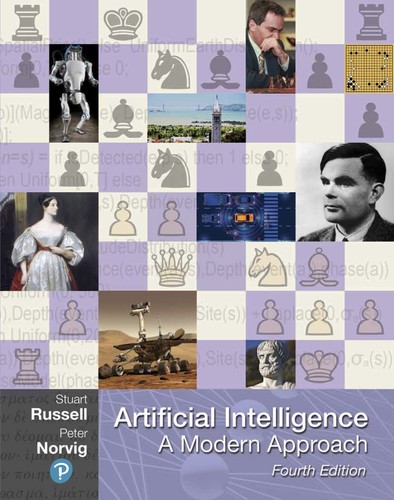
THE AI textbook: used by 1,500+ universities.
As an Amazon Associate, Zendoric earns from qualifying purchases; the price does not change for you. · all our recommended books →
🔗 Related on Zendoric
- ChatGPT-4o's age bias is not a technical glitch: it's society reflected at industrial scale (KAIST quantifies it) · 2026-06-28
- AI Traffic Cameras That Watch More Than Traffic: When Convenience Quietly Becomes Surveillance · 2026-06-28
- When AI codes for you: the productivity dilemma that erodes technical knowledge · 2026-06-28