Kyndryl and AWS expand their alliance: the agentic AI race is no longer about the model, but about who governs it

🕒 Published on Zendoric: July 12, 2026 · 00:14
Kyndryl and Amazon are expanding their agreement to bring autonomous agents to large enterprises, with a framework of their own that promises to control what those agents can do. The figure behind the urgency: one consultancy estimates that two out of three organizations expect to deploy agentic AI at scale in 2027.
📚 Go deeper
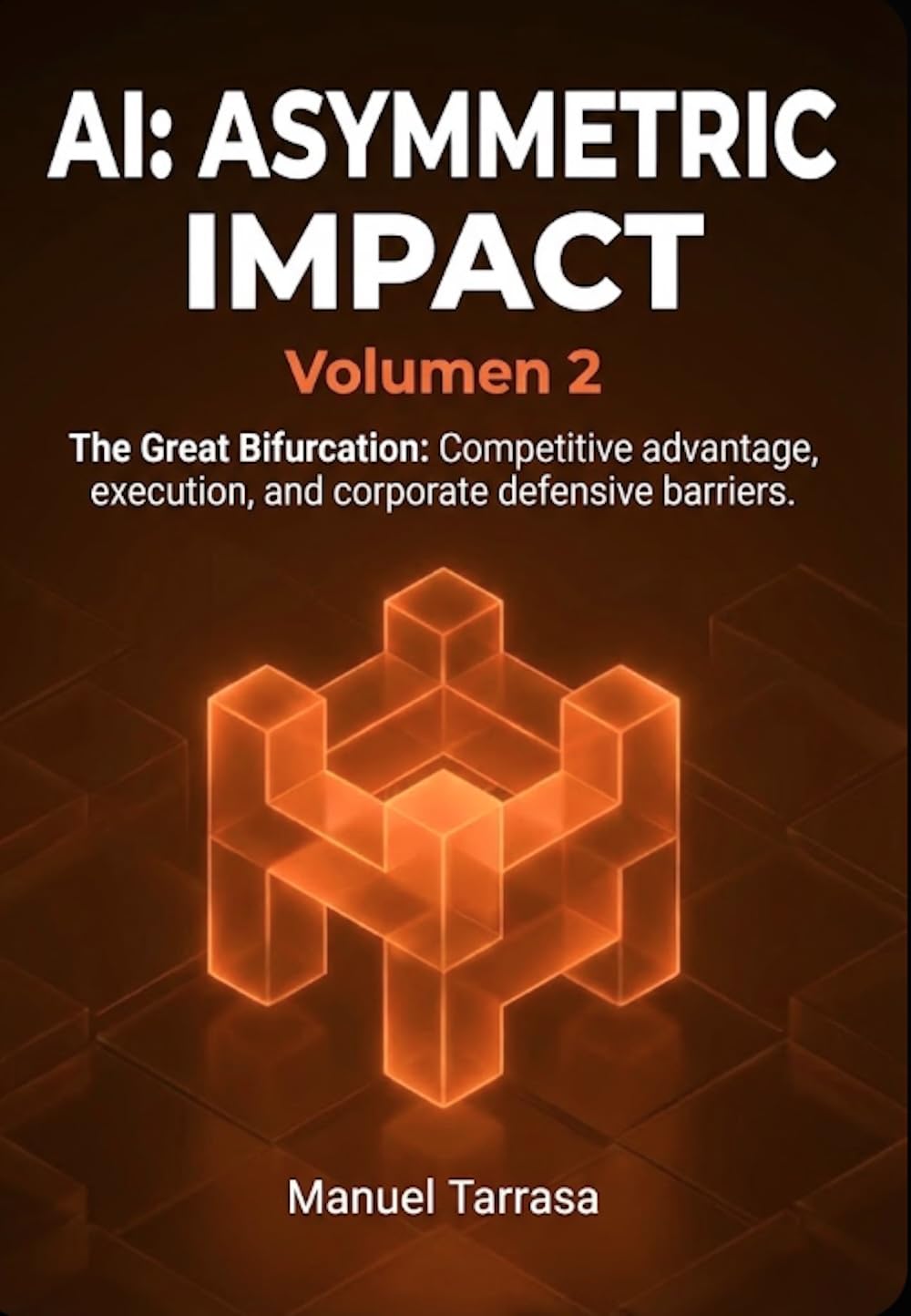
The same bifurcation seen from the boardroom: strategy, execution and defensive moats to reorganize a business around AI before your competitors do.
As an Amazon Associate, Zendoric earns from qualifying purchases; the price does not change for you. · all our recommended books →
We'll send you a confirmation email (double opt-in). Privacy.
By Crypto Briefing · July 11, 2026.
Kyndryl, the IT services firm spun off from IBM, and Amazon Web Services have expanded their collaboration to accelerate the adoption of agentic AI in large enterprises, according to the June 18, 2026 announcement reported by Crypto Briefing. AWS is committing to invest in training Kyndryl's staff, in joint solution engineering and in AI expertise; the company already has more than 11,000 AWS-certified professionals, a figure that will grow under the new agreement. The centerpiece is the Kyndryl Agentic AI Framework (KAF), available on AWS Marketplace: an orchestration layer that integrates with Amazon Bedrock and AWS infrastructure to deploy autonomous agents securely, with features such as Policy-as-Code and semantic verification designed for hybrid environments and regulated sectors. It is not the first time the two have worked together: in June 2025 they had already announced a plan to modernize mainframes with agentic AI. The context driving the move is an IDC study cited in the article, according to which 65% of organizations expect large-scale deployment of agentic AI by 2027.
What is significant about this agreement is not that it exists —there is a new one every week between hyperscalers and integrators—, but what exactly it is selling: not a smarter model, but a control layer over agents that are already assumed to act with a degree of autonomy within critical systems. Policy-as-Code and semantic verification are, in essence, guardrails: mechanisms to decide in advance what an agent can and cannot do before letting it touch a banking mainframe or a regulated system. That this kind of product exists and is marketed on an AWS marketplace confirms something we have been observing in the sector for months: the real friction of agentic AI in the enterprise is not the intelligence of the underlying model, but the governance of what that model does when it is given access to production tools and data.
In general, this kind of alliance between hyperscalers and consultancies/integrators (Accenture-AWS, Deloitte-Microsoft and now Kyndryl-AWS) reveals where the economic value of agentic AI is shifting: not toward whoever trains the best model, but toward whoever controls the integration, the certification of personnel and the compliance layer needed for a bank or an insurer to dare to unleash an agent on its infrastructure. It is the same logic we already saw in the Google-Microsoft fight over agent standards: the war over the "plumbing" —who connects, audits and certifies— may end up weighing more than the war over the benchmark. Kyndryl, with its legacy of IT services for banking, insurance and public administrations, is betting that this niche of "modernizing without breaking anything" is worth as much or more than building the next great model.
Our reading is that this announcement, without being spectacular, is a good barometer of the sector's real moment: we are in the boring but decisive phase of agentic AI, the one of multi-year contracts, staff certifications and audit layers, not the one of headlines about superintelligence. In the short term, this means a hard transition for traditional IT profiles: Kyndryl's thousands of consultants no longer compete solely on knowing how to program legacy systems, but on knowing how to design policies that cage an autonomous agent, and whoever fails to reskill in that ability will be left out. It is also honest to acknowledge that IDC's 65% figure is an industry expectation, not an accomplished fact: the gap between what the consultancies promise and what agents actually execute without supervision remains wide. But in the medium term, if these governance layers mature, the result is precisely the kind of invisible infrastructure that allows the automation of administrative tasks and legacy-system modernization to free up human capital for higher-judgment work, a small but real step toward the horizon of abundance we advocate: the more boring and reliable the plumbing of enterprise AI becomes, the closer we are to technology freeing human time rather than merely displacing it.
📚 Go deeper

A macroeconomic, sector-by-sector X-ray of how AI redraws the global chessboard over the coming decade, with the human factor at the center.

The best starting book if you're not technical: a Wharton professor explains how to work WITH AI — when to delegate, when to supervise, when to keep i
As an Amazon Associate, Zendoric earns from qualifying purchases; the price does not change for you. · all our recommended books →
🔗 Related on Zendoric
- AWS's Loom: the AI agent race is no longer about the model, it's about who governs its deployment · 2026-07-10
- Healthtech crosses the pilot threshold: the test is no longer whether it works, but whether it scales · 2026-06-24
- Hotmart tests the abundance thesis: AI agents that sell and collect payments for the creator · 2026-07-02
Sources & references
Get the analysis by email · free
One email a day analysing the AI essentials. Free, no spam, unsubscribe anytime.
We'll send you a confirmation email (double opt-in). Privacy.