Deepfakes at the Pellegrini: when generative AI becomes a weapon of gender-based violence in the classroom

🕒 Published on Zendoric: July 12, 2026 · 00:14
✨ AI-generated · how it's made
Students at schools run by the UBA allegedly used AI to create and sell fake sexual images of female classmates. The case, beyond the media sensationalism, exposes what happens when technological capability outpaces the ethics and the law that should contain it.
📚 Go deeper

DeepMind co-founder on the dilemma of containing technologies that do not want to be contained.
As an Amazon Associate, Zendoric earns from qualifying purchases; the price does not change for you. · all our recommended books →
By Agencia El Vigía · July 11, 2026.
At Colegio Carlos Pellegrini and other institutions affiliated with the University of Buenos Aires, an investigation is underway into a case in which, according to the report, students allegedly used artificial intelligence to produce fake sexual images of female classmates and sell them. It is worth stressing the conditional: these are facts under investigation, not a verdict, and they must be treated as such. But even as an allegation, the case is telling. The article's author, Karina Vukusic, a specialist in schooling and digital culture, describes it with surgical precision: it is not a "joke" or a technological prank, it is digital and gender-based sexual violence. The image may be fake in its construction; the humiliation, harassment and reputational harm suffered by the victim are not.
Sexual deepfakes take an everyday photo—an image from a social network, for example—and manipulate it using generative AI to simulate nudity or sexual content. What once required technical skill and time is now done by an app in seconds, with a realism that makes it hard to tell the fake from the real. That changes the scale of the problem: it does not create the misogyny or the pact of silence among peers that sustains it, but it multiplies its reach through anonymity, the speed of circulation and the near-impossibility of permanently erasing content once it has started to spread. The article also documents a timely political clash: as the case reopens the discussion on how to intervene, Buenos Aires deputy mayor Clara Muzzio called Comprehensive Sexual Education a "death trap," according to the report. The author responds that it is precisely CSE—working on consent, autonomy over one's own image and masculinities—that makes it possible to name and prevent this kind of violence, and that weakening it solves nothing, it only disarms schools in the face of a scenario that is already happening.
This case is, in miniature, the pattern we have been highlighting at Zendoric every time the conversation about AI is reduced to benchmarks and frontier capabilities: generative technology democratizes not only productivity, but also harm. A teenager without advanced technical knowledge can today produce fake, believable sexual content of a classmate with a free or low-cost tool, and monetize it among peers. That is the near-zero marginal cost that makes AI so attractive for legitimate uses—and so dangerous when the goal is to humiliate or objectify. It is not a flaw in the technology itself, it is the absence of friction: ethical, legal or institutional, which previously acted as a natural brake.
Our reading is that the debate should not be polarized between "banning AI in the hands of minors" and "letting schools fend for themselves," because neither resolves the underlying problem. What the Pellegrini case exposes is a governance deficit on three levels at once: educational (a CSE updated with a digital perspective, not cut back), state (data protection, access to justice, agile reporting mechanisms) and corporate (the platforms that host or facilitate the circulation of this content must offer real, fast channels for blocking and removal, not promises). It is exactly the same kind of control architecture—permissions, auditing, clear usage limits—that we have already called for regarding AI agents in the corporate sphere; here it applies, with even more urgency, to minors.
Over the long term we remain convinced that AI will be a force that multiplies human well-being: health, longevity, abundance. But that horizon does not arrive on its own, and cases like this are a reminder that the transition is neither free nor automatically benign. Every time a society learns to place ethical and legal limits on a new capability—as should happen now with deepfakes in the classroom—it builds the same institutional muscle it will need, magnified, when AI manages higher-stakes decisions. The question this episode leaves us with is not whether the technology is good or bad, but whether institutions—school, state, platforms—can mature at the same pace as the tool that is already in every teenager's pocket.
📚 Go deeper
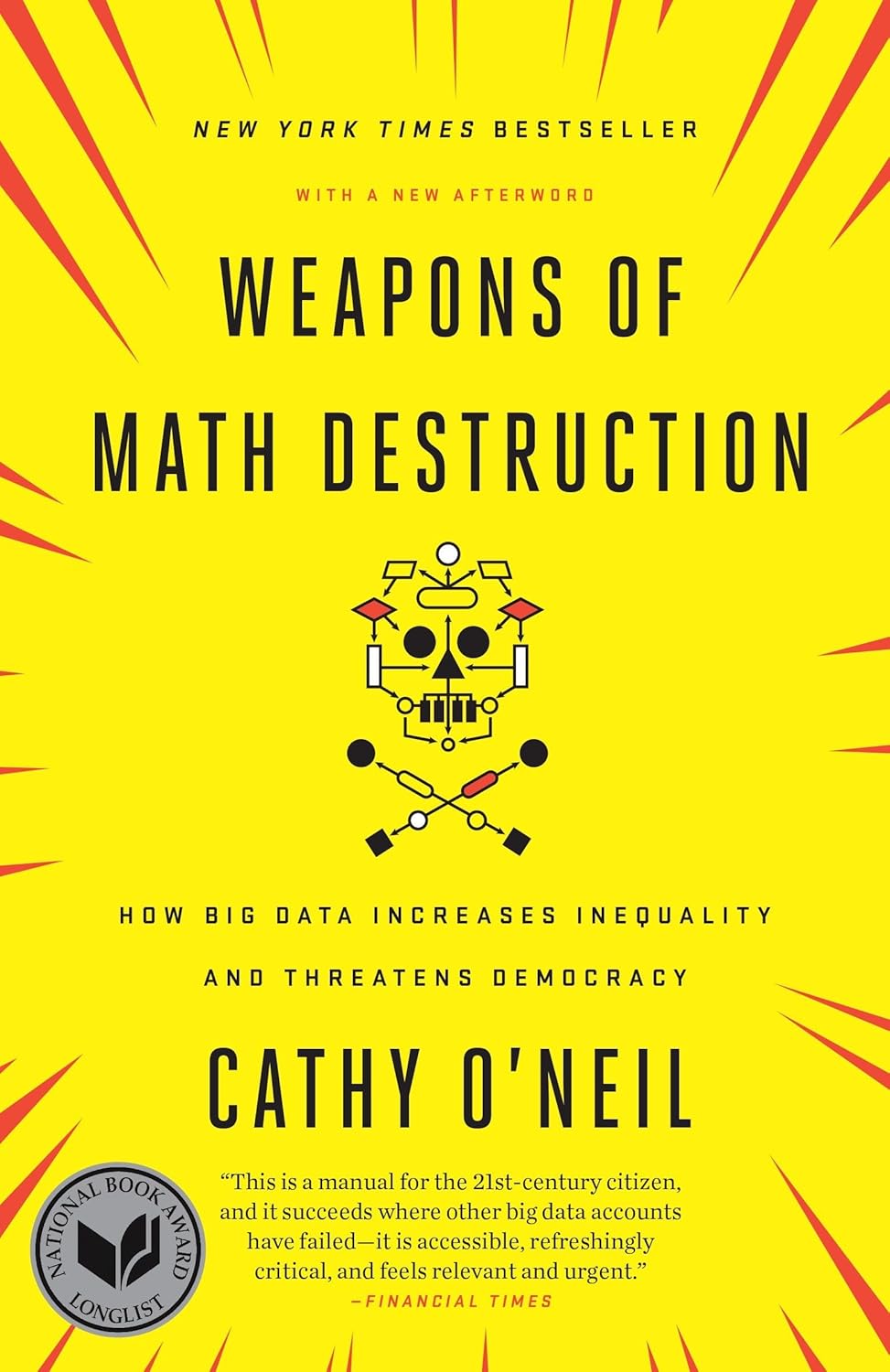
How opaque algorithms decide who gets credit, a job or parole — and why they tend to punish the same people.

Algorithms in justice, medicine, cars and art, explained with British humor and mathematical honesty.
As an Amazon Associate, Zendoric earns from qualifying purchases; the price does not change for you. · all our recommended books →
🔗 Related on Zendoric
- When generative AI becomes a weapon against minors: a case that demands a legal response, not just a technological one · 2026-07-18
- A school custodian, accused of using AI to create child sexual abuse material from social media photos · 2026-07-23
- Utah AI company executive arrested for allegedly generating child sexual abuse images · 2026-07-24