Washington legislates AI piecemeal: childhood cures, chatbots for minors and anti-deepfake labels in the same week

🕒 Published on Zendoric: July 11, 2026 · 00:27
✨ AI-generated · how it's made
In the week before July 4, the U.S. Congress introduced a wave of AI bills: from accelerating childhood cancer research to shielding minors from chatbots. The contrast between healthcare ambition and protective urgency neatly sums up AI's current moment.
📚 Go deeper
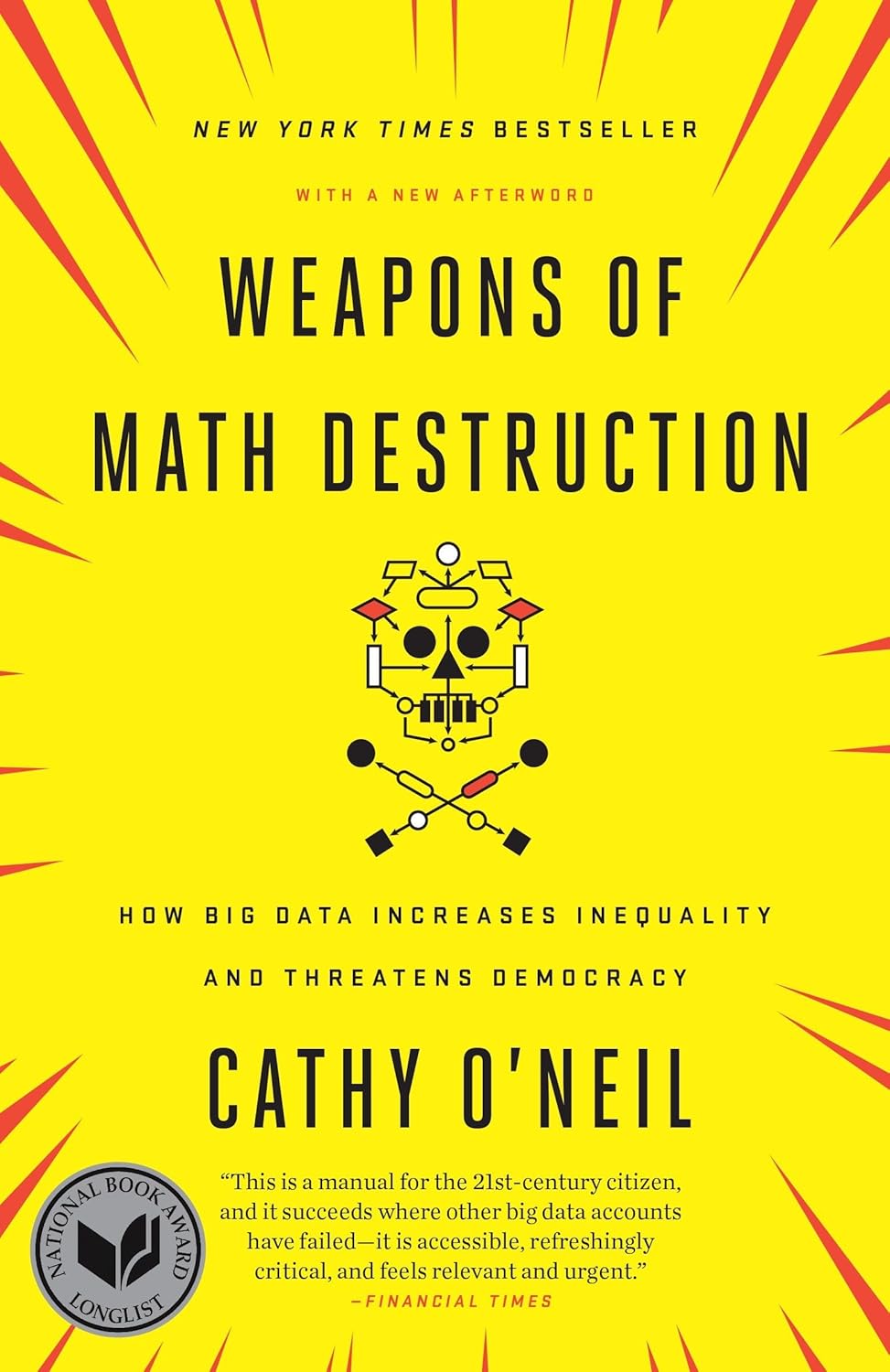
How opaque algorithms decide who gets credit, a job or parole — and why they tend to punish the same people.
As an Amazon Associate, Zendoric earns from qualifying purchases; the price does not change for you. · all our recommended books →
By Nextgov/FCW · July 10, 2026.
In the week before the July 4 recess, several U.S. lawmakers introduced a batch of bills that neatly capture the two-faced way Washington is learning to view artificial intelligence: as a tool that can save lives and as a technology that needs urgent guardrails. The most striking for its connection to the long term is the Accelerating Innovation for Kids with Cancer Act, introduced on July 9 by Representative Michael McCaul (R-Texas), which would create the position of an AI Innovation Coordinator within the Department of Health, tasked with organizing the pediatric oncology data infrastructure so that it can be exploited by AI systems and redesigning clinical trials to incorporate multimodal data. It is, in essence, an attempt by government to use AI to speed up something that until now advanced at the pace of health bureaucracy: the cross-referencing of records, biomarkers and images that could anticipate diagnoses and treatments in rare and childhood cancers, where samples are scarce and every data point counts.
In parallel, two Democrats —Valerie Foushee and Greg Casar— filed the People-First Chatbot Act the same day, which prohibits companies from using minors' chats to retrain their models, requires disabling design features harmful to young users, mandates always warning when someone is talking to a machine and imposes monthly safety audits. Foushee tied the proposal to "the recent tragedies" involving AI chatbots, a reference that should be treated for what it is: the bill author's political justification, not a judicially established fact. Alongside it, a bipartisan group (Gottheimer, Kean Jr. and Liccardo) is pushing the Spot the Fakes Act, which would require the FTC and NIST to set a technical labeling standard —embedded in metadata— for all AI-generated content.
The rest of the package is more instrumental than dramatic: a bill to create federal AI innovation prizes (algorithms, biotechnology, cybersecurity, mechanistic interpretability), another to broaden the definition of "quantum technology" in the Export-Import Bank law with a view to competing with China, a pilot program for AI anomaly detection at Arizona border crossings, and a Treasury pilot to hunt tax fraud with AI models. To this is added Senator Ed Markey's "AI Accountability Agenda," which repackages a dozen previous bills —from algorithmic bias to workplace surveillance and automated layoffs— under six principles, including a future requirement that data centers justify their energy and environmental impact before being built.
Our reading: what's interesting is not each bill on its own —the vast majority of these initiatives will die in committee and never reach a vote, as happens with most of any week's legislative activity— but the pattern they draw together. The United States is not building a single regulatory framework for AI, in the style of the European AI Act, but a patchwork quilt sector by sector: health on one side, minors on another, tax fraud on another, the border on another. It is a slower and messier approach, but also harder to capture by a single lobby and more capable of adapting to the real pace of each industry, which is precisely where monolithic frameworks tend to fail. The health piece is the one that best connects with the underlying thesis we defend: AI applied to fragmented clinical data is exactly the kind of friction that, once resolved, brings closer the promise of eradicating or making chronic diseases that are lethal today, starting with the rarest and those affecting the fewest patients —childhood cancers— because they are the ones that least interest the traditional pharmaceutical industry commercially and most depend on someone, public or private, organizing the data.
At the same time, the insistence on protecting minors from chatbots is the honest reminder that this transition is not free: the same conversational systems that within a decade could act as personalized medical or educational tutors today cause real and documentable harm to vulnerable populations, and no narrative of future abundance should be used to minimize them. That Congress legislates both things the same week is not contradictory: it is, in fact, the correct sequence. Governing immediate risk while unlocking long-term capacity is exactly the balance a sensible AI policy should pursue, even if the result, like any piecemeal law, is inevitably uneven and incomplete.
📚 Go deeper
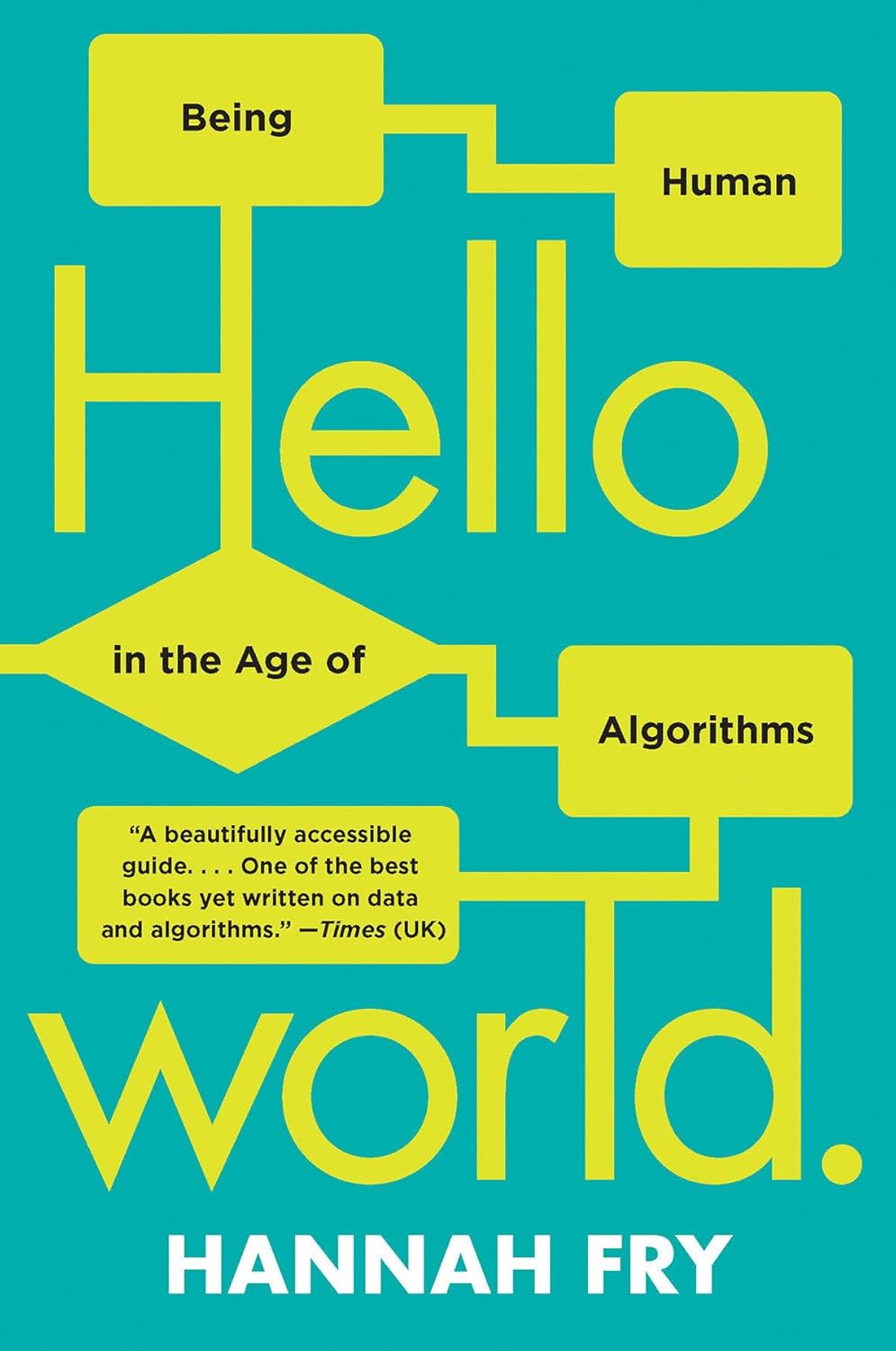
Algorithms in justice, medicine, cars and art, explained with British humor and mathematical honesty.

The definitive piece of investigative journalism on OpenAI: 260+ interviews, the clash between safety and speed, and the attempted firing of Sam Altma
As an Amazon Associate, Zendoric earns from qualifying purchases; the price does not change for you. · all our recommended books →
🔗 Related on Zendoric
- Markey pushes for AI rules on minors and algorithmic bias: the agenda that has votes and the one that doesn't · 2026-07-16
- The U.S. creates an 'AI coordinator' against childhood cancer: the cure isn't in the law, it's in the data · 2026-07-14
- The KIDS Act in the mirror: why protecting minors requires age verification and a duty of care, not good intentions · 2026-06-27