SK Hynix stages the largest U.S. IPO by a foreign company, driven by the AI chip boom
🕒 Published on Zendoric: July 11, 2026 · 00:27
The CNN Business article (July 10, 2026, by Stephanie Yang) recounts how SK Hynix, a semiconductor maker little known outside the sector until recently, has staged the largest U.S. IPO by a foreign company.
📚 Go deeper
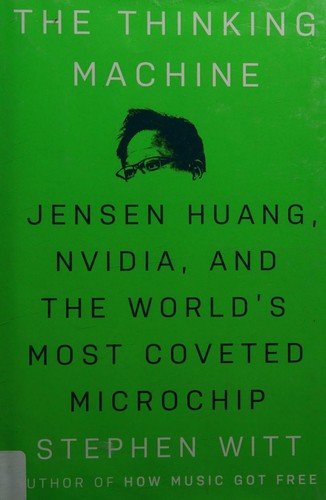
The story of NVIDIA and Jensen Huang: how a video-game card company ended up making the most coveted resource on the planet.
As an Amazon Associate, Zendoric earns from qualifying purchases; the price does not change for you. · all our recommended books →
We'll send you a confirmation email (double opt-in). Privacy.
The CNN Business article (July 10, 2026, by Stephanie Yang) recounts how SK Hynix, a semiconductor maker until recently little known outside the sector, has staged the largest US initial public offering ever carried out by a foreign company. The company began trading Friday at $149 per share, raising roughly $26.5 billion. The previous record in this area was held by Chinese e-commerce giant Alibaba, which had raised $25 billion in its 2014 IPO.
According to the article, this milestone reflects the enthusiasm that has repeatedly driven tech stocks to record highs this year, amid a massive build-out of data centers for artificial intelligence that has sent demand soaring for the memory chips SK Hynix makes. This buying frenzy, which also benefits Samsung (the world's largest maker of memory chips), has turned South Korea's stock market (Kospi) into the world's seventh largest after surpassing Canada's in May. SK Hynix and Samsung, which together account for close to 50% of the Kospi index, have both reached valuations of one trillion dollars in recent months.
The piece notes that this enthusiasm, especially among retail investors, has also intensified market volatility: there have been several temporary trading halts on South Korea's stock exchange this year due to sharp drops. Jung In Yun, CEO of Fibonacci Asset Management Global, points out that although foreign investors have sold quickly to lock in profits, the strong demand for SK Hynix's offering shows that global appetite for AI infrastructure remains intact despite recent volatility.
As for the industrial backdrop, SK Hynix and Samsung have posted record profits this year because AI has absorbed much of the world's supply of memory chips, generating forecasts of a prolonged shortage that have led both companies to invest heavily in new manufacturing capacity, with the backing of the South Korean government. Earlier this month, South Korea announced plans to invest more than $500 billion in new chip manufacturing plants in the country's southwest, and President Lee Jae Myung has called for rapid implementation to secure land, water and power and maintain the country's technological leadership. According to a regulatory filing cited in the article, SK Hynix will use the funds raised in the US market to build new production facilities in Korea.
MS Hwang, research director at Counterpoint Research specializing in memory semiconductors, is quoted explaining that this $26.5 billion US listing gives SK Hynix the financial capacity to outscale Samsung, narrow the valuation gap with US rivals such as Micron, and attract top-tier talent with attractive compensation that boosts corporate morale.
Nevertheless, the article also gathers warnings about risks: the rapid expansion of memory-chip makers, together with the surge in leveraged bets on these companies, has raised concern about a possible slowdown in the semiconductor market, given its cyclical nature. Borrowing by retail investors in the Kospi market has reached record levels this year, according to data from the Korea Financial Investment Association, and some South Korean lawmakers have warned about the financial risks of leveraged ETFs that track individual stocks such as SK Hynix's, capable of multiplying both gains and losses.
Finally, the article quotes Gareth Leather, senior Asia economist at Capital Economics, who warns in a recent briefing that the danger lies in the fact that, if corporate results disappoint expectations—something he considers likely—stock prices, especially in tech, could begin to fall toward the end of 2027, triggering a slowdown in corporate investment in the US and, potentially, turning the current boom in Asian exports into a crisis.
Overall, the article portrays SK Hynix's IPO as a symbol of the current moment of the artificial intelligence boom: a demonstration of extraordinary investor confidence in AI infrastructure, but also a case study on the risks of overheating, excessive leverage and dependence on growth expectations that, if unmet, could trigger sharp corrections in Asian and global markets.
📚 Go deeper
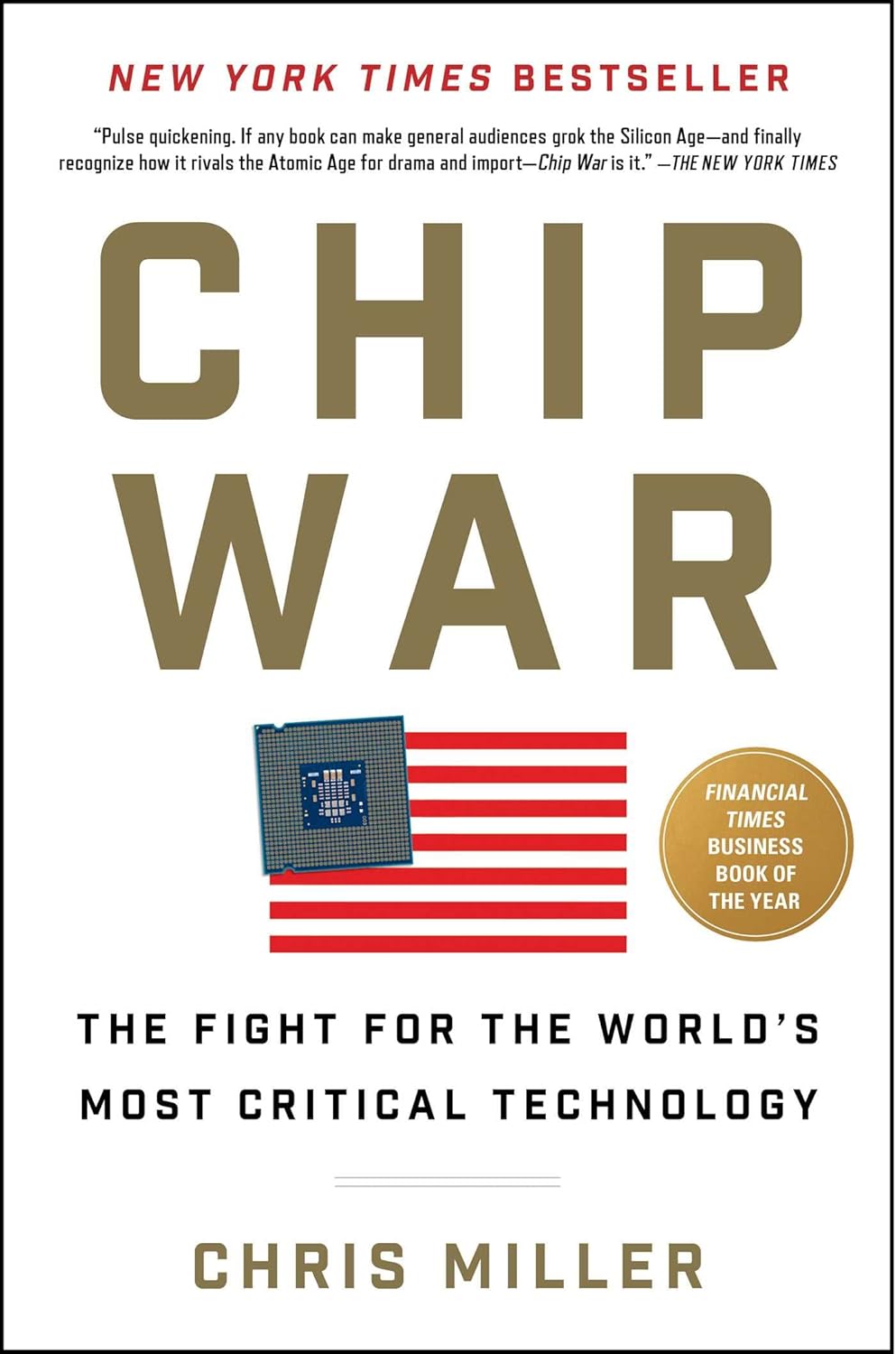
Semiconductors as the oil of the 21st century: history, espionage, and why an island of 23 million people underpins the entire AI economy.

A macroeconomic, sector-by-sector X-ray of how AI redraws the global chessboard over the coming decade, with the human factor at the center.
As an Amazon Associate, Zendoric earns from qualifying purchases; the price does not change for you. · all our recommended books →
🔗 Related on Zendoric
- Anthropic, both accuser and accused: the complaint against Alibaba lands amid a regulatory storm · 2026-06-26
- Anthropic takes AI distillation to the Senate: when copying agentic capabilities becomes a matter of state · 2026-06-26
- When a decree shuts off an API: the Legion case exposes the fragility of building on a single AI provider · 2026-06-24
Sources & references
Get the analysis by email · free
One email a day analysing the AI essentials. Free, no spam, unsubscribe anytime.
We'll send you a confirmation email (double opt-in). Privacy.