Car rental discovers AI's limit: detecting damage isn't the same as deciding the fine

🕒 Published on Zendoric: July 11, 2026 · 00:27
A year after the scandal over AI scans that fined drivers for minor scratches, the rental sector met for the first time to set clear rules. The conclusion of the panel at ICRS 2026: AI should document, not judge.
📚 Go deeper
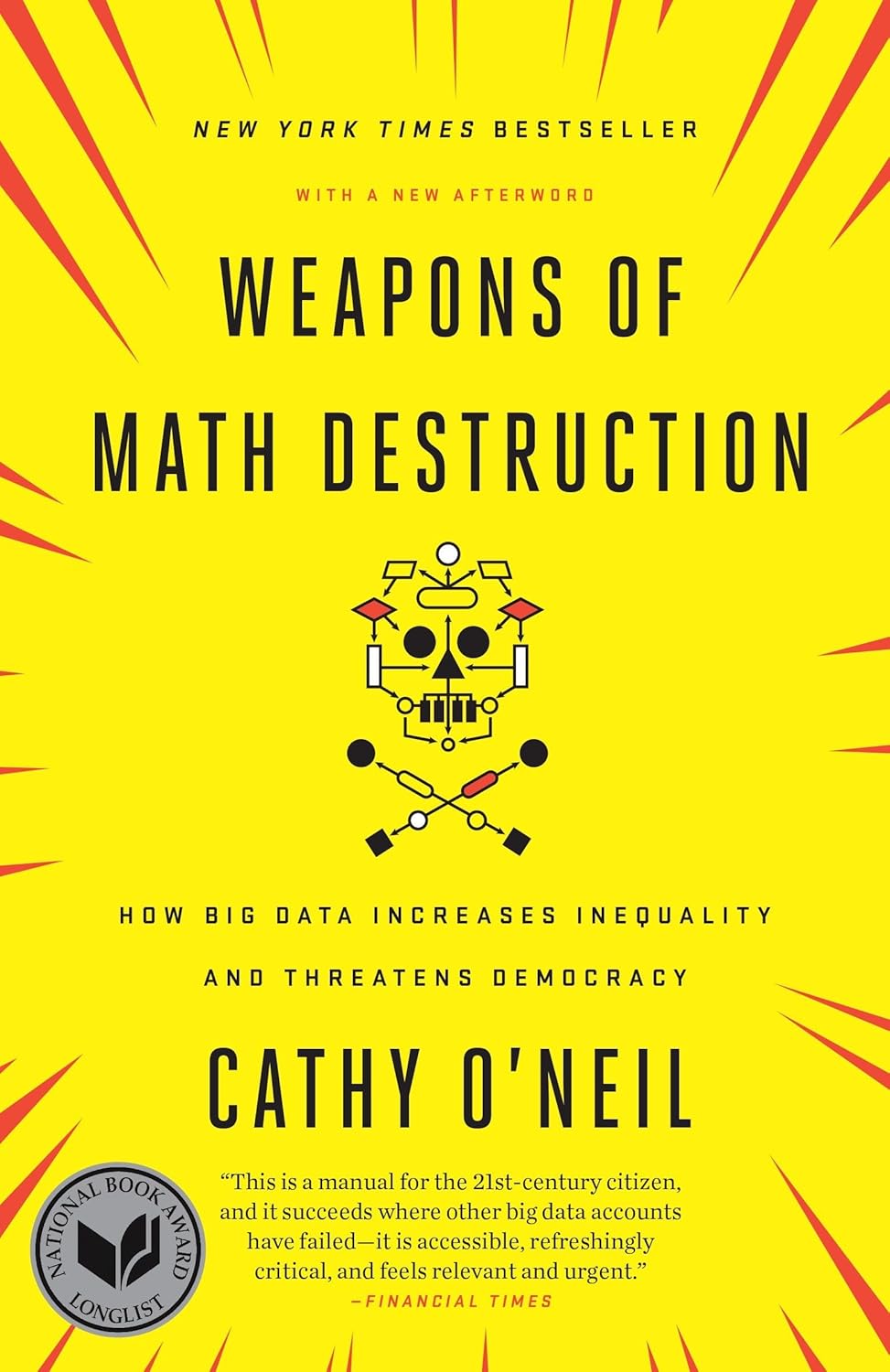
How opaque algorithms decide who gets credit, a job or parole — and why they tend to punish the same people.
As an Amazon Associate, Zendoric earns from qualifying purchases; the price does not change for you. · all our recommended books →
We'll send you a confirmation email (double opt-in). Privacy.
By Auto Rental News · July 10, 2026.
After the 2025 International Car Rental Show closed, a reputational crisis broke out that is unusual in an industry as discreet as car rental: AI scanners that inspect the bodywork when the vehicle is picked up and returned began generating damage charges that many customers swore they had not caused, or that they considered too minor to justify bills of hundreds of dollars. The media coverage was hostile and persistent. A year later, at ICRS 2026 held in Grapevine (Texas) from May 13 to 15, the industry finally organized an open debate on the matter, with a panel that brought together Nick DiPrima (Edgeball Strategies), Jeremy Martin (DAMAGE iD), Monty Merrill (GSP Transportation), Phil Spink (Sixt Rent A Car / Tom Wood Rental) and Shawn Concannon (TSD).
The panel's central conclusion, reported by editor Martin Romjue, is simple and at the same time revealing: AI should not make the final decision on whether or not to charge a customer. Its imaging capability is reliable for detecting differences between the vehicle's condition at checkout and at check-in, but translating that detection into a financial penalty requires a judgment that the machine has no context to apply. The panel itself resorted to a useful analogy: it is like asking whether everyone driving 66 in a 65 zone should be ticketed, or only those going well over the limit. The technology can measure precisely; deciding where the threshold of what is reasonable lies remains human work.
From this follow very concrete recommendations that are, at bottom, a list of mistakes already made: share the vehicle's photos with the customer at the start of the rental, not just at the end, so that transparency does not feel like a trap; establish in advance which types of damage are charged and which are absorbed, instead of billing every micro-scratch just because the system is capable of seeing it; and, above all, not turning the detection tool into a profit center disguised as quality control. One detail that probably matters more than it seems: presenting the findings as a "change in the vehicle's condition" rather than a direct accusation completely changes the tone of the conversation with the customer. And the panel insisted on a nuance almost old-fashioned in the software era: the word "forgiven" —an employee's ability to use common sense and not charge in borderline cases— generates a loyalty that no algorithm knows how to calculate, but that any long-term bottom line appreciates.
This is not a problem exclusive to car rental; it is a textbook case of something we will see repeated in sector after sector over this decade. When a company deploys an AI system that is objectively more accurate than the manual process it replaces —and here it probably is: fewer damages go unnoticed, better documentation, better residual fleet value at auction—, the temptation is to let that precision decide on its own because it is cheaper and more scalable. The result, when the layer of human judgment and clear policy is missing, is exactly what happened: a technically correct technology that generates a crisis of trust and hostile headlines. The capability arrived before the governance, and the cost of that gap was paid by the brand, not by the software provider.
There is also a regulatory warning sign that the sector itself acknowledges: AI advances faster than legislation, and an issue like this, with outraged consumers and media weight, easily enters politicians' radar. The panel's stance —self-regulate before it is done by decree— is consistent with something we defend at Zendoric: governance based on evidence and on one's own policies tends to produce better results than reactive regulation driven by the scandal of the moment, provided the industry acts quickly and honestly enough not to need to be forced.
Our take is that this episode, modest in appearance, illustrates well the pattern we are going to see repeated with AI over the next decade: it is not about whether the machine can detect the scratch —it can, and better all the time—, but about who, and by what criteria, decides what to do with that information. The jobs and functions that survive automation are not those that operate the camera or the vision algorithm, but those that apply judgment, empathy and knowledge of context to turn a data point into a fair decision. In the short term this means friction, complaints and the occasional media scandal while companies learn to calibrate their policies; in the long term, when the technology is combined with well-designed processes —transparency from the very first moment, reasonable thresholds, room for forgiveness—, the result should be a more efficient sector, with fewer disputes and better documentation from start to finish. The abundance of data that AI brings only turns into trust if someone decides, with human judgment, what to do with it.
📚 Go deeper
How to future-proof your career and multiply your professional value as AI collapses the cost of cognitive work: the "Great Bifurcation" between those
The same bifurcation seen from the boardroom: strategy, execution and defensive moats to reorganize a business around AI before your competitors do.
As an Amazon Associate, Zendoric earns from qualifying purchases; the price does not change for you. · all our recommended books →
🔗 Related on Zendoric
- Claude Fable 5 and the first AI 'blackout' over national security: a precedent that changes the sector's rules · 2026-06-29
- Rock Hill puts its house in order before the school year: why revising AI policy is now a matter of school governance · 2026-06-24
- Meta and Qualcomm seal an alliance that moves mobile energy efficiency to the heart of the AI data center · 2026-06-25
Sources & references
Get the analysis by email · free
One email a day analysing the AI essentials. Free, no spam, unsubscribe anytime.
We'll send you a confirmation email (double opt-in). Privacy.