Agentic AI is already spooking insurers: Verisk studies excluding it from standard policies

🕒 Published on Zendoric: July 11, 2026 · 00:27
Verisk, through its ISO subsidiary, is exploring new exclusions for agentic AI risks in liability policies, a further step after the generative AI exclusion already in force since January. The signal is clear: the insurance sector is beginning to treat the autonomy of AI agents as a risk that doesn't fit traditional products.
📚 Go deeper
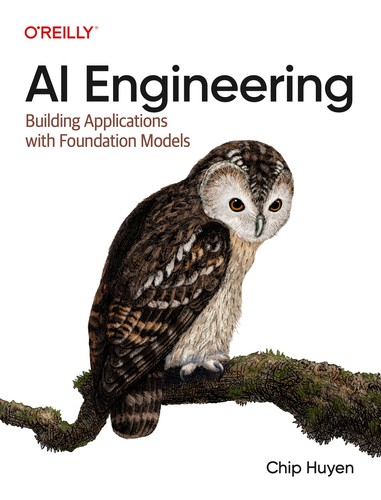
The reference manual for building products on top of AI models: prompts, RAG, fine-tuning, agents, evaluation and deployment.
As an Amazon Associate, Zendoric earns from qualifying purchases; the price does not change for you. · all our recommended books →
We'll send you a confirmation email (double opt-in). Privacy.
By The Insurer · July 10, 2026.
Verisk, the largest provider of data and standardized policy language for the U.S. insurance sector through its ISO (Insurance Services Office) unit, has confirmed that it is studying new specific exclusions for risks arising from agentic AI, that new generation of systems capable of making decisions and executing actions autonomously, beyond simply generating content. According to the company, it is a matter of "evaluating additional options" in the face of an exposure that grows as these tools become embedded in companies' operations. As in the immediate precedent —the generative AI exclusion that ISO introduced in July 2025 and which already applies to general liability (CGL) renewals since January 1, 2026, through the endorsements CG 40 47, CG 40 48 and CG 35 08— the adoption of any new clause would be optional for each insurer, depending on its risk appetite.
The relevant point is not just the announcement, but what it reveals about the market dynamic it has already set in motion. The first generative AI exclusion did not close a door: it opened a market. According to George Lewin-Smith, co-founder and chief executive of Testudo, a Lloyd's-backed MGA specialized in AI liability that began underwriting policies for mid-sized U.S. companies in early 2026, "there's increasingly more movement on the exclusions side, whether in E&O, GL or D&O," and he warns that "we're going to see quite a bit more" as insurers seek to move this exposure off their traditional balance sheets. Tim Zeilman, global head of product at HSB (a Munich Re subsidiary), qualifies the scope: the ISO exclusions were "the most immediate opportunity" to launch a dedicated insurance product, but the real risk of AI tools in companies goes far beyond general liability.
What is happening here is, at bottom, an exercise in pricing uncertainty. Liability, E&O (errors and omissions), technology and D&O (directors and officers) insurance were designed for risks with a reasonably predictable causal chain: an employee makes a mistake, a product fails, a management decision goes wrong. An AI agent that acts autonomously —negotiating, executing transactions, interacting with third parties, making operational decisions without direct human supervision at every step— breaks that actuarial model: there is not enough claims history, the chain of responsibility among the model developer, the integrator and the company deploying it is blurry, and the speed and scale at which an agent can multiply an error bear no comparison to the isolated human failure. Faced with that opacity, an insurer's rational reaction is not to take on the risk within a generic product and wait to see what happens: it is to exclude it and force it to be contracted separately, at a price that reflects what is actually known (little) about that exposure.
This is, in essence, the same script that cyber risk went through two decades ago: first traditional policies excluded cyber risk because they didn't know how to price it, then a specialized cyber insurance market flourished, and today that coverage is a mature, multibillion-dollar line of business with its own underwriting discipline. Agentic AI is walking the same path, only at a much faster pace: barely a year after the first generative AI exclusion, there are already dedicated MGAs, specific clauses under discussion for D&O and E&O, and reinsurance executives openly talking about a new product category.
Our reading is that this fits exactly the hard transition we anticipate for the short term: the autonomy of AI agents is already generating real damages and disputes —which is why the insurance market is moving before the regulator— and companies that deploy these systems without a clear understanding of their liability perimeter are going to find, sooner rather than later, that their policy does not cover what they thought. That is not a sign that agentic AI is unmanageable, it is a sign that the ecosystem around it —insurance, auditing, governance, compliance— is starting to take its real scale seriously. In the medium term, that maturation of the insurance market is precisely what enables broader and more responsible adoption: when there is a product that correctly prices the risk of an autonomous agent, companies can deploy AI with more confidence and without exposing themselves to catastrophic uncovered losses, which is a necessary, if unglamorous, ingredient of the road to the abundance we defend as a long-term horizon: you don't get there by ignoring risk, but by governing it until it stops being an obstacle to widespread adoption.
📚 Go deeper
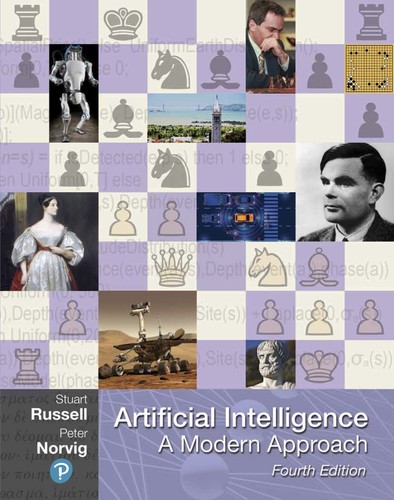
THE AI textbook: used by 1,500+ universities.

The academic "bible" of deep learning, with a Turing Award winner among its authors, and legally free on the web.
As an Amazon Associate, Zendoric earns from qualifying purchases; the price does not change for you. · all our recommended books →
🔗 Related on Zendoric
Sources & references
Get the analysis by email · free
One email a day analysing the AI essentials. Free, no spam, unsubscribe anytime.
We'll send you a confirmation email (double opt-in). Privacy.