ChatGPT Work vs Claude Cowork: The AI War Moves From Smartest Model to Cheapest Agent

🕒 Published on Zendoric: July 10, 2026 · 00:24
OpenAI's new ChatGPT Work aims coding-grade AI at non-coders, powered by the freshly launched GPT-5.6 — a direct shot at Anthropic's Claude Cowork. The headline isn't the flagship model; it's that a small, cheap version can now do the job at a fraction of the cost.
📚 Go deeper
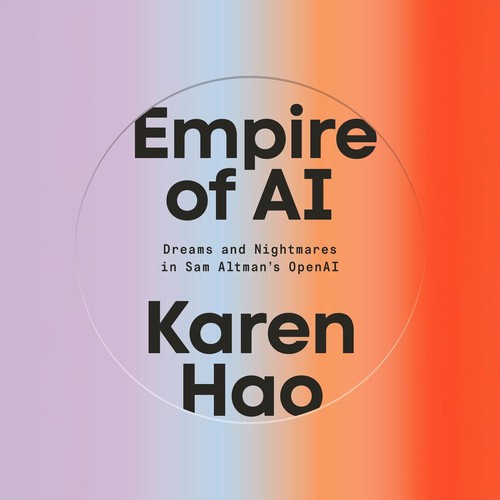
The definitive piece of investigative journalism on OpenAI: 260+ interviews, the clash between safety and speed, and the attempted firing of Sam Altma
As an Amazon Associate, Zendoric earns from qualifying purchases; the price does not change for you. · all our recommended books →
We'll send you a confirmation email (double opt-in). Privacy.
OpenAI unveiled ChatGPT Work, an agent that fuses its chatbot with its Codex coding tool so that white-collar workers who can't code can still generate documents, presentations and websites. It runs on GPT-5.6, launched the same day in three sizes — a model whose release, the company notes, was delayed last month at the U.S. government's request over national-security concerns. The framing is explicitly competitive: ChatGPT Work is a direct answer to Anthropic's Claude Cowork, the autonomous multi-step agent Anthropic shipped in January, and it also squares up against Microsoft's Copilot Cowork. OpenAI stressed its offering is cheaper and more broadly available, rolling out first to Pro, Enterprise and Edu users before reaching Plus and Business.
The strategic logic is clear once you follow the money. Both OpenAI and Anthropic are reportedly preparing for possible public offerings, and both are chasing enterprise business, which is far more lucrative than selling to consumers. The prize is the professional who wants coding-tool power without the specialized knowledge — a huge, underserved middle. Whoever owns that workflow owns the recurring enterprise revenue, and that is what this launch is really about.
But the detail worth pausing on isn't the flagship. According to Creative Strategies analyst Max Weinbach, the smallest version of the new model can complete a task about as well as the largest — at roughly one-fifth the cost — and he calls it the first time he's seen small models handle these kinds of tasks. OpenAI's own product manager describes the 5.6 line as competitive with models that are "far, far more expensive," at twice the speed and much cheaper. That is the story hiding under the super-app headline: the industry is anxious about the high cost of running these tools, and the frontier is quietly shifting from "most capable" to "good enough, at a price that scales."
Our reading: this is the maturation we've been tracking, where the battle moves away from the smartest single model and toward distribution, cost, and the plumbing that puts agents into real workflows. When a fifth-the-cost model does the job, capability stops being the moat and economics take over — which is broadly good news, because collapsing inference costs are what turn a lab demo into abundance available to ordinary teams. Two cautions temper the optimism. First, treat "competitive with far more expensive models" as vendor framing until independent benchmarks confirm it — launch-day performance claims are marketing until measured. Second, the government-requested delay over national-security fears is a quiet but important marker: the most capable agents are now treated as strategic assets, not just products. The near term is a price war that democratizes access; the durable question is who controls the standards and rails these agents run on — and that contest is only beginning.
📚 Go deeper
The same bifurcation seen from the boardroom: strategy, execution and defensive moats to reorganize a business around AI before your competitors do.
A macroeconomic, sector-by-sector X-ray of how AI redraws the global chessboard over the coming decade, with the human factor at the center.
As an Amazon Associate, Zendoric earns from qualifying purchases; the price does not change for you. · all our recommended books →
🔗 Related on Zendoric
- Claude Science: Anthropic turns its model into a lab for researchers and takes direct aim at AI's most ambitious promise · 2026-07-01
- Sonnet 5: Anthropic targets the invisible bill of AI agents with an Opus-grade model at a Sonnet price · 2026-07-01
- Microsoft Swaps In Its Own AI, a Quiet Signal That Distribution Beats the Best Model · 2026-07-07
Sources & references
Get the analysis by email · free
One email a day analysing the AI essentials. Free, no spam, unsubscribe anytime.
We'll send you a confirmation email (double opt-in). Privacy.