AI-cloned voice, the new 'my daughter had an accident' scam reaches the Coahuila-Texas border

🕒 Published on Zendoric: July 10, 2026 · 00:24
✨ AI-generated · how it's made
In Eagle Pass, a woman received a call with her daughter-in-law's cloned voice asking for help after a supposed drug-related accident. She didn't fall for it, verified on her own and hung up, but the case confirms that synthetic-voice fraud is already operating on the street, not just in cybersecurity labs.
📚 Go deeper
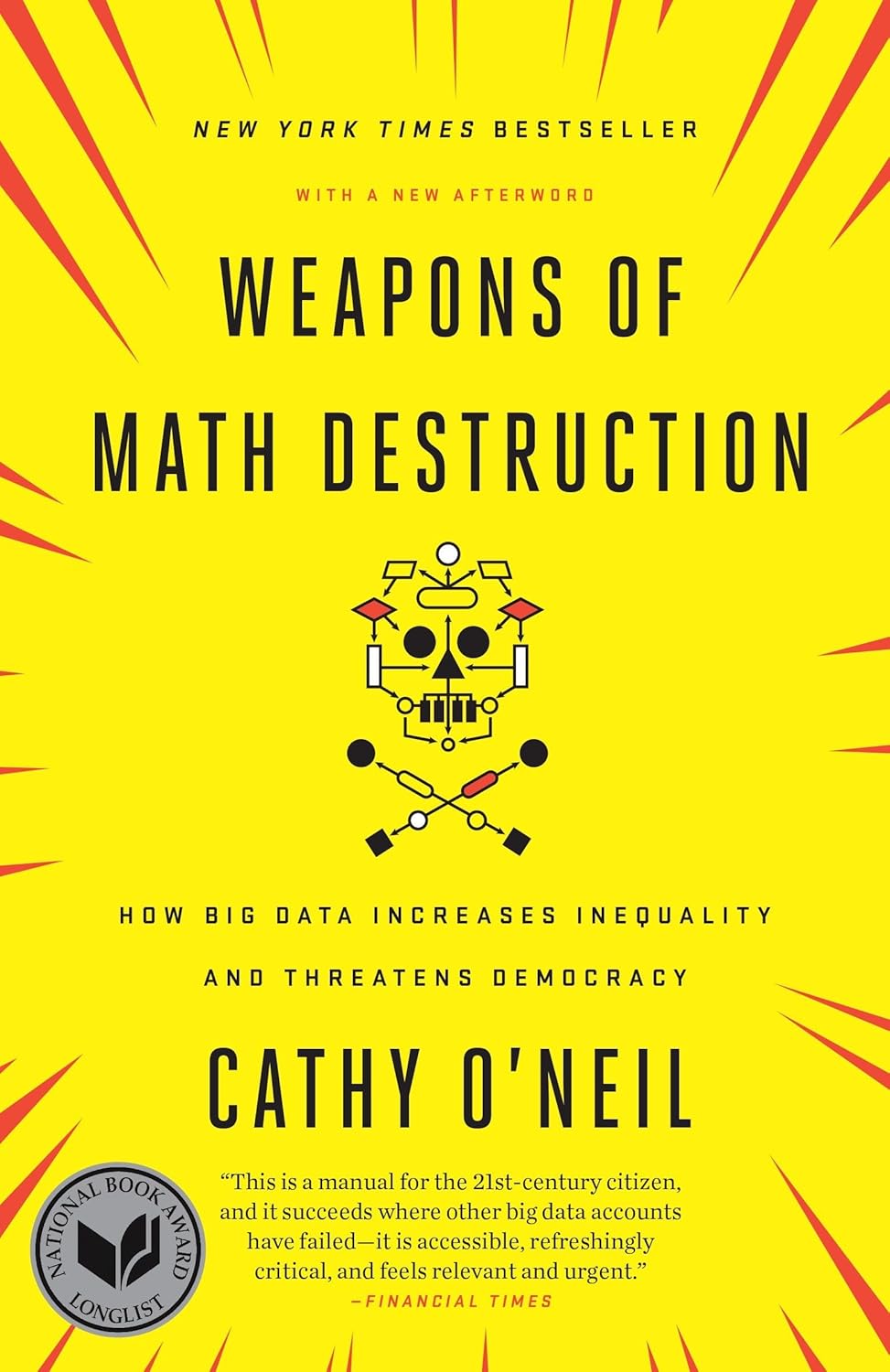
How opaque algorithms decide who gets credit, a job or parole — and why they tend to punish the same people.
As an Amazon Associate, Zendoric earns from qualifying purchases; the price does not change for you. · all our recommended books →
By La Rancherita del Aire · July 9, 2026.
Ema Vázquez, a resident of Eagle Pass, received a call on her cell phone from a man who identified himself as 'Sergeant García': her daughter-in-law, he said, had been in a car accident and drugs had been found on her, so he needed money to keep her out of jail. To lend credibility to the deception, they put on the phone a crying voice saying 'Mother-in-law, I had an accident.' According to Vázquez's own account, the voice was indistinguishable from that of her real daughter-in-law. The number that called had an Eagle Pass area code. She did not fall for it: she hung up, called her daughter-in-law directly and confirmed she was perfectly fine.
This is an AI variant of a scam that is nothing new on the Coahuila-Texas border: the outlet itself reports earlier warnings from Eagle Pass about calls from fake police officers asking for money to avoid making arrests. What changes now is the technical ingredient. Voice cloning no longer requires recording studios or actors: with just a few seconds of public audio —a voice note, a social media video, a stream— there are tools capable of generating a convincing replica of how a specific person speaks, including their crying or their way of saying 'mother-in-law.' The so-called 'family emergency scam' or virtual kidnapping has been exploiting panic for decades; generative AI simply removes for the scammer the only obstacle that used to give it away, namely that the voice sounded different from that of the loved one.
The relevant point here is not the sophistication of the attack, but how cheap and accessible it has become. You no longer need to be an organized-crime group with technical resources: voice cloning is packaged in apps and services that anyone can use in minutes. That democratizes fraud in the worst possible sense and multiplies the volume of attempts, even if each one individually is unsophisticated in its script (the mechanics of 'Sergeant García' asking for money are the same as ever). It is exactly the short-term pattern that worries us: AI does not create the crime, but it makes its execution cheaper and scales it far faster than society takes to build defenses and a culture of verification.
The good news, and the one that really matters to the reader, is that Vázquez saved herself with the oldest and most effective tool that exists against this fraud: not trusting the incoming call and verifying through a channel of her own. No audio deepfake, however good, survives you hanging up and dialing your relative's real number yourself. That discipline —family code words, cross-verification, systematic distrust of calls that urgently ask for money— will have to become as normalized as not giving out your card PIN over the phone became years ago. In parallel, it is foreseeable that the same industry perfecting voice cloning will also end up pushing synthetic voice detection and biometric call authentication as a standard service in telephony, just as email spam gave rise to filters we now take for granted.
This connects to the underlying thesis we hold at Zendoric: AI is neither good nor bad in itself, it is an amplification of intent. In the hands of a scammer on the border, it amplifies fraud; in the hands of a bank, a telephone carrier or a security developer, it can just as quickly amplify user detection and protection. The real problem is not that the technology exists, but that today the asymmetry favors the attacker because the defenses —voice identity verification, family protocols, public education— still lag behind. Cases like Eagle Pass are proof that this race has already begun at street level, not only in the academic debate about deepfakes, and that winning it depends less on stopping AI than on spreading, faster, the knowledge and tools to recognize and neutralize it.
📚 Go deeper

Algorithms in justice, medicine, cars and art, explained with British humor and mathematical honesty.

The reference manual for building products on top of AI models: prompts, RAG, fine-tuning, agents, evaluation and deployment.
As an Amazon Associate, Zendoric earns from qualifying purchases; the price does not change for you. · all our recommended books →
🔗 Related on Zendoric
- Missouri adds its first local case of an already global scam: the cloned voice demanding ransom by phone · 2026-07-19
- AI Voice Cloning Fuels Nearly $900M in US Scam Losses, FBI Data Shows — and Georgia Isn't Spared · 2026-07-21
- AI voice cloning, fake recruiters and roofing fraud: the triple alert that is already routine in the US · 2026-09-02