SpaceXAI's Grok 4.5 bets on efficiency: cheaper, faster and trained alongside Cursor

🕒 Published on Zendoric: July 10, 2026 · 00:24
✨ AI-generated · how it's made
SpaceXAI (the company behind Grok, whose legal footer on its own website still signs as "xAI Corp.") presented Grok 4.5 on July 8, 2026, described as its most intelligent model to date and specifically geared toward programming, agentic tasks and knowledge work.
📚 Go deeper
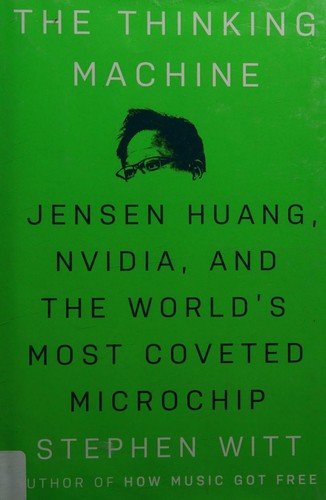
The story of NVIDIA and Jensen Huang: how a video-game card company ended up making the most coveted resource on the planet.
As an Amazon Associate, Zendoric earns from qualifying purchases; the price does not change for you. · all our recommended books →
SpaceXAI (the company behind Grok, whose legal footer on its own website still signs off as "xAI Corp.") unveiled Grok 4.5 on July 8, 2026, described as its most intelligent model to date and aimed specifically at programming, agentic tasks and knowledge work. A notable point in the announcement is that the model was trained "together with Cursor," the AI code editor, suggesting a direct collaboration between the two companies to optimize the model for real software engineering workflows, beyond academic benchmarks.
The central message of the launch is not just "we're number one," but efficiency: SpaceXAI insists that Grok 4.5 delivers reasoning that is both intelligent and efficient, and presents several comparison tables against rival models identified in the article itself as Fable, GPT 5.5, Opus 4.8, Opus 4.7 and GLM 5.2. On DeepSWE 1.0, Grok 4.5 scores 62.0% (pass@1), behind Fable (66.1%, max mode) and GPT 5.5 (64.31%, xhigh mode), but ahead of Opus 4.8 (55.75%) and Opus 4.7 (40.12%). In the DeepSWE 1.1 version, run with the mini-swe-agent harness, the order shifts and Grok 4.5 drops to 53%, falling behind Fable (70%), GPT 5.5 (67%) and Opus 4.8 (59%), though ahead of GLM 5.2 (44%).
By contrast, on SWE Marathon (pass@1 resolution rate), Grok 4.5 leads with 29.0%, surpassing Opus 4.8 (26.0%), Fable (24.0%) and Opus 4.7 (16.0%). On Terminal Bench 2.1 the results are very tight: Fable tops the list with 84.3%, GPT 5.5 with 83.4% and Grok 4.5 virtually tied in third place with 83.3%, ahead of Opus 4.8 and Opus 4.7 (both at 78.9%). Finally, on SWE Bench Pro, Grok 4.5 comes in third with 64.7%, behind Fable (80.4%) and Opus 4.8 (69.2%), but ahead of Opus 4.7 (64.3%), GLM 5.2 (62.1%) and GPT 5.5 (58.6%). The article itself clarifies that the evaluation was created by Datacurve and run with each provider's harness by "AA," while the competitors' figures come from the system cards or leaderboards published by each developer, not from tests replicated independently and uniformly by SpaceXAI. This matters: the results show that Grok 4.5 is not systematically the most capable model in these tests (in fact, in four of the five tables it falls behind Fable); rather, its selling point rests on a different axis: cost and speed per unit of intelligence.
In that respect, the most striking figure in the announcement is token efficiency: on SWE Bench Pro, Grok 4.5 solves the tasks using an average of 15,954 output tokens, compared with 67,020 tokens for Opus 4.8 (max mode)—that is, about 4.2 times fewer tokens for comparable tasks. SpaceXAI also claims that the model is served at speeds typical of "fast models," 80 tokens per second, and that it combines that speed with twice the token efficiency of the most recent leading models on the same tasks, which translates into faster and cheaper responses.
On training, the article details that Grok 4.5 was trained on tens of thousands of NVIDIA GB300 GPUs, with training and stability techniques designed for large-scale runs. Beyond the volume of tokens, SpaceXAI says it invested heavily in data filtering and curation (deduplication, quality scoring and domain-specific selection) to maintain a data mix that is both high-coverage and high-signal. Reinforcement learning (RL) was scaled with a focus on "intelligence per token," covering hundreds of thousands of tasks centered on multi-step software engineering and other technical tasks, with automated and model-based grading. The training infrastructure is designed to be highly asynchronous, allowing agentic rollouts to run for many hours while learning continues in parallel across tens of thousands of GPUs. According to SpaceXAI, the result is more intelligent and efficient reasoning on real engineering and agentic tasks, which ties directly into the token-efficiency narrative shown in the benchmarks.
The article also showcases "one-prompt build" capabilities: according to SpaceXAI, Grok 4.5 is highly competent at demanding coding tasks in Rust and C/C++, as well as at building complete end-to-end applications from a single instruction. As a concrete example, it shows a solar system simulation made with three.js from a prompt asking for "a beautiful simulation of the universe and the solar system," with adjustable time, realistic motion, orbits, stars and a well-designed HUD following modern design principles.
In the realm of office productivity, Grok 4.5 becomes the default model in Grok Build. Beyond its coding competence, SpaceXAI highlights that it can build complex Excel models incorporating research from the web, using multi-sheet formulas, and even leaving sticky notes or comments for future reference. In PowerPoint and Word, the model is likewise described as meticulous: able to use native PowerPoint shapes to build complex diagrams, design slide content intuitively and write clear prose in Word. The article illustrates this with an example of generating a five-slide quarterly business review, and mentions the existence of specific plugins for Word, PowerPoint and Excel.
As for pricing, Grok 4.5 is offered at $2 per million input tokens and $6 per million output tokens. SpaceXAI reiterates that the model achieves roughly twice the token efficiency of comparable leading models, solving tasks in fewer than half the steps, which together—according to the company—translates into the highest intelligence per unit of time and cost on the market. This is, again, SpaceXAI's own claim and not a figure verified by third parties within the article itself.
Regarding availability, Grok 4.5 is already available in Grok Build, in Cursor (on all plans) and from the SpaceXAI console, with a sample API call using the model identifier "grok-4.5." The company also offers free, time-limited use of Grok 4.5 in both Grok Build and Cursor, and promotes its CLI installable via script (x.ai/cli). An important caveat for European readers: the article explicitly warns that Grok 4.5 is not yet available in the European Union in any of SpaceXAI's products or in the API console, and that EU availability is expected by mid-July (of 2026, according to the launch context).
Overall, the positioning of this launch is not so much "the most powerful model across all benchmarks"—in fact it loses to Fable on several key tests—but a message of cost-efficiency: fewer tokens per task solved, higher serving speed and lower price per token, signaling that the metric SpaceXAI wants the market to use to compare models should no longer be just the raw benchmark score, but intelligence obtained per dollar and per second. The comparisons should be read with caution, since the competitors' figures come from sources published by each rival company rather than from a unified independent evaluation, and because the article itself mixes company names (SpaceXAI in the header and menus, xAI Corp. in the copyright notice), suggesting some inconsistency or a possible rebranding in progress that the text does not explain.
📚 Go deeper
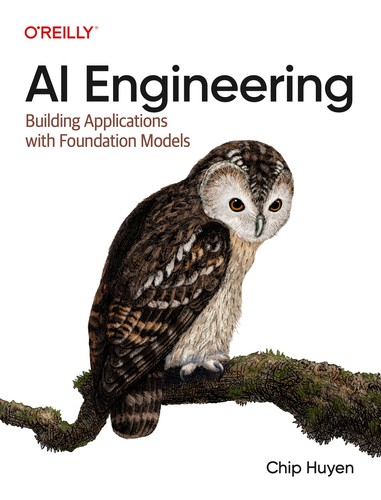
The reference manual for building products on top of AI models: prompts, RAG, fine-tuning, agents, evaluation and deployment.
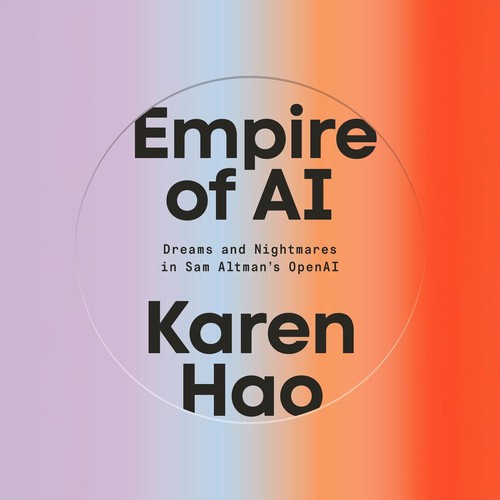
The definitive piece of investigative journalism on OpenAI: 260+ interviews, the clash between safety and speed, and the attempted firing of Sam Altma
As an Amazon Associate, Zendoric earns from qualifying purchases; the price does not change for you. · all our recommended books →
🔗 Related on Zendoric
- Meta launches Muse Spark 1.1 and opens its new Meta Model API in public preview · 2026-07-11
- Google launches cheaper Gemini 3.6 Flash and 3.5 Flash-Lite, and adds a model dedicated to cybersecurity · 2026-07-23
- From being unable to connect the robot to beating it 19 times in a year: AI enters the physical world without being trained for it · 2026-06-29