Anthropic's Reflect: the AI that asks whether you should use it less
🕒 Published on Zendoric: July 10, 2026 · 00:24
✨ AI-generated · how it's made
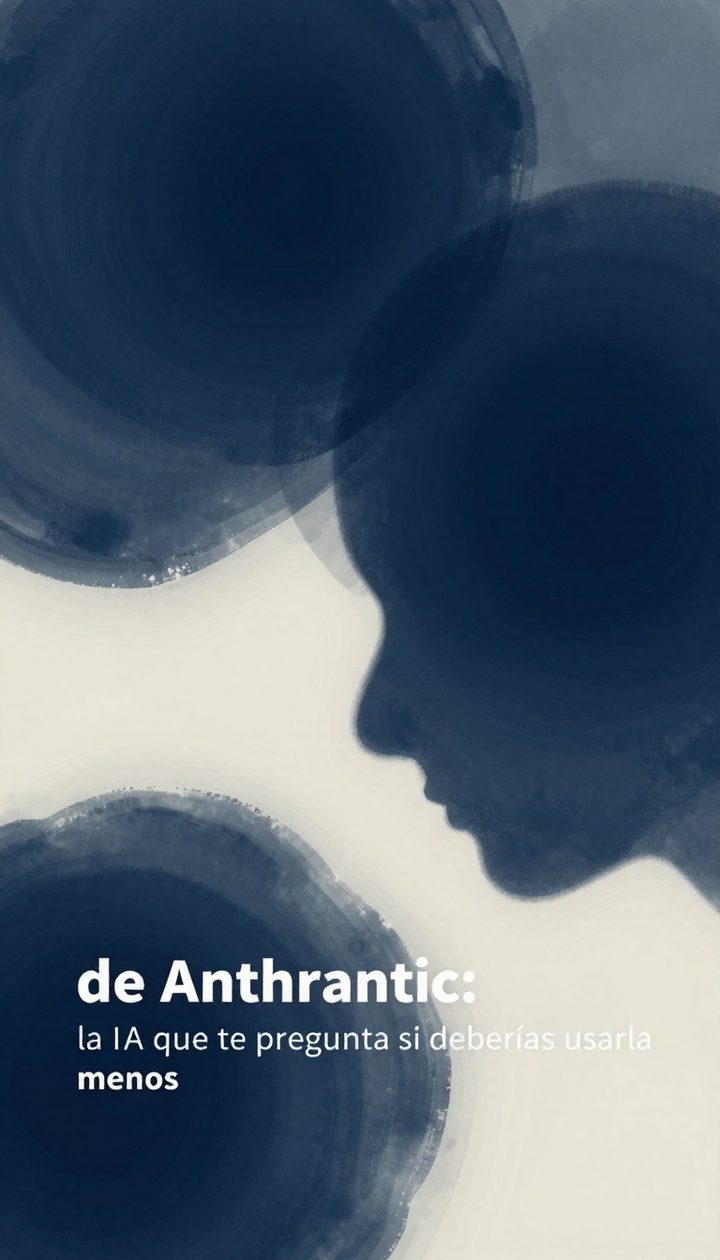
Anthropic launches 'Reflect', a Spotify Wrapped-style summary of your Claude activity that also invites you to set limits: quiet hours, break reminders and an uncomfortable question: what do you want to keep doing yourself, even if Claude does it faster?
📚 Go deeper
The best starting book if you're not technical: a Wharton professor explains how to work WITH AI — when to delegate, when to supervise, when to keep i
As an Amazon Associate, Zendoric earns from qualifying purchases; the price does not change for you. · all our recommended books →
By MacRumors · July 9, 2026.
Anthropic has added a feature to Claude called 'Reflect,' available in beta for Free, Pro and Max users who have memory enabled. It is accessed from Settings, in the Reflect tab, and generates a report covering the last 1, 3, 6 or 12 months with recurring topics, usage patterns and the kind of tasks that have been delegated to the assistant. Anthropic openly compares it to Spotify's Wrapped, but with a twist: instead of celebrating consumption, the tool poses self-examination questions, such as 'what is the one thing you'd want to keep doing yourself, even if Claude could do it faster.' It also includes practical options —quiet hours, prompts to take a break after a certain amount of use— and points to Anthropic's own '4D' framework (Delegation, Description, Discernment, Diligence) to suggest how to improve the way you work with AI. The company specifies that Reflect does not analyze chats in incognito mode, nor files from connected tools, nor conversations linked to health integrations, and that this information is not reused for other purposes.
What's striking is not the feature itself —an activity summary is trivial to build technically— but the stated intention behind it. The software industry has spent two decades optimizing for engagement: the more time and the more often you come back, the better for business. Reflect partially inverts that logic by offering, within the product itself, tools to use AI less and to ask what you are giving up by delegating. It's a gesture that fits with something we had already been observing in our analysis of AI in education: the real risk of these assistants is not that they'll 'take your job,' but that they'll tempt you to hand over the work of thinking without your realizing it. That an AI provider builds, even in beta and in a modest way, an explicit mechanism against that slide is a sign of product maturity that is uncommon in the sector.
That said, it's worth not losing sight of the commercial angle. Anthropic competes with OpenAI on a terrain where trust is starting to matter as much as model capability. A 'digital wellbeing' feature is also, inevitably, a lever for differentiation and long-term retention: a user who feels the tool looks after their autonomy is a user who trusts more and who stays. Both readings are true at once, and they are not incompatible: commercial interest and real user benefit can coincide, as has already happened with other 'screen time' features across the rest of the tech industry, which arrived late and often as a reputational patch rather than an original design.
There is also a legitimate objection that has already surfaced among the first user comments: any feature that analyzes usage history, however well-intentioned, means the company processes and summarizes information about how you work and what you ask it every day. Anthropic responds with concrete exclusions (incognito, connected files, health) and with the promise that this data does not feed other uses, but the ultimate guarantee depends on trust in the company, not just on the feature's design. It is reasonable to ask that this kind of analytics be opt-in by default and auditable, not merely well-intentioned on paper.
Over the longer term, features like Reflect point to something we consider central in the transition toward a truly useful AI: if the underlying promise is that technology frees up human time for judgment, creativity and what matters to each person, we need infrastructure that helps people notice when they are delegating too much and when they are losing, without realizing it, the practice of thinking for themselves. It is not a solution to the problem of cognitive dependence in the short term —that will require much more than a stats dashboard—, but it is a small and reasonable piece of an ecosystem that, if it aspires to the abundance we champion as a horizon, also needs to teach people to decide which work is worth continuing to do with their own hands.
📚 Go deeper
The reference manual for building products on top of AI models: prompts, RAG, fine-tuning, agents, evaluation and deployment.
The definitive piece of investigative journalism on OpenAI: 260+ interviews, the clash between safety and speed, and the attempted firing of Sam Altma
As an Amazon Associate, Zendoric earns from qualifying purchases; the price does not change for you. · all our recommended books →
🔗 Related on Zendoric
- Anthropic launches a dashboard that audits your dependence on Claude and asks whether you should use it less · 2026-07-12
- Claude Reflect: Anthropic bets on 'anti-engagement' just as all of AI competes for your time · 2026-07-13
- Anthropic versus the Pentagon: Thursday decides whether Washington can blacklist an AI for setting ethical limits · 2026-07-28