Anthropic pays $40 billion to its biggest rival's infrastructure: the paradox of renting the ground from Musk

🕒 Published on Zendoric: July 10, 2026 · 00:24
✨ AI-generated · how it's made
Musk praises Mythos/Fable and vows not to 'cut off' Anthropic, but the company already depends on xAI's data centers under a contract worth around $40 billion. Between the word of an unpredictable rival and a contract's clauses, the case lays bare how much controlling AI's physical ground matters today.
📚 Go deeper
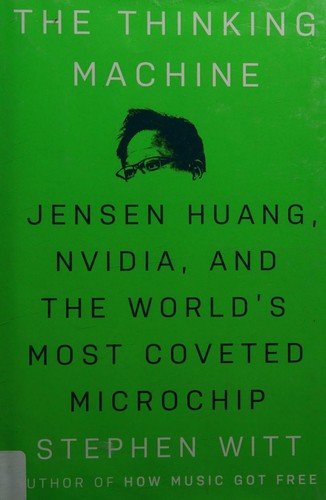
The story of NVIDIA and Jensen Huang: how a video-game card company ended up making the most coveted resource on the planet.
As an Amazon Associate, Zendoric earns from qualifying purchases; the price does not change for you. · all our recommended books →
By TechCrunch · July 9, 2026.
Elon Musk has made a 180-degree turn on Anthropic. In September 2025 he wrote that "winning was never among the possible outcomes" for the company; this week, on X, he admitted he was wrong and called it the undisputed leader in AI, claiming that "no other lab has released a model as good as Mythos/Fable" and that Mythos 2 will arrive soon. The change in tone is no accident: since May, Anthropic has been buying from xAI (merged with SpaceX in February) the entire output of the Colossus 1 data center, near Memphis, 300 megawatts of compute, for $1.25 billion a month through 2029 — some $40 billion in total for Musk's business. Google has a similar deal with SpaceX, $920 million a month through June 2029. Faced with users' suggestion that he could "unplug" Anthropic to harm a competitor, Musk replied that this "isn't his style," citing as precedents Tesla's pledge not to litigate patents against anyone using them in good faith, the opening of its Supercharger network, and the fact that SpaceX doesn't charge more for its service to rivals in satellite constellations.
The promise should not be taken at face value. Musk himself sued OpenAI, and during that trial he admitted before a court that "distillation" between AI companies —using fake accounts to extract, through massive prompting, how a competitor's model works— is a common practice in the industry ("AI companies generally distill other AI companies," he said). It is no minor detail: in February, Anthropic accused three Chinese developers of doing exactly that with Claude, an accusation that, like any charge of this kind, should be treated as one party's claim rather than a proven fact. That the infrastructure training and serving Anthropic's models now runs on the servers of a direct competitor —albeit presumably with technical and contractual safeguards— is, at the very least, a situation of visibility that no other rival of Anthropic has over its operations.
Our take: this news confirms a thesis we had already been pointing to when analyzing the distribution alliance between Google and Microsoft against OpenAI and Anthropic — competition in AI has shifted from the model to control of the "plumbing": energy, chips and data centers. Anthropic may have, according to the quality indices we track at Zendoric, the highest-performing model on the market with Mythos/Fable, and yet physically depend on the infrastructure of someone who was for years one of its most caustic critics. The real guarantees lie not in Musk's goodwill —volatile by definition, as his own litigious track record shows— but in the contractual clauses and in the enormous economic incentive SpaceX has not to break a $40 billion deal. It is, at bottom, the same pattern we already saw with Amazon hosting Anthropic's compute: dependence on someone else's infrastructure has become normalized as the cost of scaling, and the true indicator of the sector's maturity is no longer just which model scores highest, but what degree of auditability and traceability each lab demands from whoever lends it the hardware.
In the medium term this is a risk of power concentration that fits the uncomfortable part of our thesis: the fewer players that control the energy and data centers making it possible to train frontier models, the more fragile the competitive balance, and the more often we will have to trust that a handful of billionaires keep their word instead of a law. But in the long term, if these deals between rivals become widespread —Google and Anthropic buying compute from xAI, Amazon hosting Anthropic— it is also a sign that the real bottleneck of the abundance promised by AI, the available energy and silicon, is being resolved through cooperation forced by the market even among declared enemies. The irony that Musk needs Anthropic's $40 billion as much as Anthropic needs his megawatts is, paradoxically, a hint that the sector is beginning to weigh more as an interdependent industry than as the sum of isolated empires. That does not make the short-term risk irrelevant; it only indicates where the board of more compute for everyone is heading, if managed with the right governance.
📚 Go deeper
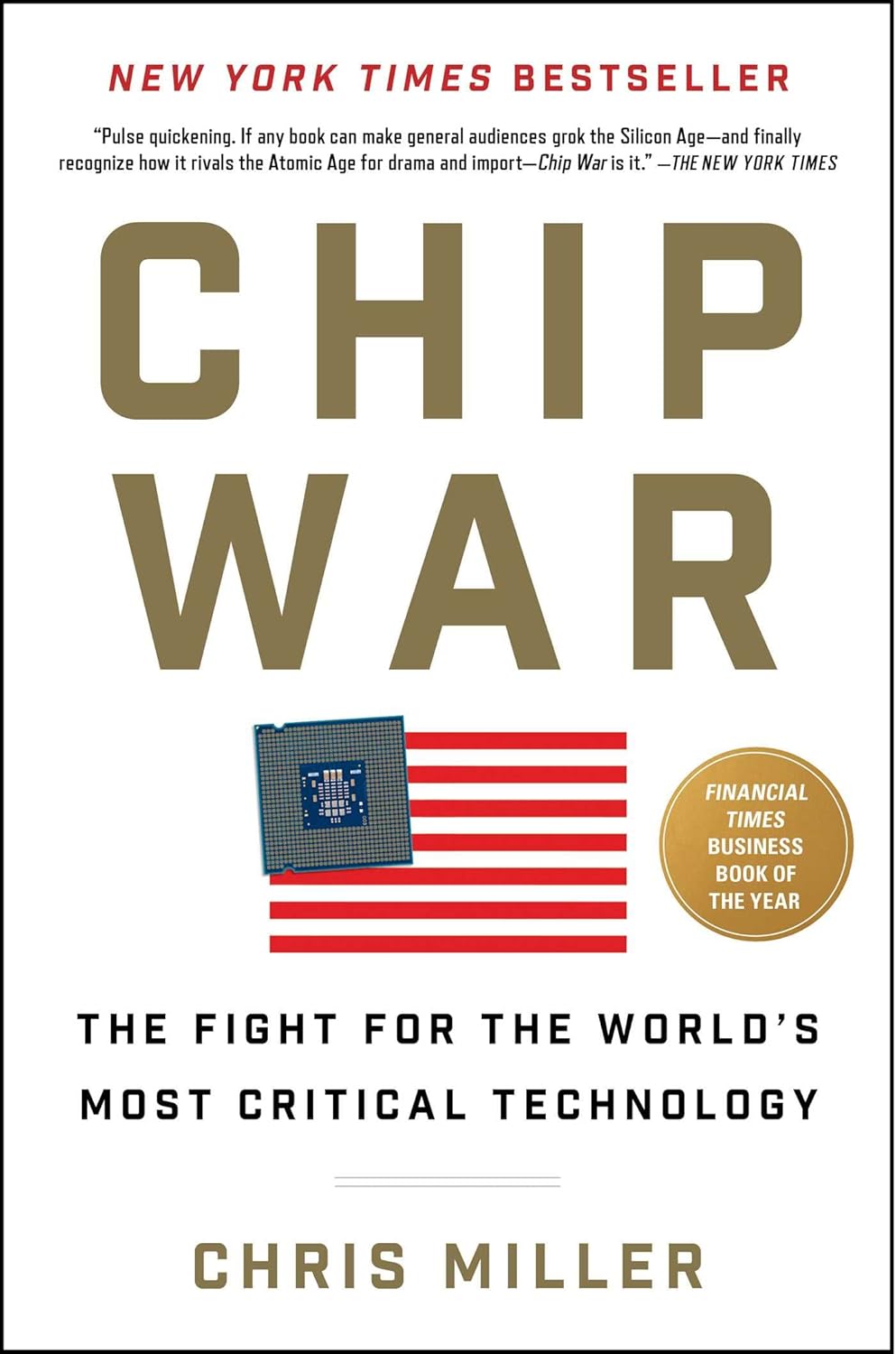
Semiconductors as the oil of the 21st century: history, espionage, and why an island of 23 million people underpins the entire AI economy.
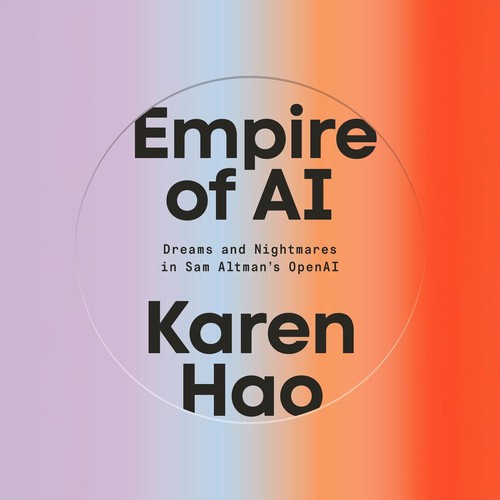
The definitive piece of investigative journalism on OpenAI: 260+ interviews, the clash between safety and speed, and the attempted firing of Sam Altma
As an Amazon Associate, Zendoric earns from qualifying purchases; the price does not change for you. · all our recommended books →
🔗 Related on Zendoric
- Meta negotiates renting its cloud to Anthropic, its rival in models, in a twist that betrays the real problem with its AI spending · 2026-07-19
- Alphabet's record profit is a mirage: AI burns through cash while its Anthropic bet soars on paper · 2026-07-24
- Anthropic's $40B compute lease from Musk turns AI safety into a supply-chain clause · 2026-07-28