Meta's non-invasive brain-to-text leaps to 68% — impressive lab feat, not a mind-reader yet

🕒 Published on Zendoric: July 9, 2026 · 00:21
✨ AI-generated · how it's made
Meta says it can now turn brain waves into text at 68% accuracy without surgery, up from a prior 8%. That is a genuine order-of-magnitude jump — but the gap between a lab demo and a device you'd trust with your thoughts is exactly where the real story lives.
📚 Go deeper

The reference manual for building products on top of AI models: prompts, RAG, fine-tuning, agents, evaluation and deployment.
As an Amazon Associate, Zendoric earns from qualifying purchases; the price does not change for you. · all our recommended books →
According to the note, Meta has unveiled a model that converts brain activity into text with 68% accuracy, a dramatic rise from a previous 8%, achieved without surgery using devices that read neural signals externally. Even discounting for the marketing gloss that accompanies any such announcement, an eightfold-plus improvement is a serious result. Non-invasive decoding is far harder than the electrode-implant work that grabs headlines, because reading the brain through the skull means fighting a much noisier signal — so progress here is progress on the harder problem.
Context matters, though. 68% accuracy is roughly two words right out of every three, which is a research milestone, not a usable interface — a keyboard that misfired a third of the time would be unbearable. And non-invasive setups have historically leaned on bulky, controlled lab hardware and cooperative subjects thinking in constrained ways. We should read "reads your mind" claims for what the demonstrated capability actually is: decoding intended or attempted language under lab conditions, not silently harvesting private thought. The distinction is not pedantic; it is the whole ethical and technical ballgame.
Why it matters, on our long-term view: this is one of the technologies that could genuinely restore what disease and injury take away. For people with ALS, stroke, or locked-in syndrome, a reliable non-invasive path to communication would be life-changing — no surgery, no infection risk, potentially far cheaper to scale. That is precisely the kind of abundance-of-capability we think AI ultimately delivers: giving voice back to people who have lost it.
Our reading: treat this as an encouraging waypoint, not an arrival. The near-term reality is transitional — accuracy still too low for daily use, hardware still tethered to the lab, and, crucially, a company whose core business is behavioral data now building tools that touch the most intimate signal of all. Neural data demands governance before it demands products; consent, on-device processing, and hard limits on secondary use should be settled early, not retrofitted after a launch. The long arc points toward restored communication and human augmentation we should welcome. Getting there responsibly is the part worth watching — and the part where who controls the technology matters as much as what it can do.
📚 Go deeper
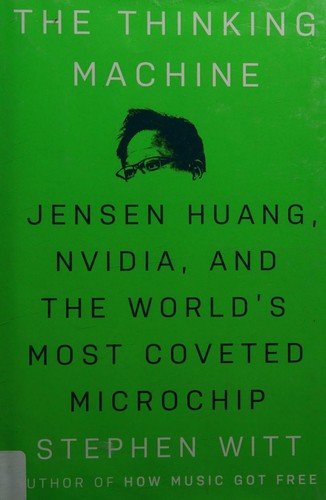
The story of NVIDIA and Jensen Huang: how a video-game card company ended up making the most coveted resource on the planet.

The best starting book if you're not technical: a Wharton professor explains how to work WITH AI — when to delegate, when to supervise, when to keep i
As an Amazon Associate, Zendoric earns from qualifying purchases; the price does not change for you. · all our recommended books →
🔗 Related on Zendoric
- Meta's non-invasive brain-to-text jump is real progress — and worth reading carefully · 2026-07-10
- When a decree shuts off an API: the Legion case exposes the fragility of building on a single AI provider · 2026-06-24
- Goldman's 15-Million-Job Warning: The Transition Cost Is Real, the Story Isn't Over · 2026-06-26