Chinese AI models gain ground in the US as OpenAI and Anthropic costs soar

🕒 Published on Zendoric: July 9, 2026 · 00:21
✨ AI-generated · how it's made
The CNBC article (July 7, 2026, by Kai Nicol-Schwarz) documents a significant shift in enterprise AI adoption in the United States: American companies are increasingly turning to AI models built in China —such as DeepSeek and Z.ai— as these…
📚 Go deeper
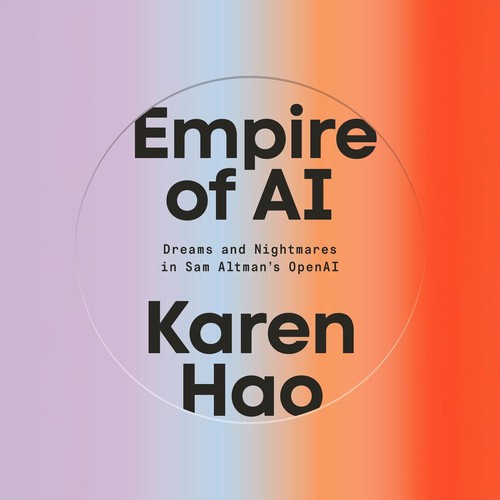
The definitive piece of investigative journalism on OpenAI: 260+ interviews, the clash between safety and speed, and the attempted firing of Sam Altma
As an Amazon Associate, Zendoric earns from qualifying purchases; the price does not change for you. · all our recommended books →
The CNBC article (July 7, 2026, by Kai Nicol-Schwarz) documents a significant shift in enterprise adoption of artificial intelligence in the United States: American companies are increasingly turning to AI models built in China—such as DeepSeek and Z.ai—as these close the performance gap with the frontier systems of OpenAI and Anthropic while proving substantially cheaper to use.
The central figure the piece provides comes from OpenRouter, a platform that lets developers access various AI models: the share of tokens U.S. companies consume on Chinese models has stayed above 30% every week since February 8, peaking at 46%. To put this in perspective, the average over the previous twelve months was just 11%, and in the first half of 2025 that figure fell to 4.5%. In other words, in little more than a year the usage share of Chinese models has multiplied several times over.
This shift is occurring against a backdrop of rising per-token prices at many of the most advanced U.S. labs, which has left companies grappling with higher-than-expected AI costs. According to Kyle Chan, a researcher at the John L. Thornton China Center at the Brookings think tank, cited in the article, "Chinese AI models are particularly attractive to U.S. companies now that AI costs are soaring," and he adds that, whereas companies once prioritized AI adoption regardless of the model, they are now far more cost-sensitive.
The article frames this surge of Chinese open-source and open-weight models at a moment when the U.S. administration is seeking to regulate its most powerful AI models and to assess how to curb the rapid adoption of foreign alternatives. It notes that, in late June, OpenAI agreed to limit the deployment of a new set of models at the government's request, and that export controls on Anthropic's Mythos and Fable models were also lifted that month, following a tense standoff between the Trump administration and the company.
As for specific adoption cases, the AI startup Lindy shifted 100% of its traffic in June from Anthropic's Claude models to DeepSeek, the Chinese company that broke through with a surprise launch in early 2025 and released a new model in April. Its CEO, Flo Crivello, told CNBC: "We did it, and you could see the cost curve go down, literally plummet." Crivello estimated the decision will save Lindy millions of dollars within a few months, and in a post on X he noted that the switch to DeepSeek V4 even improved performance across many of the company's core use cases.
The report also draws on data from Vercel, a platform for deploying applications and websites: DeepSeek's share of tokens handled through its gateway rose between May and June, and Z.ai's GLM 5.2 model, launched in June to great anticipation, recorded the fastest adoption of any model tracked by Vercel in 2026. Harpreet Arora, head of agentic infrastructure at Vercel, explained that in its first full week after launch the daily token volume grew roughly 27-fold and the number of customers using it multiplied about 80-fold. Arora sums up the dynamic with a line quoted in the article: "Price is what's doing the work here. When a task doesn't need the best model, teams start routing it to the cheapest model that's good enough, and the recent wave of models coming out of China is winning that bet."
On the cost difference, Justin Summerville of OpenRouter indicates that open-source Chinese models can be between 60% and 90% cheaper than the leading models from Anthropic and OpenAI (both companies were contacted by CNBC for the article, with no response reported). The piece also quotes Cien Solon, CEO and founder of LaunchLemonade, an AI-agent platform for regulated sectors, who notes that, while Claude and ChatGPT still dominate usage on his platform, GLM 5.2 is already among its five most-used models. According to Solon, "Chinese models like those from Z.ai and Qwen (from Alibaba) are becoming options for companies [because] they offer an attractive combination of performance and cost for specific workloads," and he adds that companies with more mature AI strategies are increasingly willing to use them when it makes technical or commercial sense.
In terms of performance, the article notes that Chinese models are approaching the frontier: Brookings' Chan estimates they operate "close to the leading U.S. frontier models," lagging "six to nine months" behind the U.S. leaders, despite costing only "a fraction" of what those cost. Summerville agrees that "the new open-source models are performing well and prove capable for all but the most complex LLM tasks." As a concrete benchmark data point, it is mentioned that GLM 5.2 came within less than a percentage point of Anthropic's Opus 4.8 on a well-known agentic benchmark, at roughly one-fifth of the cost, and that some researchers have noted GLM 5.2 can perform on par with the leading U.S. labs on certain cybersecurity benchmarks.
Finally, the article includes a warning from Yacine Jernite, head of machine learning at Hugging Face, about the structural risk this poses: "There's a real risk that users end up trapped having to choose between high-performing but expensive U.S. proprietary models, whose price and accessibility can fluctuate rapidly, or using Chinese models as the only viable alternative when they want to control costs or own their own AI infrastructure." This idea closes the article with a reflection on how price competition between the U.S. and China could, paradoxically, leave Western companies with fewer real options to control their AI technology stack, just as U.S. regulators try to restrict access to the country's most advanced models.
📚 Go deeper
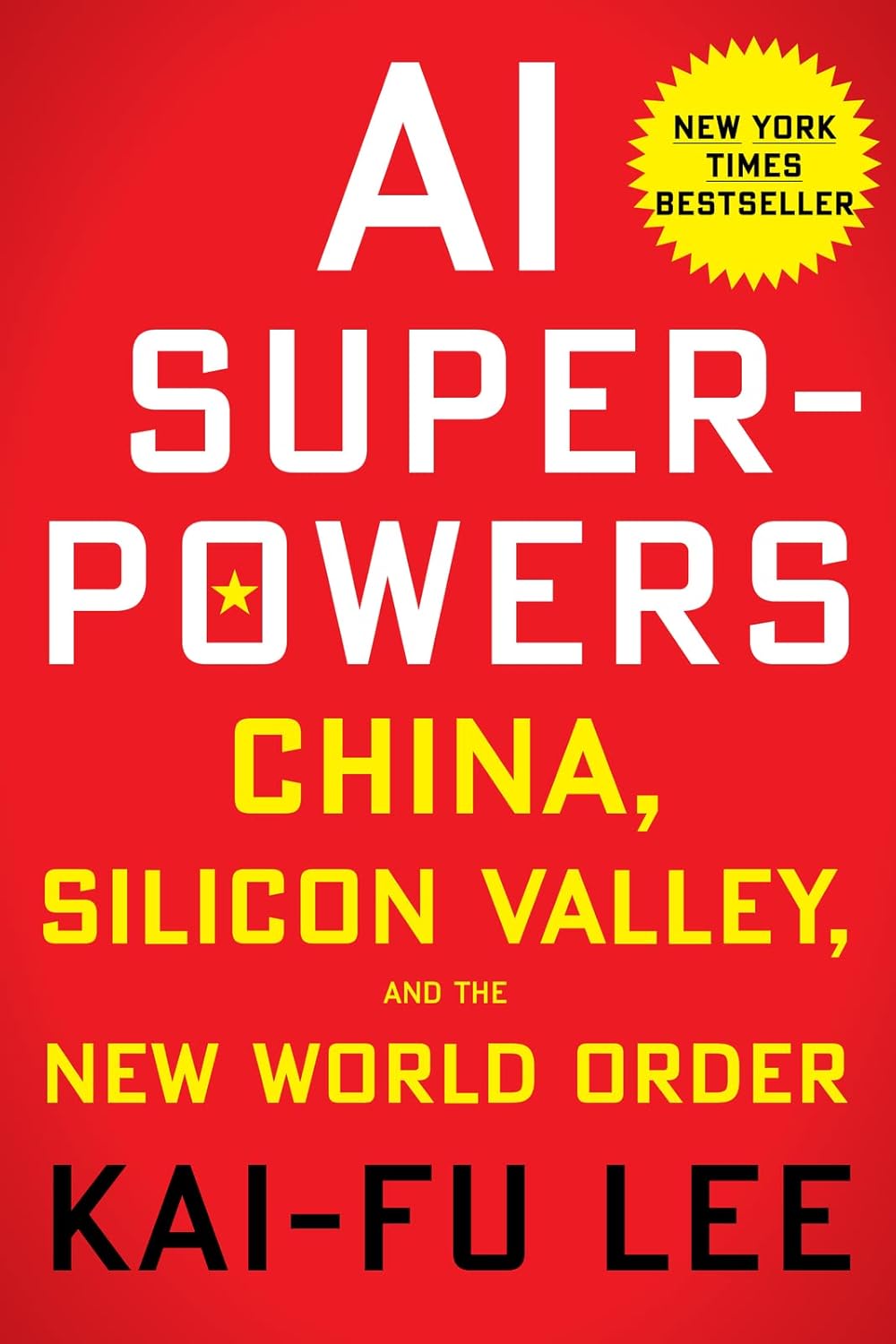
China vs.

DeepMind co-founder on the dilemma of containing technologies that do not want to be contained.
As an Amazon Associate, Zendoric earns from qualifying purchases; the price does not change for you. · all our recommended books →
🔗 Related on Zendoric
- Trump's secret battle against Chinese AI: a ban on open models that would benefit OpenAI and Anthropic? · 2026-07-22
- How users in China keep evading Anthropic's geographic restrictions to use Claude · 2026-07-04
- Anthropic closes the loopholes Chinese companies used to access Claude, according to the FT · 2026-07-07