Beijing weighs restricting foreign access to its most advanced AI models

🕒 Published on Zendoric: July 9, 2026 · 00:21
✨ AI-generated · how it's made
Reuters reveals, citing three sources familiar with the talks, that Chinese authorities have held meetings over the past month with the country's big tech firms to explore how to limit access from abroad to China's most advanced artificial intelligence models, including…
📚 Go deeper
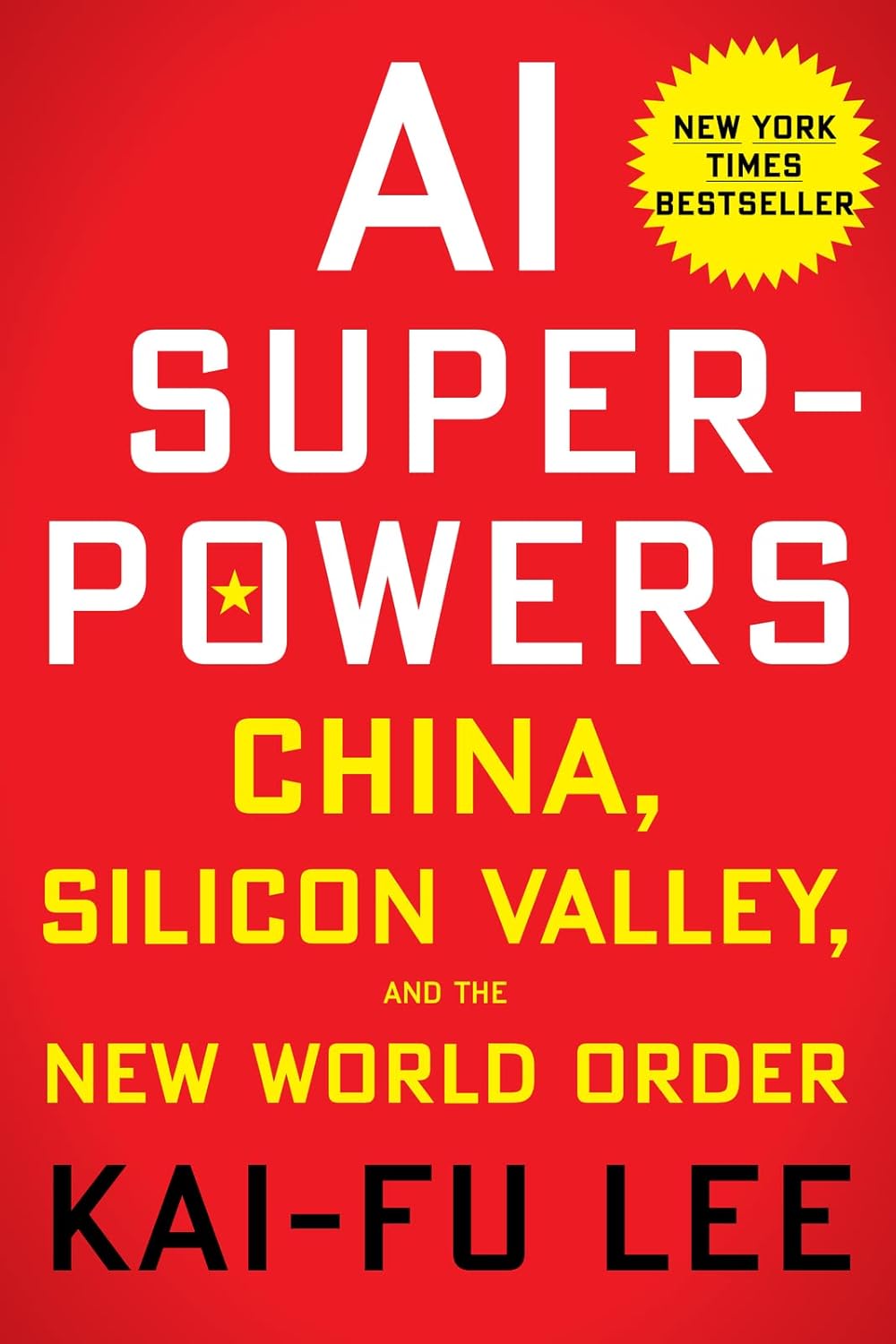
China vs.
As an Amazon Associate, Zendoric earns from qualifying purchases; the price does not change for you. · all our recommended books →
Reuters reveals, citing three sources familiar with the talks, that Chinese authorities have held meetings over the past month with the country's major tech companies to explore how to limit foreign access to China's most advanced artificial intelligence models, including some not yet released. The meetings, led by the Ministry of Commerce with the participation of the National Development and Reform Commission (the state planning agency), were attended by Alibaba, ByteDance and the startup Z.ai. None of the three companies nor the government bodies responded to Reuters' questions, which leaves the episode in the realm of the officially unconfirmed but backed by direct sources.
The backdrop is clear: since the emergence of DeepSeek's R1 model last year, Chinese models have gained ground globally thanks to their low cost and growing capabilities. Alibaba with its Qwen family and ByteDance with Doubao are among the most widely used within China, while the startup Z.ai has stunned Silicon Valley with its GLM-5.2 model, whose performance approaches that of the U.S. leaders but at a fraction of the cost. It is precisely that export success that Beijing now appears to want to bring under control: if restrictions are ultimately imposed, the article notes that costs could rise for numerous companies worldwide that today rely on these cheaper models.
The meetings discussed limits for both closed models and more open versions (open-weight ones), meaning it would not be only about protecting the intellectual property of proprietary systems, but also about controlling the spread of the versions that today can be freely downloaded, run and customized. In addition, officials raised the possibility of criminalizing, under China's strict national security law, any leak or theft of proprietary AI technology. The idea of establishing new restrictions on who can fund Chinese AI startups was reportedly also addressed, which points to greater scrutiny of foreign investment in the sector. Even so, the article itself underscores the uncertainty: the scope of the measures is still under discussion, could apply only to future models, and it is unclear whether, or when, they might materialize.
The parallel with the United States is one of the piece's central threads. The Trump Administration has shown growing concern that its own cutting-edge AI models could be used by military intelligence services in China, Russia or other countries deemed to pose a risk. In June, Washington ordered that foreign nationals not have access to the most advanced models from Anthropic, Fable and Mythos, which led the company to disable them globally for all users, as it could not verify nationality in real time. The restrictions on Fable, aimed at the general public, were lifted after new safeguards were introduced, but Mythos, designed for cybersecurity professionals, remains limited to a group of "trusted" U.S. organizations. The article also notes that some U.S. AI experts have called on Washington to likewise regulate the use of Chinese models, reinforcing the idea of a symmetrical escalation of controls in both directions.
On the Chinese side, the specific concern surrounding Mythos is revealing: according to two of the cited sources, authorities fear that this model could exploit software vulnerabilities and that Washington might come to use it against Chinese interests. That fear has also been expressed publicly by state media and by Zhou Hongyi, founder of the cybersecurity firm 360 and a major provider to government and corporate clients, who has stated that China needs to develop its own equivalent to Mythos. In other words, the concern is not only commercial or about intellectual property, but is explicitly framed within a logic of national security and the possible offensive use of AI between rival powers.
This move does not arise in a vacuum: the report recalls a series of earlier steps by Beijing in 2026 to keep national AI under domestic control. In April, the state planning agency ordered Meta to unwind its $2 billion acquisition of the Chinese-founded startup Manus. In early June, authorities issued sweeping rules to tighten control over foreign dealings involving Chinese investors, technology, data and national security. In addition, China opened investigations this year into Manus and other local AI startups that had moved abroad, to determine whether they had violated export control laws; Manus did not respond to Reuters' requests for comment.
A clue as to how a future regime of restrictions might be structured in practice comes from a roundtable of Chinese legal experts held in May on the regulation of open-source AI, whose summary was published in an official journal of the Supreme People's Court. Participants proposed a tiered system: basic open-source tools would be subject to a simple registration procedure; more advanced technologies would require security reviews; and the most sensitive frontier models would be outright barred from public release or restricted solely to domestic use. Although Reuters could not confirm whether this scheme will translate into final policy, it offers a plausible framework for how Beijing might differentiate between varying levels of capability and risk.
Taken together, the news documents a significant shift: China, which until now had pushed the aggressive export of its AI models as a lever of global technological and economic influence, is beginning to weigh treating its most advanced systems as a strategic asset worth protecting and controlling, in a manner symmetrical to how the United States already treats its own. If confirmed, the most immediate and tangible effect for the rest of the world would be the end—or at least the reduction—of the cost advantage that companies and developers outside China have been gaining from access to models such as Qwen, Doubao or GLM-5.2. It is worth stressing that, as the article is worded, these are ongoing discussions and not an already-approved policy: the text itself acknowledges that it is not even clear whether these restrictions will ultimately be implemented.
📚 Go deeper

The reference manual for building products on top of AI models: prompts, RAG, fine-tuning, agents, evaluation and deployment.
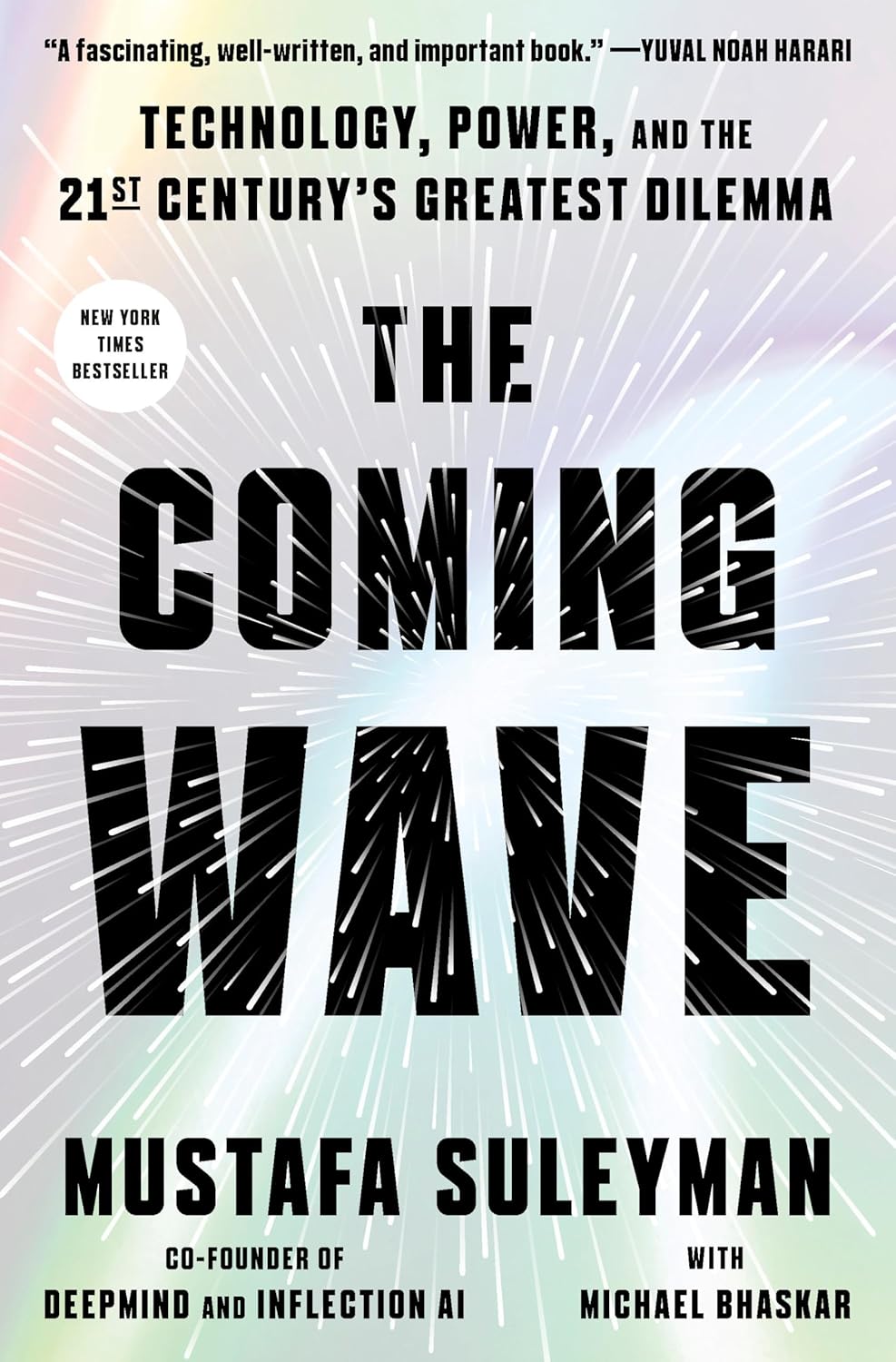
DeepMind co-founder on the dilemma of containing technologies that do not want to be contained.
As an Amazon Associate, Zendoric earns from qualifying purchases; the price does not change for you. · all our recommended books →
🔗 Related on Zendoric
- Trump's secret battle against Chinese AI: a ban on open models that would benefit OpenAI and Anthropic? · 2026-07-22
- CISA uses Anthropic's Mythos to audit government code despite tension with the White House · 2026-07-08
- The U.S. and China agree to hold their first AI dialogue under the Trump era in September · 2026-07-23