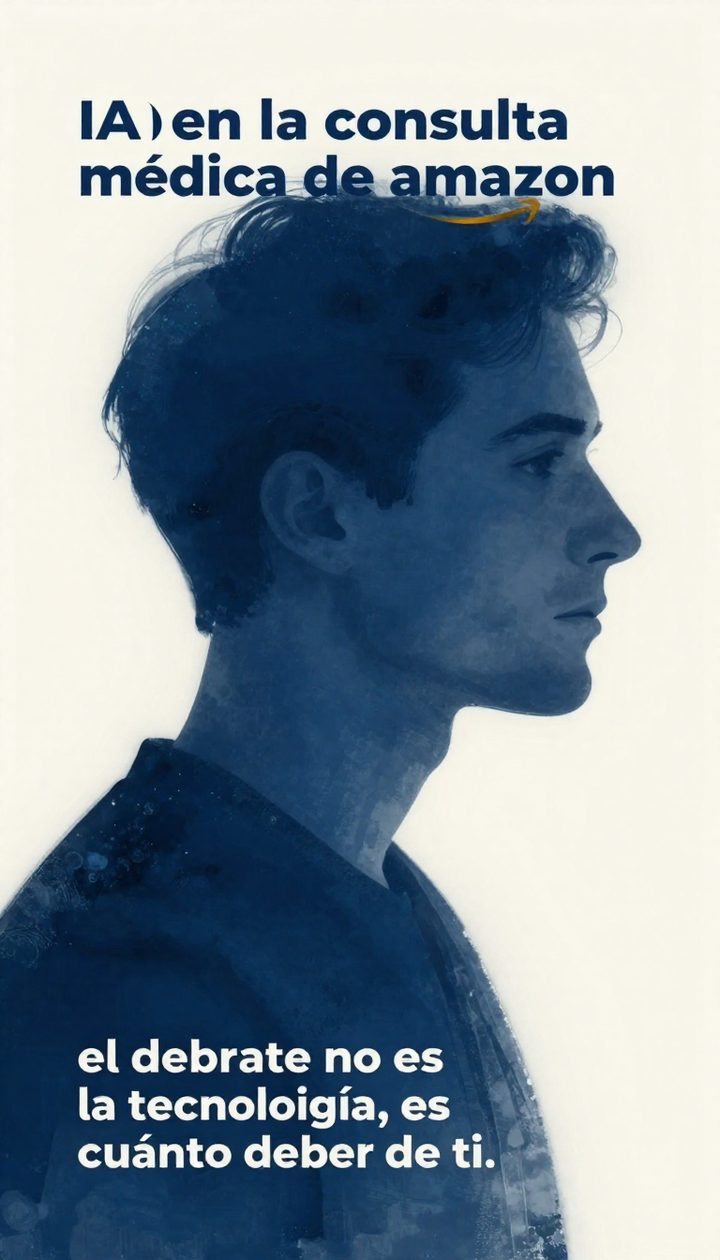
AI in Amazon's medical consultation: the debate is not the technology, it's how much it should know about you
🕒 Published on Zendoric: July 9, 2026 · 00:21
Amazon is bringing AI to its health services, and the immediate reaction is not enthusiasm but wariness: should an automated system review a patient's entire history before a consultation? The question matters more than any answer a headline might give.
📚 Go deeper
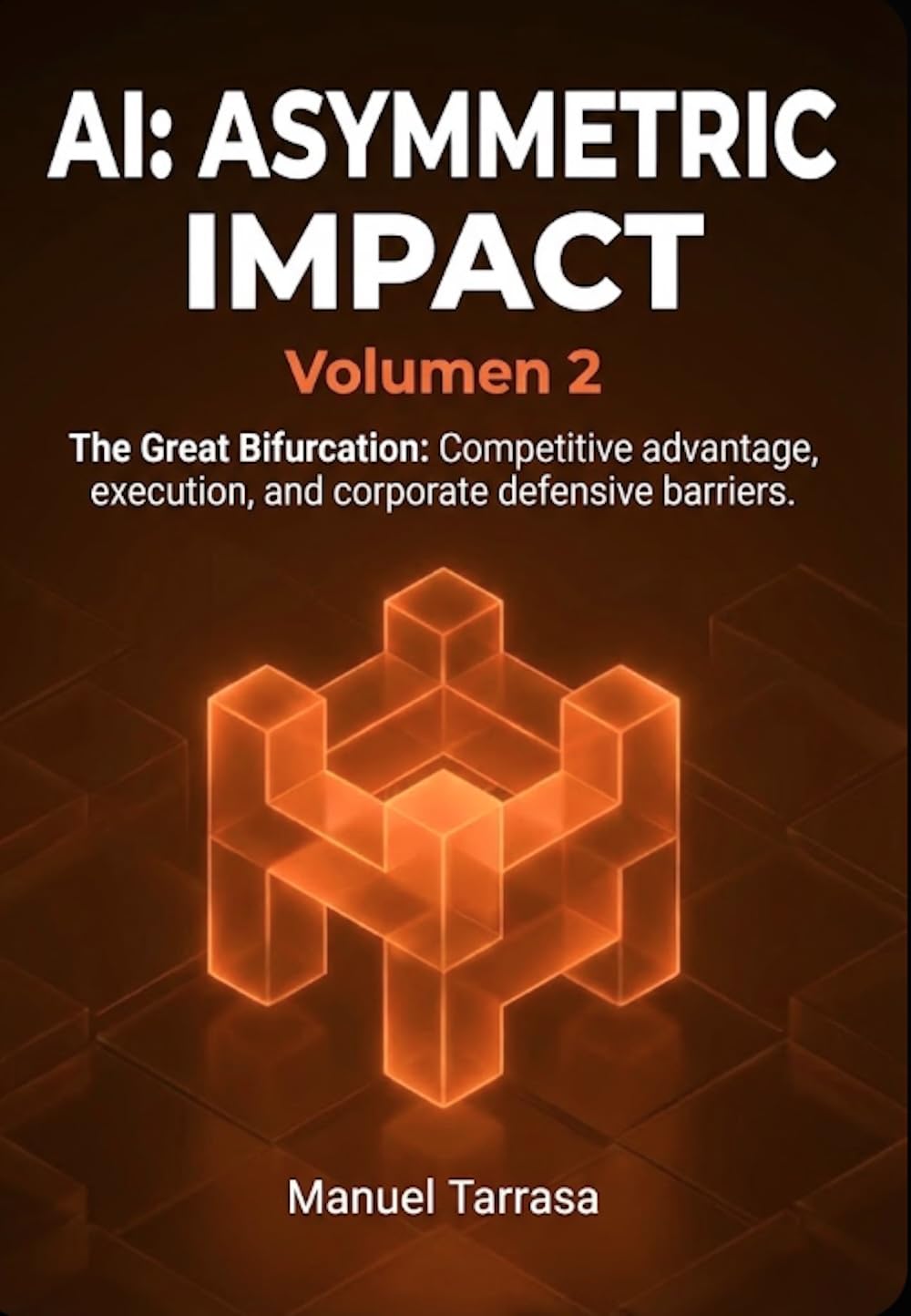
The same bifurcation seen from the boardroom: strategy, execution and defensive moats to reorganize a business around AI before your competitors do.
As an Amazon Associate, Zendoric earns from qualifying purchases; the price does not change for you. · all our recommended books →
We'll send you a confirmation email (double opt-in). Privacy.
By Yahoo · July 8, 2026.
The material available on this piece is scant —the original source could not be fully recovered— but the headline and the quote accompanying it, "Do we really want AI reviewing all this information?", are enough to identify the underlying issue: Amazon is moving forward with incorporating artificial intelligence into its medical services, and that incorporation is generating friction between patients and professionals over how much sensitive information should pass through an automated system before or during a medical visit.
Broadly speaking, Amazon has spent years building a presence in healthcare —One Medical, Amazon Clinic, Amazon Pharmacy— with the stated goal of making care faster and more accessible. Adding AI to that machinery follows a clear business logic: the more clinical context a system can synthesize before the patient speaks with a doctor, the more efficient the consultation is, in theory. The problem, and it is a genuine one, is not technical but a matter of trust: the medical record is one of the most intimate pieces of data that exists, and for a corporation with commercial interests in advertising, retail and now healthcare to have expanded access to it —even for clinical purposes— reopens data-governance questions that are not resolved by a promise of "only to improve your care."
Our reading: this kind of wariness is exactly the sort that should be taken seriously in the short term, and not out of alarmism. The distrust does not arise from AI being a poor diagnostic tool —in fact, the evidence accumulated in radiology, pathology and early detection points to real improvements—, but rather from the fact that the infrastructure for consent, auditing and usage limits almost always arrives after the product is deployed, not before. When the actor is a platform with a data-based business model, that asymmetry weighs even more heavily.
In the long term, however, the thrust of the thesis does not change: systems capable of cross-referencing complete medical histories, genomic signals and biomarkers are precisely the kind of capability that can bring us closer to detecting diseases before they become serious, personalizing treatments and, over time, narrowing the gap between "sick" and "healthy" that we today assume to be inevitable. The healthcare abundance that AI promises —accessible diagnosis, continuous monitoring, less human error from overload— will not arrive if these privacy questions are ignored; it will arrive if they are answered well. Whoever wins this phase will not be whoever deploys medical AI the fastest, but whoever manages to make patients trust it enough to let it look.
📚 Go deeper

A macroeconomic, sector-by-sector X-ray of how AI redraws the global chessboard over the coming decade, with the human factor at the center.

The best starting book if you're not technical: a Wharton professor explains how to work WITH AI — when to delegate, when to supervise, when to keep i
As an Amazon Associate, Zendoric earns from qualifying purchases; the price does not change for you. · all our recommended books →
🔗 Related on Zendoric
- NVIDIA and biomedicine: a glimpse of the future behind a cookie wall · 2026-06-25
- AI glasses in exams: when cheating beats the top 5 of the class, the assessment system has a bigger problem · 2026-06-28
- Breast cancer leaves traces six years earlier: AI can already see them, and that forces a rethink of the entire screening process · 2026-06-28
Sources & references
Get the analysis by email · free
One email a day analysing the AI essentials. Free, no spam, unsubscribe anytime.
We'll send you a confirmation email (double opt-in). Privacy.