Critical thinking, the asset AI can't replace, is the first casualty of its use in the classroom

🕒 Published on Zendoric: July 9, 2026 · 00:21
✨ AI-generated · how it's made
Surveys show a stark jump in less than a year: the share of students who fear AI will erode their ability to think for themselves has nearly doubled among high schoolers. Teachers' response isn't to ban the tool, but to teach students to interrogate it.
📚 Go deeper
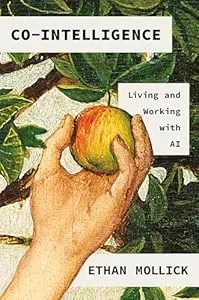
The best starting book if you're not technical: a Wharton professor explains how to work WITH AI — when to delegate, when to supervise, when to keep i
As an Amazon Associate, Zendoric earns from qualifying purchases; the price does not change for you. · all our recommended books →
By Education Week · July 8, 2026.
The data are striking and come from a source hardly given to alarmism: the RAND Corporation. In February 2025, 48% of middle school students in the U.S. said they were worried that the use of AI was harming their critical thinking. Ten months later, in December 2025, that figure had risen 20 points, to 68%. Among high school students, the concern went from 55% to 65% over the same period. These are not adults alarmed by a technology they do not understand: they are the users themselves, teenagers, saying they notice how outsourcing their thinking to a chatbot is taking a toll on them. Add to that a 2025 report from the College Board in which 87% of school principals say AI could reduce the development of their students' critical thinking, and 82% fear it will hinder deep engagement with academic content.
The institutional response is lagging, but it is picking up speed: according to Media Literacy Now, at least half of U.S. states already have media literacy laws, and eleven of them were passed just since January 2024. It is a sign that the education system has understood that classic media literacy—teaching students to tell a reliable source from a hoax—has fallen short in the face of AI-generated content, which has no identifiable author, is produced at nearly zero cost, and can sound authoritative without being so. On the ground, the response from the teachers featured in the article is pragmatic and fairly sensible: in Passaic (New Jersey), an acceptable-use rubric for AI is used as a starting point for the conversation in class; in Washington, an English teacher poses her students a simple but effective question—would you ask your teacher for this?—to draw the line between asking for help brainstorming (yes) and asking someone to write your entire essay (no). And for the problem of sources, the recommendation is to begin and end any use of AI with human judgment: human prompt, human reflection, and checking what the AI answers against other sources.
Our reading is that this news, though it talks about classrooms, is really news about the future of work, and it connects directly with something we have been pointing out in our analysis of AI's impact by sector: what resists automation is precisely judgment, expert reasoning, the ability to evaluate ambiguous information and make a reasoned decision. That is the asset that will be worth the most in an economy where AI handles the routine. The problem is the paradox this article reveals: if today's students outsource critical thinking to the very tool that is supposed to demand that critical thinking of them tomorrow, they are eroding exactly the skill that should protect them. It is not a problem with the technology itself, but with how it is integrated into pedagogy: used as a substitute for cognitive effort, it atrophies; used as scaffolding—to explore ideas, question answers, compare sources—it can reinforce precisely that capacity for independent reasoning.
In the short term, the diagnosis is uncomfortable and must be stated plainly: there is an entire generation of students growing up with access to a tool that can think for them, and neither curricula nor teacher training have had time to adapt to the pace at which the technology changes. The teenagers themselves notice it and say so out loud, which is an early warning sign worth taking seriously, not dismissing as passing moral panic. But over the long term, if schools manage to reshape the relationship with AI—from crutch to cognitive-scaffolding tool—the result may be a generation better trained to live in a world of informational and resource abundance, where scarcity is no longer of data or answers, but of the human capacity to discern which ones matter and why. That is, at bottom, the real curriculum of the coming century: not learning to compete with the machine, but learning to interrogate it better than anyone.
📚 Go deeper

The reference manual for building products on top of AI models: prompts, RAG, fine-tuning, agents, evaluation and deployment.
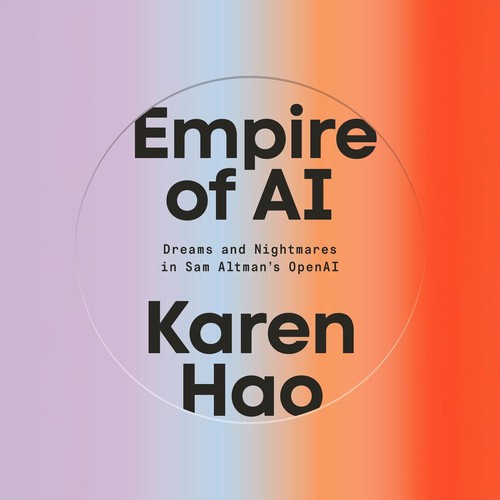
The definitive piece of investigative journalism on OpenAI: 260+ interviews, the clash between safety and speed, and the attempted firing of Sam Altma
As an Amazon Associate, Zendoric earns from qualifying purchases; the price does not change for you. · all our recommended books →
🔗 Related on Zendoric
- NYC starts the school year with no AI rules: the largest city in the US tests how to tame artificial intelligence in the classroom · 2026-09-02
- From copier to tutor: how teachers can turn AI into a real learning tool · 2026-06-28
- AI to retain teachers: when the algorithm acts as a critical mirror for school principals · 2026-07-01