Robots against robots: the U.S. floats a record defense budget to win the autonomous race

🕒 Published on Zendoric: July 9, 2026 · 00:21
A panel of former military and finance figures gathered in Charlotte anticipates that the largest defense budget in U.S. history will accelerate drones, robotics and autonomous AI systems. Behind the local headline lies an uncomfortable thesis: much of the next wave of AI is being funded to wage war, not to cure it.
📚 Go deeper

A macroeconomic, sector-by-sector X-ray of how AI redraws the global chessboard over the coming decade, with the human factor at the center.
As an Amazon Associate, Zendoric earns from qualifying purchases; the price does not change for you. · all our recommended books →
We'll send you a confirmation email (double opt-in). Privacy.
By The Charlotte Ledger · July 8, 2026.
At a Charlotte Economics Club luncheon, a panel made up of retired Lieutenant General David Beydler (former head of Marine Corps Forces for Central Command), Army veteran Jeff Harrick (Huntington Bank) and Erik Berdy (Michael Best Strategies) agreed on a diagnosis: the Trump Administration's budget proposal, put by the speakers themselves at $1.5 trillion for defense, marks the start of an era of "massive autonomous robotic warfare," in Beydler's words. Their logic is simple and somewhat unsettling: "our robots have to be better than theirs," and that requires heavy spending on AI and autonomy to replace crewed military equipment with unmanned systems. The parallel the panelists themselves draw — with the postwar nuclear buildup or the shift to precision weapons in the 1980s — is revealing: they are not talking about an incremental improvement, but about a paradigm shift in how wars are fought.
The concrete facts are more modest than the headline: this was a regional economic-policy roundtable, not an official Pentagon announcement, and the $1.5 trillion figure is the speakers' reading of the budget proposal, not a datum independently verified in the article. What is clear is the framing shared by these financial-sector figures and former military officers: replacing arsenal depleted by the conflicts in the Middle East and support for Ukraine, and preparing for long-term competition with China. It is the same thesis we have been verifying in other reports on dual-use AI: the "we have to get there before they do" argument is frequently used to justify massive spending, even though the real capability — both one's own and the adversary's — is rarely subjected to the same scrutiny as the political argument.
The most useful fact in the article is not military but economic: the panelists insist that the bulk of defense money does not stay with the large contractors, but flows toward small suppliers, regional manufacturers and veteran-owned businesses, and that private capital — private equity funds included — is entering defense companies ever faster. It is the military version of a phenomenon we already see in civilian AI: when a sector becomes a strategic priority, private capital rushes to finance the infrastructure before clear governance rules exist. North Carolina, with Fort Bragg, Camp Lejeune and Cherry Point, illustrates the scale well: it is the fourth state in the country in military personnel, though only 17th in defense spending, which suggests that much of that future money in AI and autonomy will have to compete with states that have a more consolidated defense industrial base.
Our reading is that these kinds of episodes — regional panels, rounded figures, "race" rhetoric — are a more reliable thermometer of where real AI spending is heading than many headlines about frontier models. The militarization of AI is not a distant hypothesis: it is already an active funding line, and the technology's dual use (the same advances in autonomy, computer vision and planning that improve a domestic robot serve a combat drone) makes separating "good AI" from "war AI" almost impossible in practice. In the short term this is exactly the kind of tension not to be minimized: an AI-assisted arms race, fed by historic budgets and private capital without governance frameworks as mature as those of the civilian sector, is a genuine risk of power concentration and escalation, not a minor side effect.
That said, it is worth keeping historical perspective: much of the technology that today sustains the promise of abundance — the internet, GPS, modern semiconductors — was born of defense programs before spilling over into civilian life. If something similar happens with the autonomous robotics and AI the Pentagon funds today, it would not be far-fetched for part of that investment to end up, within a decade, accelerating the industrial automation, medical logistics or care robotics that underpin our long-term thesis. But that requires the governance of these dual-use technologies to advance at the same pace as the spending, something this Charlotte panel, focused on investment opportunities, does not even mention as a problem.
📚 Go deeper

The story of NVIDIA and Jensen Huang: how a video-game card company ended up making the most coveted resource on the planet.
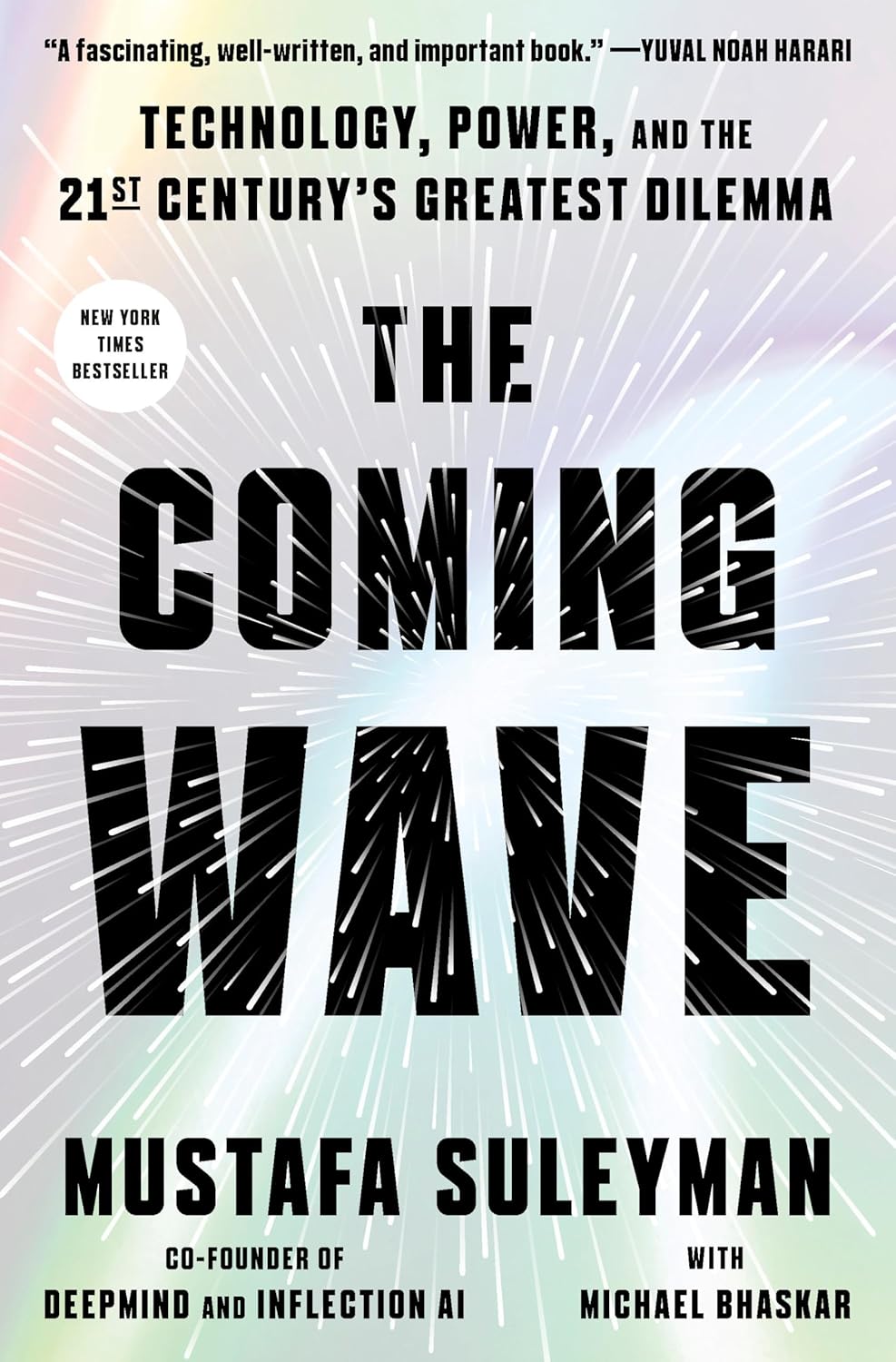
DeepMind co-founder on the dilemma of containing technologies that do not want to be contained.
As an Amazon Associate, Zendoric earns from qualifying purchases; the price does not change for you. · all our recommended books →
🔗 Related on Zendoric
- The Pentagon centralizes command of its drones: military AI enters its industrial phase · 2026-07-02
- SoftBank bets its future on superintelligence: Son turns record profits into ammunition to dominate the AI era · 2026-06-25
- The uncomfortable question about AI is not whether it works, but who pays the bill · 2026-06-27
Sources & references
Get the analysis by email · free
One email a day analysing the AI essentials. Free, no spam, unsubscribe anytime.
We'll send you a confirmation email (double opt-in). Privacy.