CISA audits its own code with Anthropic's AI while the White House remains at odds with the company
🕒 Published on Zendoric: July 7, 2026 · 03:25
✨ AI-generated · how it's made
The US cyber defense agency is using Mythos, Anthropic's model specialized in finding vulnerabilities, to scan government repositories, according to Reuters sources. The paradox: the same government that placed Anthropic on a supply-chain risk list now relies on its technology to protect itself.
📚 Go deeper

The definitive piece of investigative journalism on OpenAI: 260+ interviews, the clash between safety and speed, and the attempted firing of Sam Altma
As an Amazon Associate, Zendoric earns from qualifying purchases; the price does not change for you. · all our recommended books →
By Reuters · July 6, 2026. CISA's Attack Surface Assessment team, at the U.S. cyber defense agency, is using Mythos —the Anthropic model described as extremely capable at finding and exploiting cybersecurity vulnerabilities— to audit federal government code repositories in search of flaws that could open the door to foreign spies and cybercriminals. According to three sources cited by Reuters, the audits have already uncovered a considerable number of vulnerabilities, though their severity and how much code has been reviewed have not been specified. Neither Anthropic nor CISA has confirmed details of the program.
What is striking about the case is the political context in which it is happening. Anthropic maintains a turbulent relationship with Washington: in February, after refusing to remove the safeguards that prevent its AI from being used for autonomous weapons or domestic surveillance, the Pentagon imposed a formal supply-chain risk designation on it, a label previously reserved for foreign companies suspected of facilitating espionage. A judge blocked that measure in March, but the tension has not entirely disappeared: when Anthropic released the public version of Mythos (dubbed Fable, with built-in cybersecurity safeguards), the White House abruptly demanded that its use be barred for foreign users, which triggered a global blackout of the model that was only lifted last week. Meanwhile, the NSA had already been using Mythos since April despite the blacklist, as Axios had reported, and agency analysts were reportedly impressed with its capabilities in classified environments, according to The New York Times.
This contradiction —blocking a company on national security grounds while two of the country's most sensitive agencies operationally depend on its product— is not an isolated bureaucratic oversight, but a symptom of something more structural: when a technology reaches a real and verifiable level of capability, politics tends to lag behind operational necessity. Our own cybersecurity indices (which prioritize unsaturated expert tasks, not benchmarks where everyone scores top marks) place Anthropic's models among the strongest in the sector at vulnerability detection, alongside OpenAI's. That it is precisely this capability that now protects critical U.S. infrastructure, while the White House argues with the company over other matters, confirms that in AI geopolitics and engineering advance along separate, and often opposing, tracks.
There is also an underlying tension worth naming: a tool capable of finding and exploiting vulnerabilities with that effectiveness is, by design, dual-use. What today audits government code to shield it could tomorrow —in other hands, without the same safeguards— be used to attack it. That is exactly the logic that led the Pentagon to place Anthropic on the risk list, and the same one that today makes it impossible for CISA and the NSA to do without the tool. It is not a contradiction resolvable with a press release; it is the kind of dilemma that will define the governance of national security AI in the coming years, and that demands more mature rules than a political tug-of-war depending on which agency wins the internal argument that week.
Over the longer term, the episode reinforces a thesis we have been putting forward: AI applied to cybersecurity can tip the balance toward defense, if deployed with judgment and transparency, helping to shield critical infrastructure before hostile actors do. But that benefit only materializes if governments stop treating their most capable providers as suspects and collaborators at the same time. Anthropic, which has already confidentially filed for its IPO, now has a weighty argument to make to Washington: it is not just a research lab with inconvenient scruples, it is a piece that the U.S. national security machinery can no longer remove from the board without cost.
📚 Go deeper

The best starting book if you're not technical: a Wharton professor explains how to work WITH AI — when to delegate, when to supervise, when to keep i
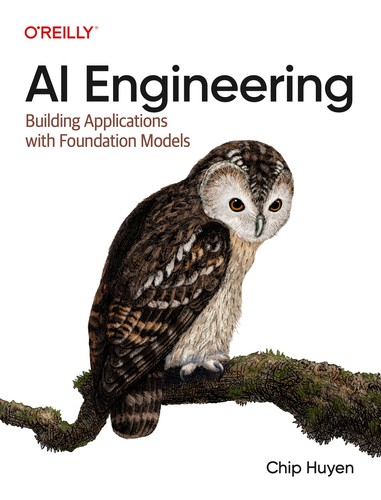
The reference manual for building products on top of AI models: prompts, RAG, fine-tuning, agents, evaluation and deployment.
As an Amazon Associate, Zendoric earns from qualifying purchases; the price does not change for you. · all our recommended books →
🔗 Related on Zendoric
- CISA uses Anthropic's Mythos to audit government code despite tension with the White House · 2026-07-08
- Dimon compares Mythos to 'ballistic missiles': when Wall Street calls for limits on AI that hunts vulnerabilities · 2026-07-16
- When the state shuts down a model: the Fable 5 case redefines who's in charge of frontier AI · 2026-06-25