The end of per-seat SaaS: Gartner puts at $234B the spending that agentic AI will redistribute

🕒 Published on Zendoric: July 7, 2026 · 03:25
Gartner predicts that between now and 2030 AI agents will shift $234 billion in enterprise software spending, breaking the link between user count and revenue that has sustained SaaS for two decades. GitHub, Zendesk and Workday have already begun changing their pricing models.
📚 Go deeper
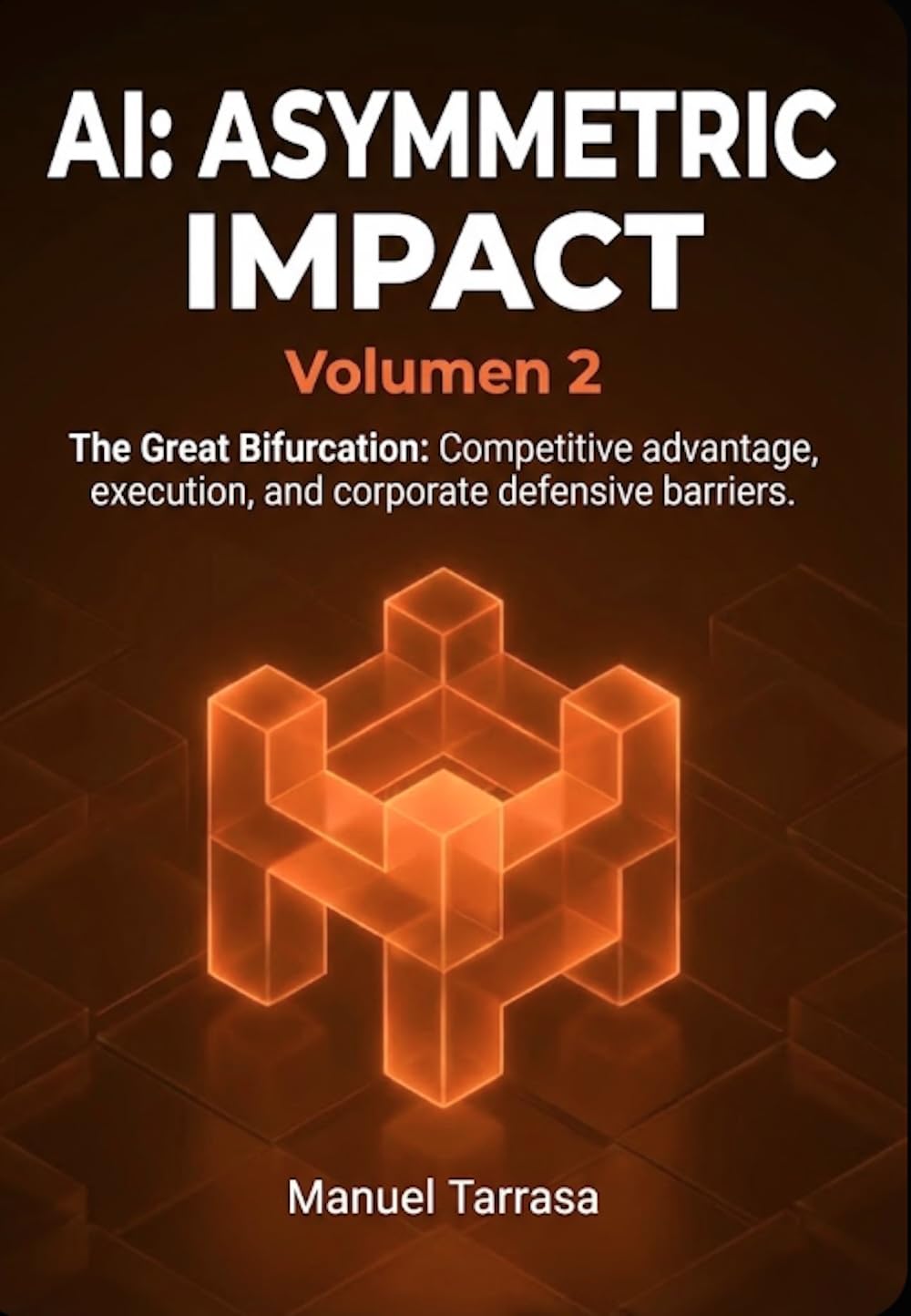
The same bifurcation seen from the boardroom: strategy, execution and defensive moats to reorganize a business around AI before your competitors do.
As an Amazon Associate, Zendoric earns from qualifying purchases; the price does not change for you. · all our recommended books →
We'll send you a confirmation email (double opt-in). Privacy.
By CIO Dive · July 6, 2026.
Gartner has published a report that puts a figure on something the sector had been sensing for months: agentic AI will displace up to $234 billion in enterprise software spending by 2030. The underlying reason is simple and devastating for the classic SaaS business model: when an agent completes tasks across several systems without a human having to open a dashboard, log in or navigate an interface, the link between "more users" and "more revenue" —the engine that has fueled the valuations of Salesforce, Workday or Zendesk for twenty years— starts to break down. According to George Brocklehurst, a Gartner VP cited in the report, the pricing adjustments stemming from this dynamic will account by 2030 for around 20% of companies' total SaaS spending.
It is not an abstract prediction: it is already happening. In June, GitHub dropped its flat rate for "premium requests" and moved to charging for input, output and cache tokens by model. Zendesk and Workday have also redesigned their pricing structures this year. It is the practical confirmation of what some began calling in early 2026 the "SaaSpocalypse": the fear that the new AI models would empty of meaning the seat-and-dashboard software that has been the corporate standard since the cloud era.
What is interesting about the report is not so much the diagnosis —already widely shared in the sector— as the map of winners Gartner draws. Those who defend their legacy dashboards and their per-user fees will not survive, but those who build horizontal platforms capable of orchestrating complete workflows across different systems will, while also capturing the customer's context and institutional memory over time. That is: value shifts from "selling access to a tool" to "delivering an outcome," and whoever manages to insert their agentic layer at the exact point where work is executed —not where clicks happen— is the one who will capture both existing spending and the incremental budget that appears when the customer starts to see real ROI.
This connects directly with something we have already pointed out at Zendoric when analyzing the rivalry between Google and Microsoft over agent standards: the war is no longer waged solely over model quality, but over who controls the integration, the orchestration and the "plumbing" between systems. This Gartner report is the dollar translation of that thesis. AI-native startups and service providers that redesign entire workflows around agents now have a huge economic incentive to position themselves as that horizontal layer, while traditional SaaS vendors —however solid their current products— face what the report itself describes, without mincing words, as an existential threat if they do not adapt.
Our reading is that this shift is consistent with the hard but necessary transition we defend as an underlying thesis: in the short term there will be painful restructuring within the software industry —entire business models will become obsolete, and with them jobs tied to license sales, support and per-seat management—, but the underlying result is a more efficient allocation of resources. When the price of software stops depending on how many employees use it and starts depending on what results it produces, the door opens for extremely powerful tools to reach organizations that previously could not afford per-head licenses. It is exactly the kind of structural cost reduction that, sustained over time, pushes toward the abundance of technological capacity we defend as a long-term horizon: it is not that software disappears, it is that it stops being charged for access and starts being charged for value delivered, which —for the end customer, and in the long run for the sector itself— is an improvement, not a threat.
The real risk, and here caution is warranted, is that this transition concentrates in a few players capable of building those horizontal orchestration layers, replicating at the enterprise-infrastructure level the same power-concentration dynamic we already watch in the frontier models. Gartner speaks of "AI-native vendors" and "service providers" as those poised to benefit, but it does not clarify whether they will be dozens of players competing or a handful of dominant platforms absorbing the freed-up spending. That is the question that will define whether this restructuring of software spending ends up being a democratization of access to enterprise AI or a new form of technological toll.
📚 Go deeper

A macroeconomic, sector-by-sector X-ray of how AI redraws the global chessboard over the coming decade, with the human factor at the center.

The best starting book if you're not technical: a Wharton professor explains how to work WITH AI — when to delegate, when to supervise, when to keep i
As an Amazon Associate, Zendoric earns from qualifying purchases; the price does not change for you. · all our recommended books →
Sources & references
Get the analysis by email · free
One email a day analysing the AI essentials. Free, no spam, unsubscribe anytime.
We'll send you a confirmation email (double opt-in). Privacy.