Kerala deploys 625 AI cameras for traffic: the price of safety is total surveillance

🕒 Published on Zendoric: July 6, 2026 · 00:04
Thiruvananthapuram is launching a network of 625 AI cameras to detect traffic violations in real time. The official message is clear: 'you are under surveillance.' Behind the promise of safer streets lies a debate the whole world will have to resolve: where safety ends and control begins.
📚 Go deeper

AI as the latest chapter in the history of information networks, from gossip to the printing press to the algorithm.
As an Amazon Associate, Zendoric earns from qualifying purchases; the price does not change for you. · all our recommended books →
We'll send you a confirmation email (double opt-in). Privacy.
By Kerala Kaumudi · July 5, 2026.
The Indian state of Kerala has rolled out a system of 625 AI-powered cameras in Thiruvananthapuram, designed to automatically detect traffic violations and warn drivers that they are being watched at all times. The original headline captures the intent well: 'you are under surveillance' is not just a technical description, it is an explicit deterrent threat, part of the system's very design.
This kind of deployment is not a local anecdote. It is the umpteenth instance of a pattern repeating in cities around the world: China with its mass facial recognition, the United Kingdom with its thousands of AI-augmented CCTV cameras, the United States with license-plate recognition systems in constant expansion, and now India adding its own infrastructure. The difference between these deployments and the analog surveillance of past decades is qualitative, not merely quantitative: AI makes it possible to process, correlate and act on volumes of visual data that once required armies of human operators. An AI camera does not just record, it classifies, identifies, predicts and decides at a speed and scale that changes the very nature of the social contract between citizen and State.
The case in favor is solid and should not be dismissed lightly: traffic accidents kill more than a million people a year worldwide, and a substantial fraction of those deaths are due to avoidable violations — speeding, running red lights, reckless driving. If the technology verifiably reduces that figure, there is a real and measurable human benefit. The honest question is not whether AI can improve road safety, which it probably can, but under what guarantees it is deployed, who audits its use, what data is retained and for how long, and whether the same system built to fine a reckless driver can be repurposed tomorrow to track activists, journalists or political dissidents.
This is precisely the tension that will define the coming decade of technology governance: the same infrastructure of cameras, computer-vision algorithms and identification databases that reduces traffic accidents is, without changing a single line of code, an infrastructure of total social control. The difference between a legitimate public-safety system and an authoritarian surveillance apparatus lies not in the technology itself, but in the institutional safeguards, the transparency about its scope and the legal limits on its secondary use. India, like many democracies with oversight institutions still under development, faces this dilemma without the robust regulatory framework that ideally should precede this kind of mass deployment.
Our reading at Zendoric is that this kind of news, seemingly local and minor, is in fact the real testing ground for how AI is deployed in the everyday life of billions of people. While the public debate focuses on frontier models, benchmarks and geopolitical races between labs, algorithmic surveillance is already here, already operational, and already normalizing the idea that being watched constantly is the default price of living in a city. In the short term, it is reasonable to expect more deployments of this kind in more cities, with genuine safety benefits but also with a silent expansion of the state's surveillance capacity that is rarely reversed once installed. In the long term, the abundance and well-being that AI promises will only be compatible with individual freedom if societies manage to separate legitimate use —saving lives on the road— from illegitimate use —social control without democratic control. That separation is not made by technology: it is made by laws, courts and the political will to set limits on what AI can watch and for how long it can remember what it has seen.
📚 Go deeper
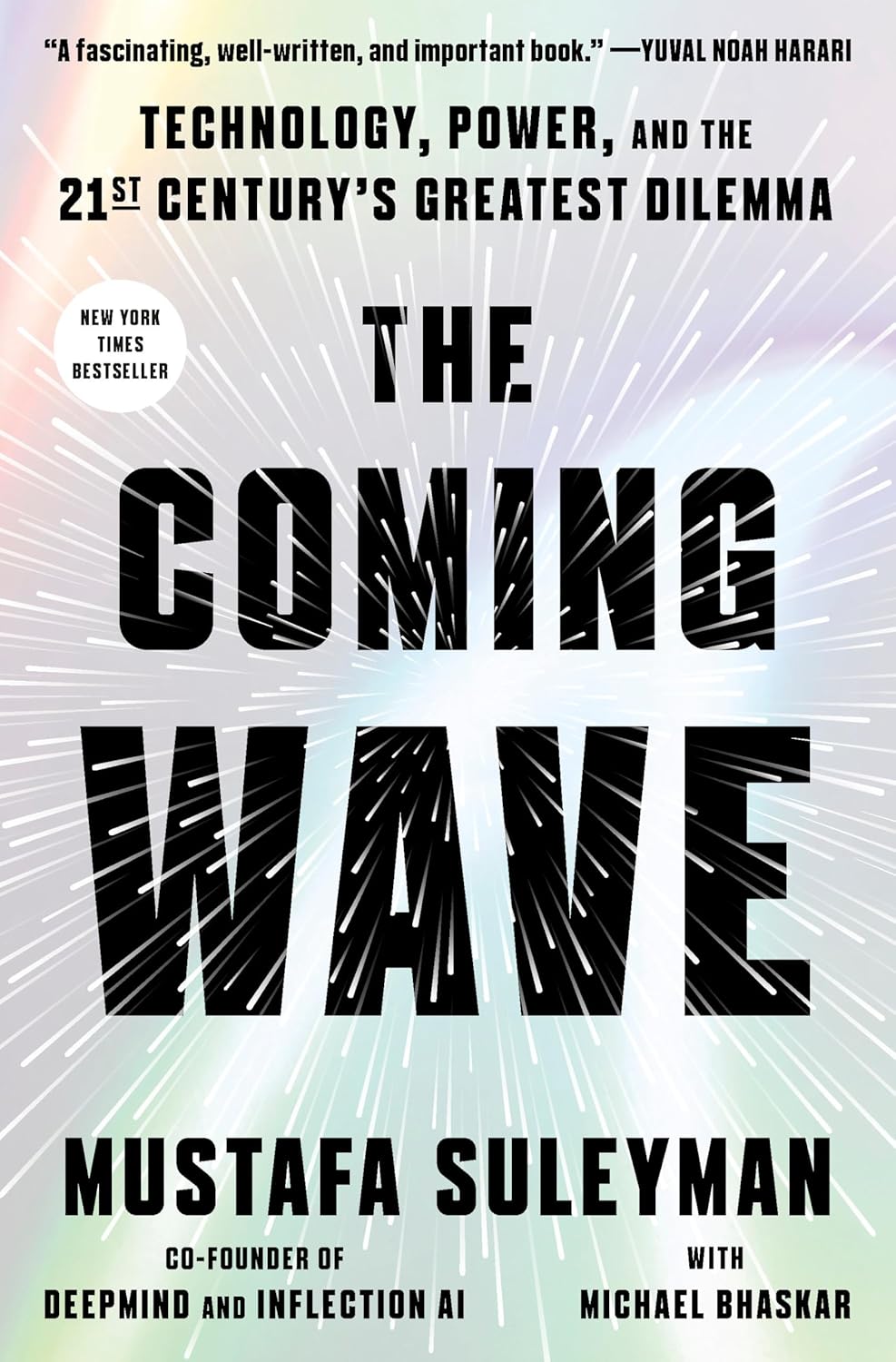
DeepMind co-founder on the dilemma of containing technologies that do not want to be contained.

The book that started the existential-risk debate and that half the industry still cites.
As an Amazon Associate, Zendoric earns from qualifying purchases; the price does not change for you. · all our recommended books →
Sources & references
- Kerala Kaumudi — Kerala deploys 625 AI cameras for traffic: the price of safety is total surveillance
- Business Empresarial — AI agents need traffic rules: ESET joins the race for their safety standards
Get the analysis by email · free
One email a day analysing the AI essentials. Free, no spam, unsubscribe anytime.
We'll send you a confirmation email (double opt-in). Privacy.