Durango bets on the teacher who masters AI, not the one who fears it

🕒 Published on Zendoric: July 6, 2026 · 00:04
The Universidad Juárez del Estado de Durango (UJED) has completed a program to train its faculty in the ethical and innovative use of artificial intelligence in teaching. It is a modest but meaningful gesture: the institutional response to the challenge of AI in the classroom starts with training, not banning.
📚 Go deeper
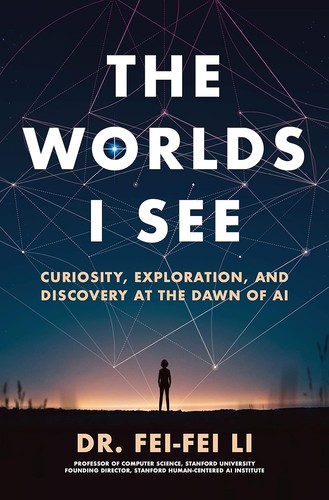
The memoir of the creator of ImageNet, the scientist who made the deep learning revolution in vision possible.
As an Amazon Associate, Zendoric earns from qualifying purchases; the price does not change for you. · all our recommended books →
We'll send you a confirmation email (double opt-in). Privacy.
By El Sol de Durango · July 5, 2026.
The news itself is brief: the UJED wrapped up a training course for its teaching staff focused on the ethical and innovative use of artificial intelligence in teaching. The article gives no participant figures, no details of the syllabus and no indication of who delivered it, so it is worth being honest about the limits of what we know: this is a specific, local data point, not a study nor a program with measurable results yet.
That said, the gesture matters more than its scant coverage suggests. While much of the public debate on AI and education revolves around panic —students cheating with chatbots, teachers banning their use, institutions reacting too late—, a Mexican public university has chosen to train its faculty in how to integrate the tool, not in how to ban it. That distinction is not cosmetic: it determines whether AI enters the classroom clandestinely and uncontrolled, or in a supervised way with pedagogical judgment.
In our reading of how AI is reshaping the education sector, the dividing line is not "teacher versus machine," but "teacher who orchestrates AI" versus "teacher who merely transmits content." The second profile is the most exposed to disruption, because much of the pure transmission of information can already be handled by a language model. The first —the one who uses AI to personalize, detect learning gaps, design more robust assessments or simply save administrative time— is the one who gains relevance rather than losing it. Courses like this, though modest in scale, are exactly the kind of transition infrastructure that is needed: not everyone will retrain on their own, and public institutions have a role to play in training their staff before adoption happens in a disorderly fashion.
What the article does not tell —and what would be the most interesting part— is whether this course had a measurable impact: whether it improved teaching planning, changed assessments, or generated controversy among the more reluctant faculty. That is the kind of follow-up that distinguishes an institutional press release from a genuine case study. For now, let us take it for what it is: a regional university that has decided that the best defense against the uncertainty of AI in the classroom is training, not denial. It is a small step, but in the right direction for the transition looming over the entire education system.
📚 Go deeper
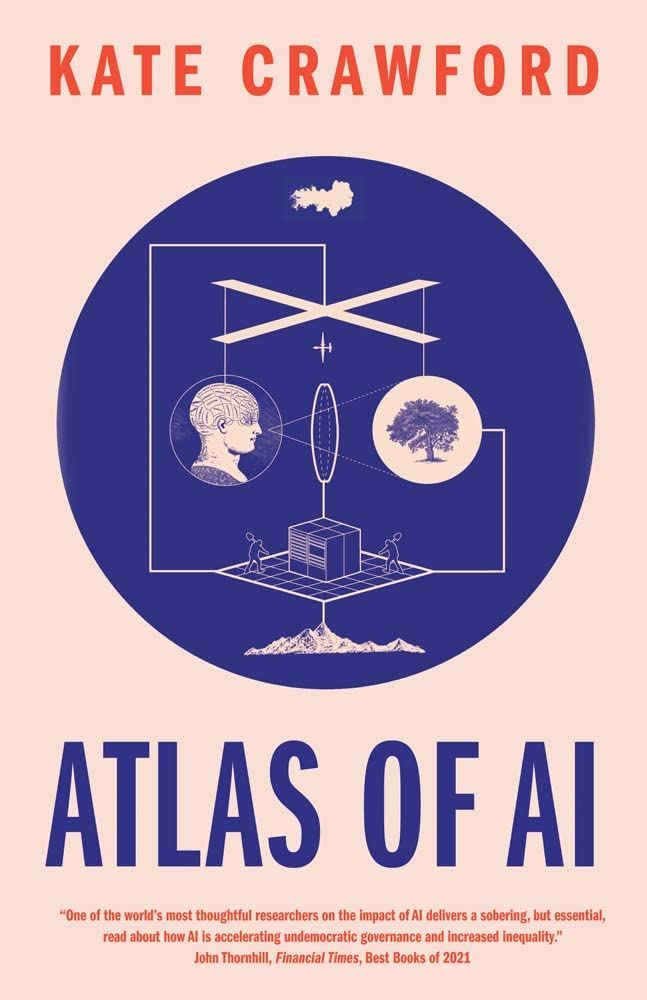
AI as an extractive industry: the lithium, the energy, the underpaid data-labeling work and the bodies behind the cloud.

The only novel on the list, by a Nobel laureate: an artificial friend observes humans with a blend of lucidity and innocence no essay achieves.
As an Amazon Associate, Zendoric earns from qualifying purchases; the price does not change for you. · all our recommended books →
Sources & references
Get the analysis by email · free
One email a day analysing the AI essentials. Free, no spam, unsubscribe anytime.
We'll send you a confirmation email (double opt-in). Privacy.