What pigeons teach us about training AI to detect cancer
🕒 Published on Zendoric: July 6, 2026 · 00:04
A new study explores how the behavior of pigeons trained to identify tumors in medical images could inspire better learning methods for diagnostic AI systems. The original piece is brief, so here we separate what is confirmed from what remains to be verified.
📚 Go deeper
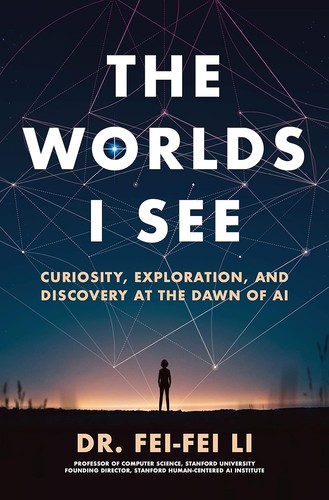
The memoir of the creator of ImageNet, the scientist who made the deep learning revolution in vision possible.
As an Amazon Associate, Zendoric earns from qualifying purchases; the price does not change for you. · all our recommended books →
We'll send you a confirmation email (double opt-in). Privacy.
By KXAN Austin · July 5, 2026. The material available on this story is limited —a headline and an agency description, without the full article at hand—, so it is best to be cautious with the specific technical details of the study KXAN mentions. What we can affirm solidly is the context: the idea of using pigeons as a model for visual cancer detection is neither new nor marginal.
As sector context, in 2015 a team led by Richard Levenson (UC Davis) published in PLOS ONE a widely cited study in which pigeons trained through reinforcement reached accuracy levels comparable to those of human radiologists when classifying mammography images as benign or malignant, both in color and in black and white, and even acting as a 'committee' to improve consensus. The relevant finding then was not that pigeons were better doctors, but that their visual system, trained by simple association, could discriminate complex pathological patterns without understanding what it saw in medical terms. That ability to 'see without understanding' is exactly the kind of process that computer vision systems also exploit.
If the current study returns to that line to inform the design of diagnostic AI architectures, the editorial interest lies in the methodological analogy: animals trained by conditioning offer a cheap and fast biological testbed to validate hypotheses about which visual features are truly discriminant in a medical image, before investing in the far more costly training of a neural network. It is bioinspiration applied to algorithm design, a field with precedents (insect vision for sensors, echolocation for radars) that rarely makes headlines but keeps producing useful engineering shortcuts.
Our reading is that this type of research, however modest it may seem next to the big model launches, fits the underlying thesis we hold at Zendoric: the combination of AI and comparative biology accelerates the path toward cheaper, more accessible and earlier diagnoses, a concrete step toward eradicating diseases that today depend on expensive scans and scarce specialists. The risk, as always in science communication, is that eye-catching headlines like 'AI learns from pigeons' oversimplify a hypothesis-validation process that is, in reality, considerably more tedious and rigorous than the headline suggests. Without the full article we cannot pin down the exact methodology or the figures of the current study, and we prefer to say so honestly rather than fill in with assumptions.
📚 Go deeper
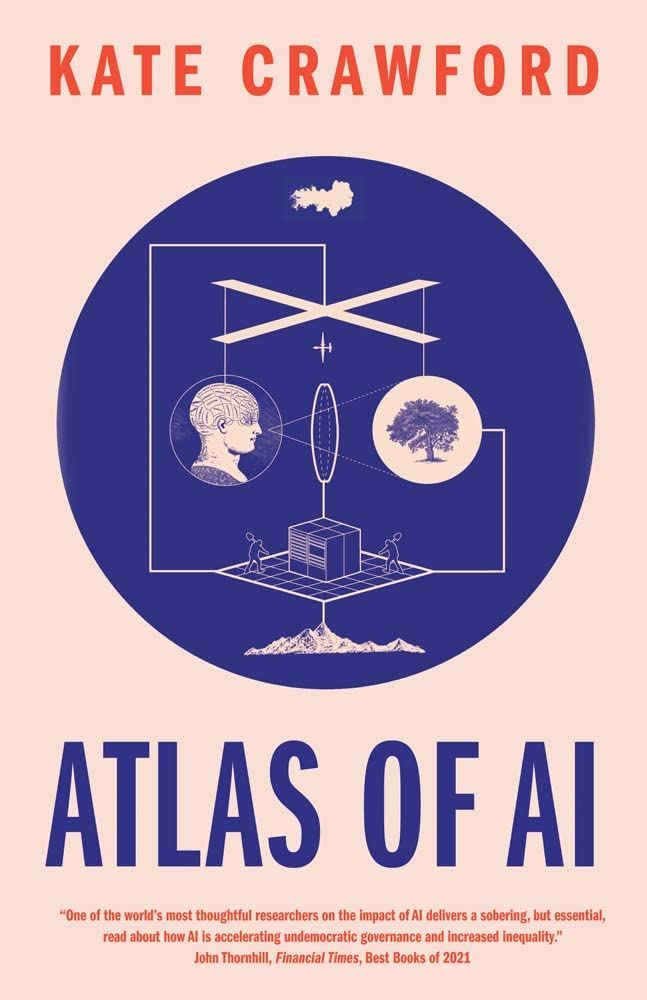
AI as an extractive industry: the lithium, the energy, the underpaid data-labeling work and the bodies behind the cloud.

The only novel on the list, by a Nobel laureate: an artificial friend observes humans with a blend of lucidity and innocence no essay achieves.
As an Amazon Associate, Zendoric earns from qualifying purchases; the price does not change for you. · all our recommended books →
Sources & references
Get the analysis by email · free
One email a day analysing the AI essentials. Free, no spam, unsubscribe anytime.
We'll send you a confirmation email (double opt-in). Privacy.