Microsoft's New Layoffs Show AI Is Restructuring Big Tech From the Inside Out

🕒 Published on Zendoric: July 6, 2026 · 00:04
✨ AI-generated · how it's made
Microsoft is reportedly preparing to cut up to 5,000 jobs across sales, consulting and Xbox next week, part of a broader pivot to redirect resources toward AI. It's the latest chapter in a year that already saw roughly 15,000 positions eliminated at the company.
📚 Go deeper
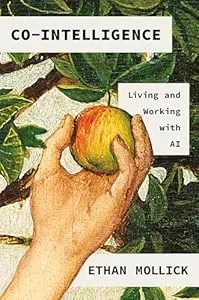
The best starting book if you're not technical: a Wharton professor explains how to work WITH AI — when to delegate, when to supervise, when to keep i
As an Amazon Associate, Zendoric earns from qualifying purchases; the price does not change for you. · all our recommended books →
Microsoft is reportedly gearing up for another round of layoffs, potentially affecting up to 5,000 workers starting next week, according to Business Insider via Fox Business. The cuts would hit sales, consulting and the Xbox gaming division, and come after a year in which the company already eliminated around 15,000 jobs across multiple rounds — roughly 6,000 in May 2025 and 9,000 in July 2025, which alone represented about 4% of its workforce. With roughly 228,000 full-time employees as of mid-2025, even a modest percentage cut translates into thousands of real careers disrupted.
The framing matters: this isn't presented as crisis-driven cost-cutting alone, but explicitly as reallocation toward AI investment. That's consistent with what we've tracked across the sector for months — technology companies are not just adopting AI tools, they're restructuring their entire organizational logic around them. Some employees facing cuts are reportedly being offered new roles internally, suggesting this is less a pure downsizing than a reshuffling of where human labor adds value versus where AI-driven automation and software now cover the same ground.
The Xbox angle is particularly telling. A division already under pressure — price hikes of $100-150 attributed partly to AI-driven demand for memory and storage — is now facing potential studio closures, mergers and project cancellations, with its CEO calling for an internal 'reset.' This illustrates a pattern we've flagged before: it's not just administrative and back-office roles being hollowed out, but entire consumer product lines being reconsidered as AI reshapes cost structures across supply chains, from chips to cloud infrastructure.
The stock market reaction — a roughly 19% monthly decline, among Microsoft's worst since the dot-com crash — adds a layer of investor anxiety that AI could cannibalize parts of the company's own software business, not just create demand for its cloud services. That's a nuance often missing from AI-employment narratives: the disruption isn't only about replacing workers, it's about replacing revenue lines that used to justify those workers' jobs in the first place.
Our reading: this fits squarely into the thesis we've built around AI and employment sector by sector — the pain is concentrated in administrative, sales and support functions, while the technology's own economics (compute, infrastructure, integration) become the new center of gravity for hiring and investment. Microsoft isn't abandoning workers for algorithms out of ideology; it's responding to a real shift in where value is created. The near-term human cost is legitimate and shouldn't be minimized — a partial voluntary retirement program absorbing a third of eligible employees doesn't erase the disruption for those who remain exposed. But the long-term trajectory we track holds: this transition, however uneven, is part of the same technological wave that will eventually free up capital and labor for higher-value, more human work — provided the transition is managed with real support for displaced workers, not just corporate reallocation toward AI capex.
📚 Go deeper

The reference manual for building products on top of AI models: prompts, RAG, fine-tuning, agents, evaluation and deployment.
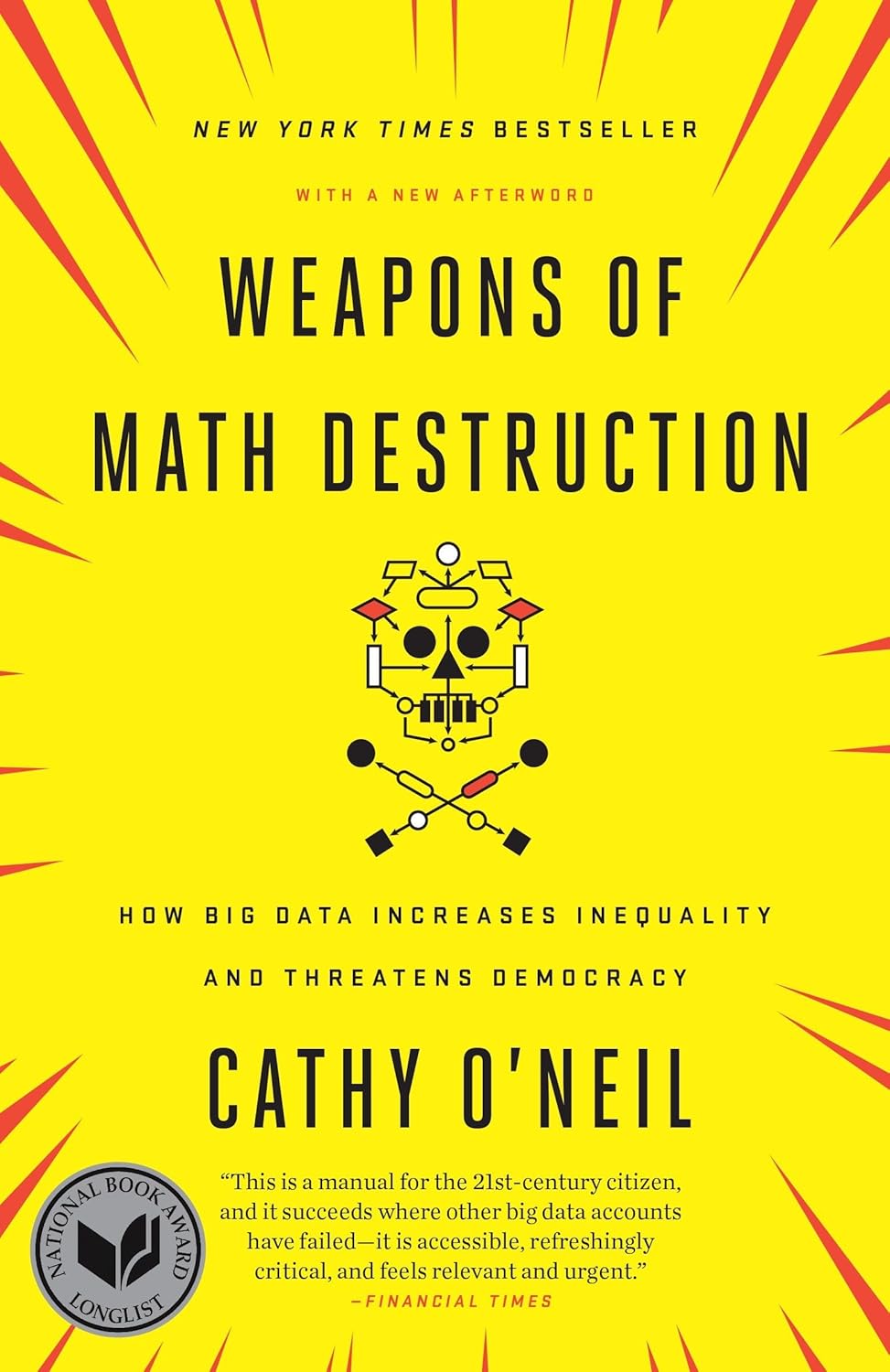
How opaque algorithms decide who gets credit, a job or parole — and why they tend to punish the same people.
As an Amazon Associate, Zendoric earns from qualifying purchases; the price does not change for you. · all our recommended books →
🔗 Related on Zendoric