Egypt inaugurates 'The Octagon': AI enters the military headquarters as state infrastructure

🕒 Published on Zendoric: July 6, 2026 · 00:04
Cairo is opening a state-of-the-art military command in its New Administrative Capital with artificial intelligence systems against cyberthreats and crises. Beyond the concrete, the move confirms that AI is now a standard component in the national security planning of regional powers.
📚 Go deeper

A macroeconomic, sector-by-sector X-ray of how AI redraws the global chessboard over the coming decade, with the human factor at the center.
As an Amazon Associate, Zendoric earns from qualifying purchases; the price does not change for you. · all our recommended books →
We'll send you a confirmation email (double opt-in). Privacy.
By Gulf Daily News (Reuters) · July 5, 2026.
Egypt inaugurated 'The Octagon' this past Saturday, July 4, a new military headquarters in the New Administrative Capital, with President Abdel Fattah Al Sisi, in his capacity as Supreme Commander of the Armed Forces, presiding over the ceremony. It is an eight-sided complex —hence its name— inspired by ancient Egyptian architecture and Islamic motifs, conceived as a nerve center for military operations, strategic planning and national crisis management. According to Egyptian authorities, the facility incorporates advanced digital systems, including artificial intelligence, aimed at strengthening the response to cyber threats, emergencies and evolving security challenges. The same official sources stress that it was built entirely by Egyptian experts and ranks among the largest military command centers in the Middle East and Africa.
The news, thin on technical detail —it does not specify which AI models, providers or architectures the center uses—, is nonetheless telling for what it normalizes: artificial intelligence has ceased to be an experimental add-on in defense and has become the declared backbone of a next-generation headquarters. That a state presents its military AI as a public-relations argument, on the same level as the building's monumental architecture, shows how far the narrative of 'AI-augmented command' has become a marker of geopolitical prestige, not merely a discreet capability.
This fits a trend we had already been observing in the region: the race to build defense infrastructure with integrated AI is not exclusive to the United States, China or the major tech powers; regional powers in the Middle East and Africa are also seeking to position themselves, partly in response to the proliferation of cyber threats and partly as a symbol of technological sovereignty. Egypt's emphasis on the center being 'built entirely by Egyptian experts' points precisely to that dimension: military AI, like cloud software or semiconductors, is becoming yet another vector of national strategic autonomy.
Our reading is twofold. In the short term, announcements of this kind —with minimal technical information and heavy symbolic emphasis— should be read with caution: 'AI for cyber defense and crisis management' is a description broad enough to cover everything from genuinely sophisticated predictive-analysis systems to conventional monitoring dashboards rebranded in the language of the moment. There is nothing in the material by way of independent verification of real capabilities, and it is worth not confusing inaugural rhetoric with evidence of technical sophistication. In the medium term, however, the underlying pattern matters: the region's military command infrastructure is being redesigned around AI as the default, not the exception, which will inevitably accelerate the debate over governance of these technologies' dual use —the same system that detects a cyberattack can, in theory, feed targeting decisions or internal surveillance. In that sense, every 'Octagon' inaugurated around the world is a reminder that the conversation about who controls and audits these military AI systems should advance at the same pace as their deployment, and not lag behind the concrete and the press releases.
📚 Go deeper
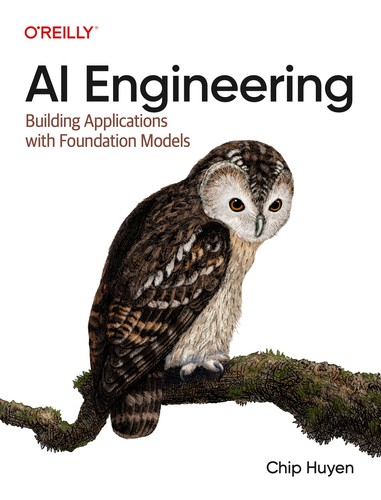
The reference manual for building products on top of AI models: prompts, RAG, fine-tuning, agents, evaluation and deployment.

The story of NVIDIA and Jensen Huang: how a video-game card company ended up making the most coveted resource on the planet.
As an Amazon Associate, Zendoric earns from qualifying purchases; the price does not change for you. · all our recommended books →
Sources & references
Get the analysis by email · free
One email a day analysing the AI essentials. Free, no spam, unsubscribe anytime.
We'll send you a confirmation email (double opt-in). Privacy.