The contract that says more than the company admits: the Amira Learning lesson in Portland

🕒 Published on Zendoric: July 6, 2026 · 00:04
An educational AI company denies collecting sensitive data from students in Portland, but its own contract included checked boxes to collect ethnicity, immigration status and disability. The case exposes the gap between legal clauses and actual practice in the era of AI in schools.
📚 Go deeper
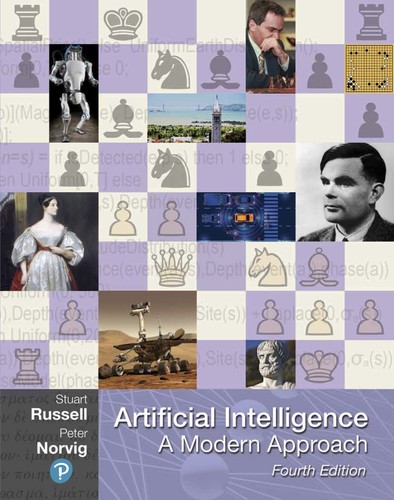
THE AI textbook: used by 1,500+ universities.
As an Amazon Associate, Zendoric earns from qualifying purchases; the price does not change for you. · all our recommended books →
We'll send you a confirmation email (double opt-in). Privacy.
By Willamette Week · July 5, 2026.
Amira Learning, the AI software that Portland Public Schools used in a reading pilot during the 2025-26 school year at ten schools for $5,160, sent a letter to the school board denying that it had collected student data. The response came after board member Stephanie Engelsman warned, at a June 15 meeting, about a contract appendix—obtained by WW through a public records request—that listed categories of data 'collected by the product,' with checked boxes that included place of birth, languages spoken, English-learner status, disability information, housing situation (including homelessness or foster care) and immigration status. Engelsman cautioned that this combination of data could be enough for federal immigration agents to identify a student or family and build a warrant, directly violating the new district student-access protection policy that Oregon is implementing to shield immigration-status information.
Amira's chief operating officer, Amy Scholz, responded that the committee discussion included 'inaccurate claims': the company never received, stored or used demographic information from PPS, and its software does not need it to work. According to the letter, the checked boxes identified categories that 'could' be shared if the district requested it for a research study on academic growth—a study that, she says, was never conducted, so no demographic data was ever exchanged. Amira adds that it rejects 'sensitive' data categories such as disability, housing situation or immigration status 'under any circumstances.' The company did not respond to why those boxes appeared checked in the contract if it never intended to use them.
This episode is small in scale but enormous in what it reveals about the current moment for AI in the classroom: the gap between what a legal contract says and what a company claims to do in practice. That the boxes were checked—whether due to a standard template, legal foresight or oversight—and that only after public scrutiny did the company clarify (without correcting the document) that this information 'was never used,' is exactly the kind of ambiguity that erodes trust in AI educational tools, even when the company is acting in good faith.
Our reading: this case is not about Amira being malicious, but about the ed-AI sector still operating with contracts drafted for maximum legal flexibility—checking every possible box 'just in case'—in a context where that flexibility has become dangerous. In a political climate where a student's immigration status can become a vector for surveillance, contractual opacity stops being an administrative detail and becomes a real risk for vulnerable families. School districts, pressed by tight budgets and the promise of improving reading outcomes with AI-assisted tutoring, are signing agreements without the technical and legal scrutiny the technology demands. Board vice president Michelle DePass summed it up honestly: surprised by the letter, but grateful the record was corrected.
In the long run, tools like Amira have genuine potential: AI-personalized reading tutoring can close learning gaps that public schools' limited human resources fail to address, and it is exactly the kind of application that, well governed, fits a vision of educational abundance accessible to every child, not just those who can afford private tutoring. But that future only arrives if data governance advances at the same pace as adoption. Cases like Portland's—resolved with a clarifying letter rather than an independent audit or a public contract amendment—suggest that the scaffolding of verifiable trust is still missing. The proliferation of AI pilots in school districts across the United States makes it predictable that we will see more similar episodes: generic contracts, oversized data clauses and reactive responses only when a journalist or a board member asks the uncomfortable questions.
📚 Go deeper

The academic "bible" of deep learning, with a Turing Award winner among its authors, and legally free on the web.

The reference manual for building products on top of AI models: prompts, RAG, fine-tuning, agents, evaluation and deployment.
As an Amazon Associate, Zendoric earns from qualifying purchases; the price does not change for you. · all our recommended books →
Sources & references
Get the analysis by email · free
One email a day analysing the AI essentials. Free, no spam, unsubscribe anytime.
We'll send you a confirmation email (double opt-in). Privacy.