Your watch isn't a tricorder: what wearable AI really detects (and what's just marketing)
🕒 Published on Zendoric: July 5, 2026 · 04:36
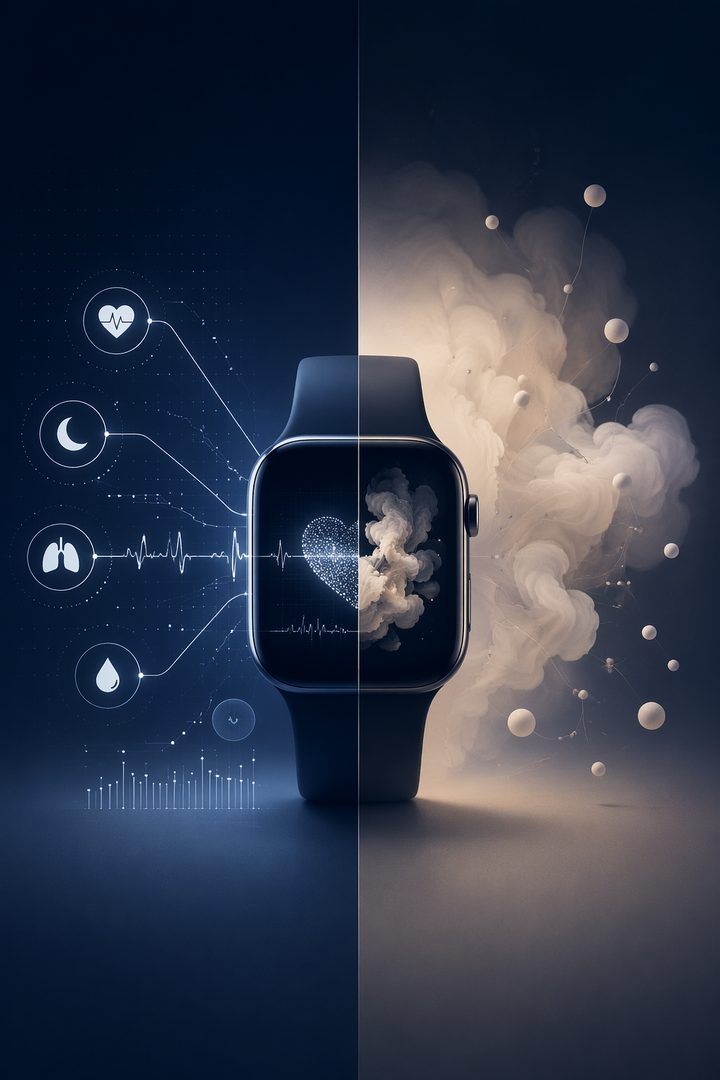
Between the atrial fibrillation they do reliably detect and the wellness scores that are black boxes, AI smartwatches sit halfway between gadget and clinical tool. The promise of a future free of silent pandemics is real, but today the device on your wrist still diagnoses nothing on its own.
We'll send you a confirmation email (double opt-in). Privacy.
By Engadget · July 4, 2026.
Engadget's review puts figures and nuance to a question that has been hovering over the wearable sector for years: can your watch really detect that you're getting sick before you notice it? The answer, according to doctors consulted by The New York Times and cited in the article, is a qualified yes. Atrial fibrillation detection on the Apple Watch, for example, is clinically confirmed in 84% of cases according to a referenced study—reliable enough that many doctors consider it genuinely useful. Step counts and basic sleep patterns also make that short list of "high-confidence" metrics. The rest—blood pressure, calories, detailed sleep stages, VO2 max, Whoop's proprietary Recovery scores or Oura's Readiness—are, at best, rough estimates that no doctor would use to make a clinical decision.
The most interesting part of the article is not the list of what works and what doesn't, but the mechanism that does have real potential: detecting combined anomalies against your personal baseline. A study by Texas A&M and Stanford cited in the text found that smartwatches can detect early signs of COVID-19 and flu just hours after infection, long before symptoms appear, simply by cross-referencing skin temperature, resting heart rate and breathing patterns. The researchers estimate that encouraging people to isolate and get tested within that early window could reduce the transmission of a pandemic by up to 50%. It's a figure with enormous public-health implications, and probably the most substantial finding in the entire article, even if it gets buried among warnings about the hype.
Because hype is exactly what surrounds this market. The article itself notes how every Apple event comes accompanied by stories of lives saved, and how the U.S. administration—with its Health Secretary aligned with skepticism toward conventional medicine, as Engadget reports—has adopted the wearable as a political banner even though the underlying technology hasn't changed substantially. That's the underlying problem: FDA authorization for a new feature becomes marketing ammunition that suggests far more than the device actually delivers. Google's Gemini Health Coach, Oura's Symptom Radar or Apple's Vitals promise to "connect the dots" with generative AI, but as the article rightly points out, that analysis happens in a black box: useful for making the user feel supported, useless for a doctor to act on.
Our reading is that this tension—between the promise of AI and real clinical utility—is exactly the kind of short-term friction that should be named without fear. There is no Star Trek tricorder around the corner, and any company hinting otherwise is selling regulatory smoke. But the underlying trajectory is the right one: the more sensors, the more baseline data and the more capable language models become at correlating subtle signals, the closer we are to a massive, cheap early-warning system available on anyone's wrist. That is precisely the kind of infrastructure that, taken to its logical conclusion over a decade or two, could bring us closer to detecting illnesses—from respiratory infections to chronic heart conditions—before they become a problem, not after. The abundance that AI promises in health won't come from a chatbot that replaces the doctor, but from millions of cheap sensors that multiply preventive monitoring and free professionals to intervene only when it's truly needed.
The risk, and here it's worth being honest, is that people confuse "my watch warned me" with "my watch diagnosed me," and replace the medical checkup with the word of a proprietary algorithm. That's the real problem of this transition: not that the technology is useless, but that marketing presents it as if it already did something it can't yet do. In the meantime, the prudent thing—and what the article itself recommends—is to treat these devices as what they are today: a thermometer for trends, not a pocket doctor.
Sources & references
Get the analysis by email · free
One email a day analysing the AI essentials. Free, no spam, unsubscribe anytime.
We'll send you a confirmation email (double opt-in). Privacy.