Anthropic sues Abnormal AI over its logo: the brand is also a strategic asset
🕒 Published on Zendoric: July 3, 2026 · 01:20
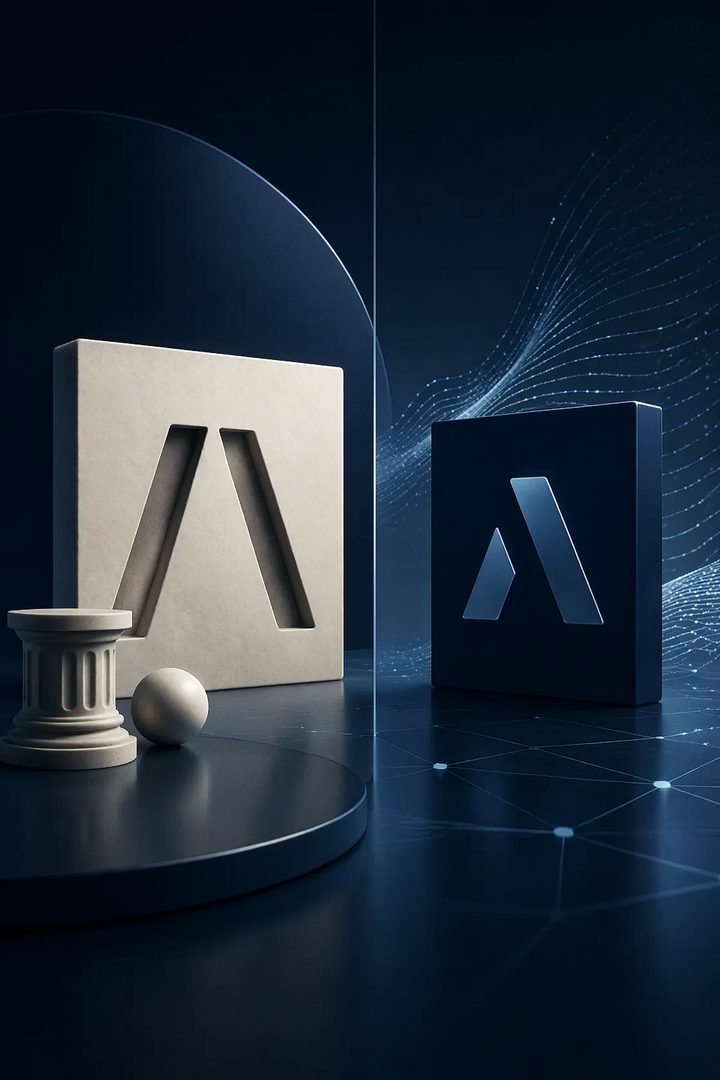
Anthropic has filed a trademark infringement lawsuit against cybersecurity firm Abnormal AI, alleging that its 2025 rebranding copied the 'bar'-style logo and animated transitions of Anthropic's brand, causing confusion among customers. The case, before a California federal court, is minor in itself but revealing of the moment the sector is living through.
By Law360 · July 2, 2026.
Anthropic has sued Abnormal AI Inc. and Abnormal Security Corp. in the U.S. District Court for the Northern District of California, alleging that the cybersecurity company's 2025 rebrand copied its distinctive slash-shaped logo and the style of its animated brand transitions, causing confusion among customers. Morrison & Foerster is listed as a law firm tied to the case; LinkedIn Corp. appears mentioned among the related parties in the filing, though the full procedural details (case number, judge, exact filing date) remain behind Law360's paywall. The verifiable facts, for now, come down to the nature of the claim and its jurisdictional framework.
At first glance, it is a minor item from a specialized legal newsletter, the kind that rarely reaches beyond the circle of intellectual property lawyers. But it shouldn't be dismissed as an anecdote: that Anthropic —one of the two or three companies defining the frontier of generative AI— is devoting legal resources to protecting its brand's visual identity is a symptom of corporate maturity, not a whim. When a company goes from being a research lab to a consumer brand and enterprise with a presence in dozens of markets (assistants, APIs, enterprise deals), its logo stops being an aesthetic detail and becomes an asset with economic and reputational value that must be defended like any other intellectual property.
Our reading is that this kind of litigation is going to multiply as the AI sector becomes saturated with startups competing for attention in a limited visual and semantic space: names that evoke intelligence, brains, sparks, minimalist geometric shapes. The proliferation of brands with similar aesthetics —diagonal slashes, gradients, geometric typefaces— is no coincidence: there is a design language the sector has adopted almost as a convention, and that makes the lines between legitimate inspiration and copying ever finer and more litigable. For AI companies, defending the brand becomes as strategic as defending the model or the training data: it is part of how trust is built in a market where products are, for the average user, technically hard to tell apart.
Beyond the specific dispute, the case confirms something we had already noted about geopolitics and competition in AI: the war for leadership is no longer waged only on benchmarks or model quality, but also in the battle over brand identity, distribution and public perception. Anthropic, which competes head-to-head with OpenAI on technical capability, understands that its market position also depends on a recognizable and unmistakable visual identity. It is a prosaic but relevant reminder: as AI becomes a mass industry, its battles are starting to look more and more like those of any other consumer sector, with its courts, its lawyers and its disputes over a logo.