Are We Living in a Simulation? What Generative AI Adds to (and Subtracts from) Philosophy's Most Unsettling Argument
Bostrom's trilemma turns two decades old just as AI world models begin manufacturing interactive realities — and just as a team of physicists claims to have “mathematically proven” we are not simulated. We examine what science actually says, what is intellectual marketing, and why this debate matters more for what it reveals about us than for its answer.
🎬 Our Short
📚 Go deeper
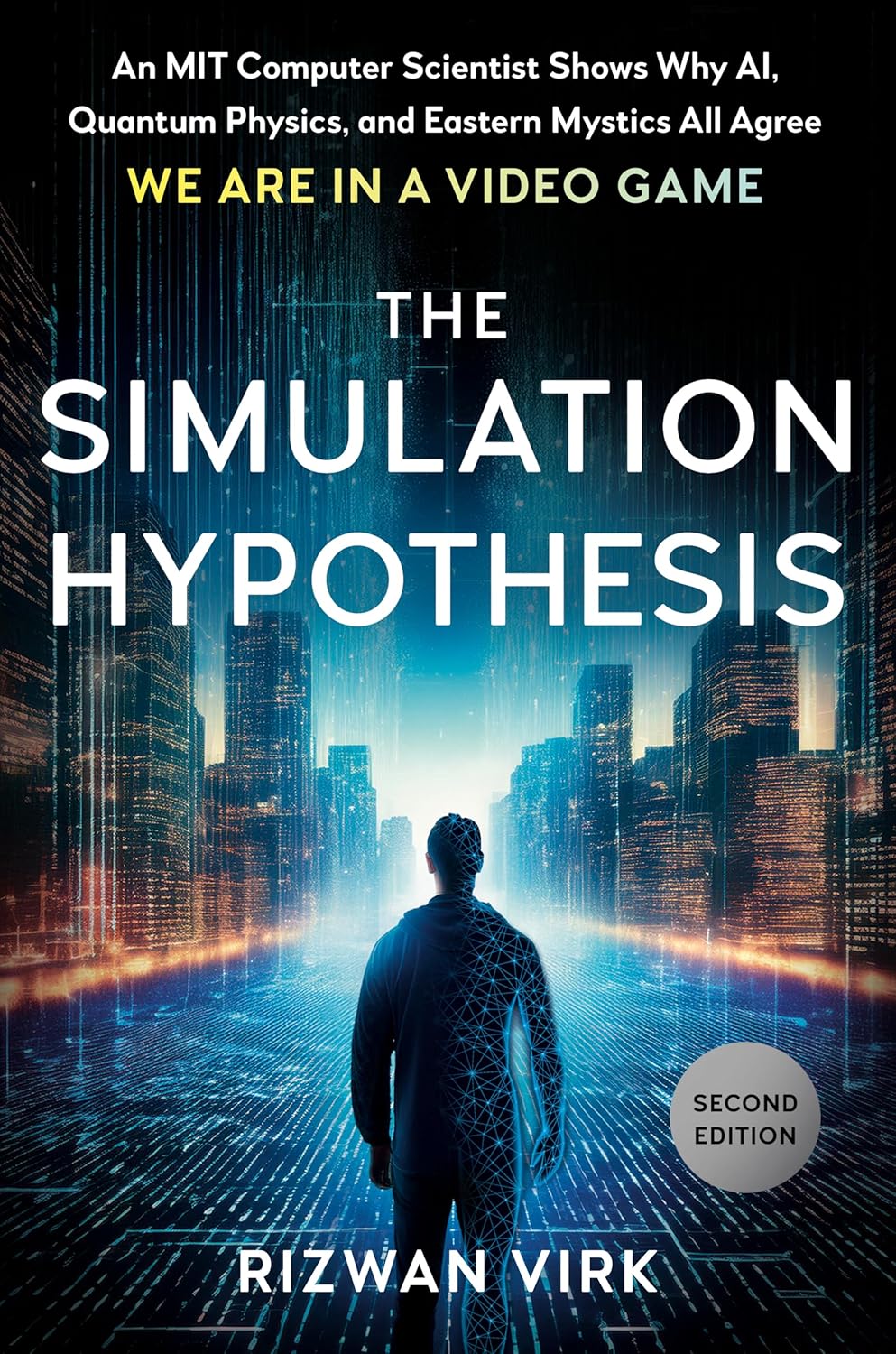
An MIT computer scientist connects AI, quantum physics and video games to take an uncomfortable question seriously: what if we live in a simulation? M
As an Amazon Associate, Zendoric earns from qualifying purchases; the price does not change for you. · all our recommended books →
We'll send you a confirmation email (double opt-in). Privacy.
THESIS: the simulation hypothesis is not a scientific theory about the cosmos; it is an epistemological mirror — and generative AI has just polished it. World models like Genie 3 and Sora make the technical premise of Bostrom's argument more credible (that creating simulated worlds is possible and cheap at scale), yet they simultaneously expose its weakest link: rendering convincing appearances is not the same as computing a complete physics, let alone a consciousness. Our reading is that the probability that we live in a simulation remains honestly incalculable, that nobody has “proven” or “refuted” it, and that the debate's real value lies elsewhere: it is training us for the ethical and governance questions that will arrive soon, when we are the ones running worlds inhabited by agents.
Let's start with rigor. The argument Nick Bostrom published in 2003 does not claim we live in a simulation: it is a trilemma. At least one of three propositions must be true: (1) almost no civilization reaches the technological maturity needed to simulate minds; (2) almost no mature civilization chooses to run “ancestor simulations”; or (3) we are almost certainly living in a simulation. The argument's force is arithmetic: if simulations are possible and anyone runs them, simulated minds would outnumber biological ones by orders of magnitude, and any given mind — yours, say — would be statistically more likely to be inside than outside. The weakness, as we will see, lies in the premises that arithmetic takes for granted.
For years the argument lived in the realm of celebrity speculation. Elon Musk declared at the 2016 Code Conference that there is “a one in billions chance” we are in base reality, extrapolating the trajectory of video games: from Pong to photorealistic worlds in forty years. David Chalmers, one of the world's most cited philosophers of mind, is more cautious but rules nothing out: in his book “Reality+” he puts the probability at “at least 25 percent or so,” and adds a provocative thesis worth keeping: if we did live in a simulation, our reality would be no less real — virtual objects would be genuine objects. That is not cheap consolation; it is a serious philosophical position on what “real” means.
This is where AI enters, and where the debate has stopped being a conference parlor game. In the past two years, labs have moved from generating text to generating worlds. Google DeepMind's Genie 3 produces interactive, navigable 3D environments in real time from a single prompt, with intuitive physics and consistency lasting minutes. Video models like Sora are explicitly framed as “world simulators” trained on hundreds of thousands of hours of footage. And an influential strand of research describes LLMs themselves as “simulators”: systems that are not a character but an engine capable of simulating endless characters and scenarios. Bostrom's premise 1 — is it technically possible to simulate worlds with inhabitants? — looked like science fiction in 2003; in 2026 it is a product roadmap with an assigned budget.
But our reading is that generative AI cuts both ways, and this is almost never said. Yes: it makes the trajectory toward synthetic worlds tangible. But it also reveals the chasm between simulating appearances and simulating realities. Genie 3 holds coherence for a few minutes at 720p; our universe has run for 13.8 billion years without a single verified glitch, with a quantum mechanics that survives every precision test to the twelfth decimal place. Today's world models are masters of selective rendering: they paint what you look at and nothing more. That this might also be a cosmic simulator's strategy is an attractive conjecture, not evidence. And the argument's truly decisive premise — that consciousness can run on any computational substrate — remains exactly as unproven as it was in 2003. Without it, Bostrom's entire statistical edifice has no tenants.
Can it be tested empirically? People have tried, and the most serious attempt remains that of Silas Beane, Zohreh Davoudi and Martin Savage in 2012: if the universe were a numerical simulation on a space-time lattice — like the quantum chromodynamics simulations they themselves run — the lattice would leave fingerprints. The most promising: a breaking of rotational symmetry in the distribution of the highest-energy cosmic rays, whose spectral cutoff bounds the inverse lattice spacing at around 10^11 GeV. It is honest science with an honest limitation the authors themselves acknowledge: it would only detect one very specific kind of simulation (a cubic lattice like ours). A competent simulator would leave no visible pixels. Absence of evidence, here, is not evidence of absence.
At the opposite extreme sits the headline that circled the globe in late 2025: “Physicists mathematically prove the universe is not a simulation.” The work by Mir Faizal, Lawrence Krauss, Arshid Shabir and Francesco Marino, published in the Journal of Holography Applications in Physics, applies Gödel's incompleteness theorems to quantum gravity and concludes that no complete, consistent theory of everything can be derived from computation alone: reality would demand a “non-algorithmic” understanding. And since every simulation is algorithmic, the universe cannot be one. It is an elegant argument. It is also, according to its academic critics — and here we attribute rather than assert — an overreach: peer commentaries argue that undecidability at the fundamental level does not preclude simulating the observable “shadow” of reality, which is all a simulation would ever need to reproduce. Our long-standing editorial rule applies to metaphysics too: distinguish what is demonstrated from what is declared. What is demonstrated is a formal result about computational theories of quantum gravity; what the headlines declared is rather more.
Then there is Sean Carroll, whose skepticism strikes us as the debate's healthiest counterweight. His objections are two, and both bite. First: the argument devours itself. If we assume we are “typical” observers, and typical observers do not know how to simulate consciousness, on what basis do we extrapolate that typical civilizations will run such simulations en masse? Second: if a hypothesis changes no observable expectation, it is not a scientific theory — it is, in words attributed to him, an “ontological shrug.” Add the cost problem: simulating a universe in full detail might require a computer comparable to the universe itself, which turns the “it will be easy” premise into question-begging. Proposals like Melvin Vopson's “second law of infodynamics” — that information entropy tends to decrease, as if the cosmos were compressing data — try to give the debate what it always lacked, a testable prediction, but they remain minority views and heavily contested within physics.
Our reading, in short: Bostrom's trilemma remains logically intact — none of its three exits has been sealed — but its probability is radically incalculable, because it hinges on premises (the substrate of consciousness, the motivations of posthuman civilizations, the true cost of simulating physics) about which we have not a single data point. Anyone telling you the odds are “one in billions,” or that the idea is “mathematically refuted,” is selling certainty where there is only argument. Generative AI has moved one needle, and only one: the technical-feasibility premise is less fanciful today than in 2003. Everything else stands where it stood.
So why devote a deep-dive to an undecidable question? Because its practical implications are not undecidable at all, and they arrive from the direction nobody watches: we are not the simulated ones — we are about to become the simulators. If world models continue on their current trajectory and one day host persistent agents with rich internal models, the ethics of creating, pausing, copying and deleting those worlds will stop being an Oxford thought experiment and become a product decision. Chalmers' thesis — the virtual is genuinely real to whoever inhabits it — graduates from metaphysical curiosity to governance principle. This is the honest short term: before we settle whether anyone is simulating us, we will have to decide how we treat what we simulate, just as we already debate the moral status of the systems that converse with us today.
The second implication is epistemic, and it connects to this decade's real risk: we are going to live surrounded by convincing synthetic realities manufactured not by posthuman gods but by companies and fraudsters. The question “how would you know your world is generated?” used to be recreational philosophy; it is now basic media literacy. In that sense, the simulation argument is the best possible intellectual training for the age of generative disinformation: it teaches you to distinguish the indistinguishable-in-appearance from the identical-in-substance — precisely the muscle citizens are going to need.
And the third implication is the one that justifies our long-term optimism. The capacity to simulate worlds is not (only) metaphysical vertigo: it is the most powerful tool ever built for compressing scientific time. Simulating protein folding already transformed biology; simulating cells, organs, climates and materials is the shortest path to eradicating disease and extending life. The very advance that makes Bostrom's trilemma plausible is the one that can carry us toward abundance: test worlds where being wrong costs no lives. If a civilization ever simulates entire universes, let us hope it does so for the same reason we are beginning to: to heal, to understand, to create.
Conclusion: no, we do not know whether we live in a simulation — and you should distrust equally those who proclaim it with euphoria and those who bury it with a theorem. What we do know is that the boundary between the given world and the built world is becoming porous for the first time in history, and that the questions posed by Bostrom, Chalmers and Carroll — what is real, which minds count, who governs the one running the world — will soon stop being speculative philosophy and become technology policy. On that day, having thought slowly about this “unsettling” argument will turn out to have been the most practical thing in the world.
📚 Go deeper
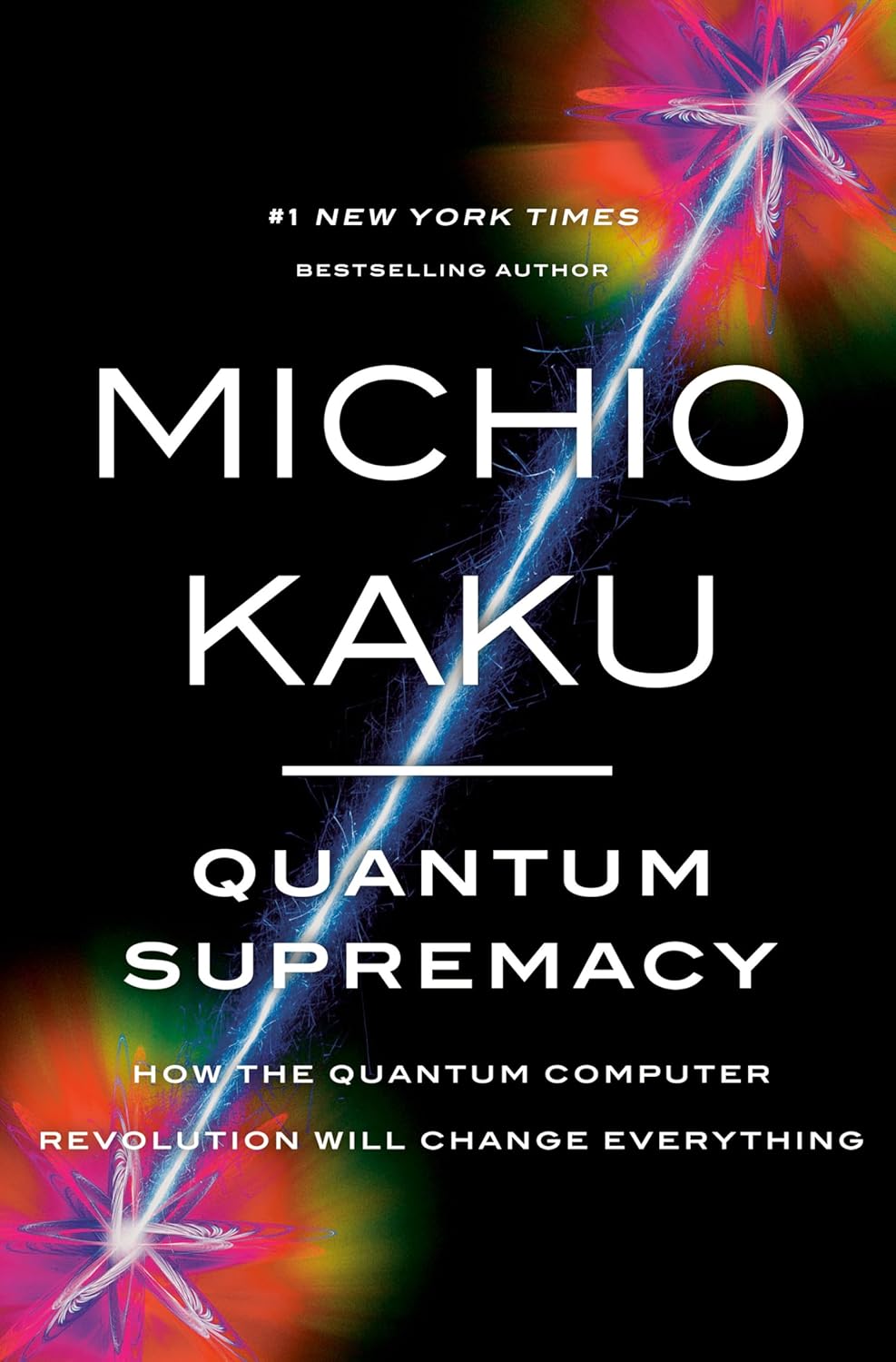
Physics' most-read popularizer explains what quantum computing will change — from drug discovery to machine learning.
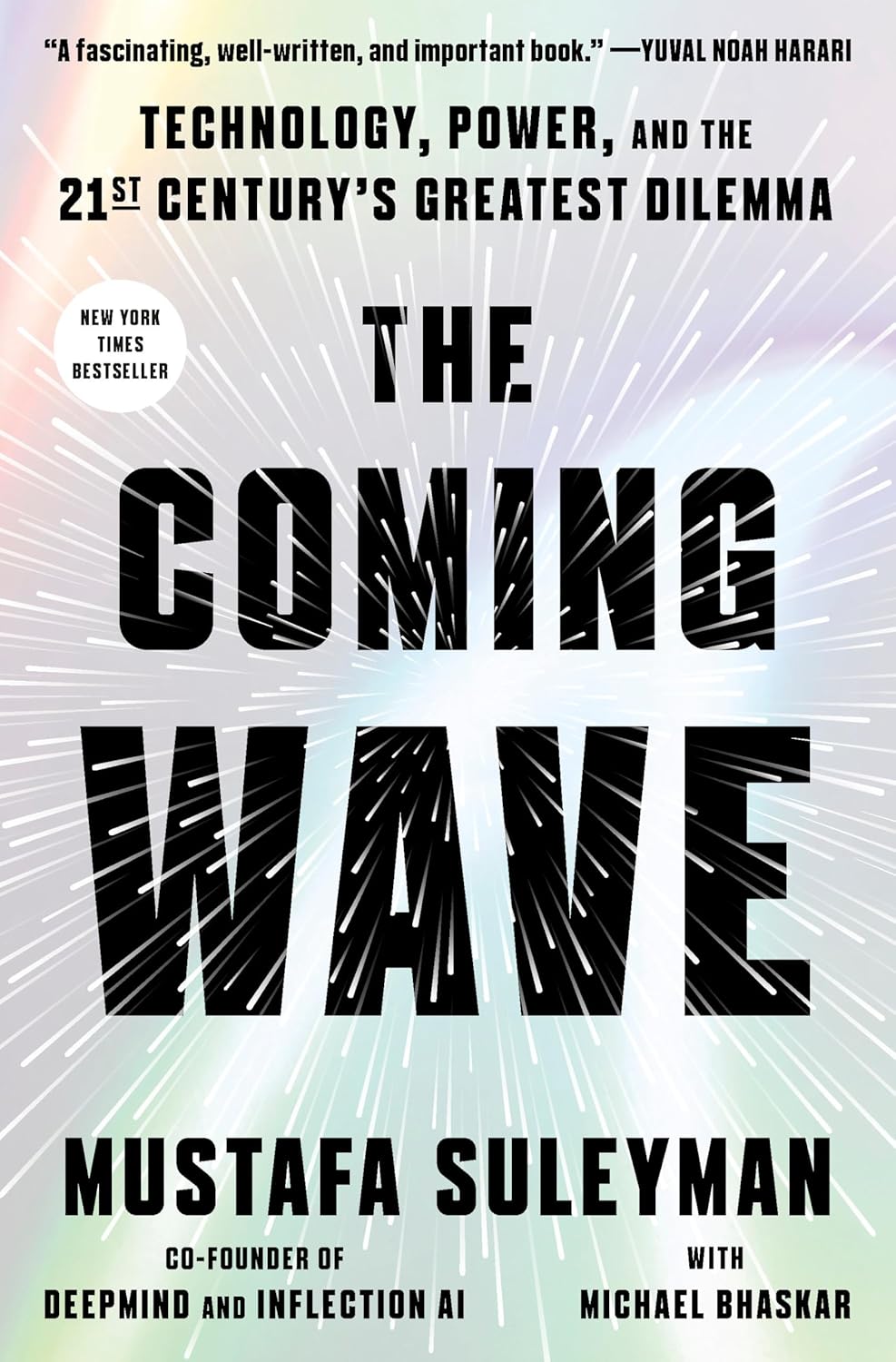
DeepMind co-founder on the dilemma of containing technologies that do not want to be contained.
As an Amazon Associate, Zendoric earns from qualifying purchases; the price does not change for you. · all our recommended books →
Sources & references
- Nick Bostrom — The Simulation Argument (sitio oficial del paper de 2003)
- Beane, Davoudi & Savage — Constraints on the Universe as a Numerical Simulation (arXiv, 2012)
- Faizal, Krauss, Shabir & Marino — Consequences of Undecidability in Physics on the Theory of Everything (arXiv, 2025)
- ScienceDaily — Physicists prove the Universe isn't a simulation after all (cobertura del paper de Faizal et al.)
- Phys.org — Mathematical proof debunks the idea that the universe is a computer simulation
- Khan — Discussion on the Faizal-Krauss-Shabir-Marino argument (crítica académica, PhilArchive)
- David Chalmers — Taking the Simulation Hypothesis Seriously (paper)
- Nautilus — The Simulated World According to David Chalmers (entrevista sobre Reality+)
Get the analysis by email · free
One email a day analysing the AI essentials. Free, no spam, unsubscribe anytime.
We'll send you a confirmation email (double opt-in). Privacy.