What Will We Do When AI Does All the Work? Abundance Doesn't Distribute Itself (and Money Can't Buy Purpose)
Keynes predicted the 15-hour week by 2030: he was right about productivity and wrong about people and distribution. With AI, the bottleneck on the road to an abundance society won't be technical — it will be institutional (who captures the wealth) and existential (what we do with our lives). Basic income pilots and youth employment data are already giving us clues.
🎬 Our Short
📚 Go deeper
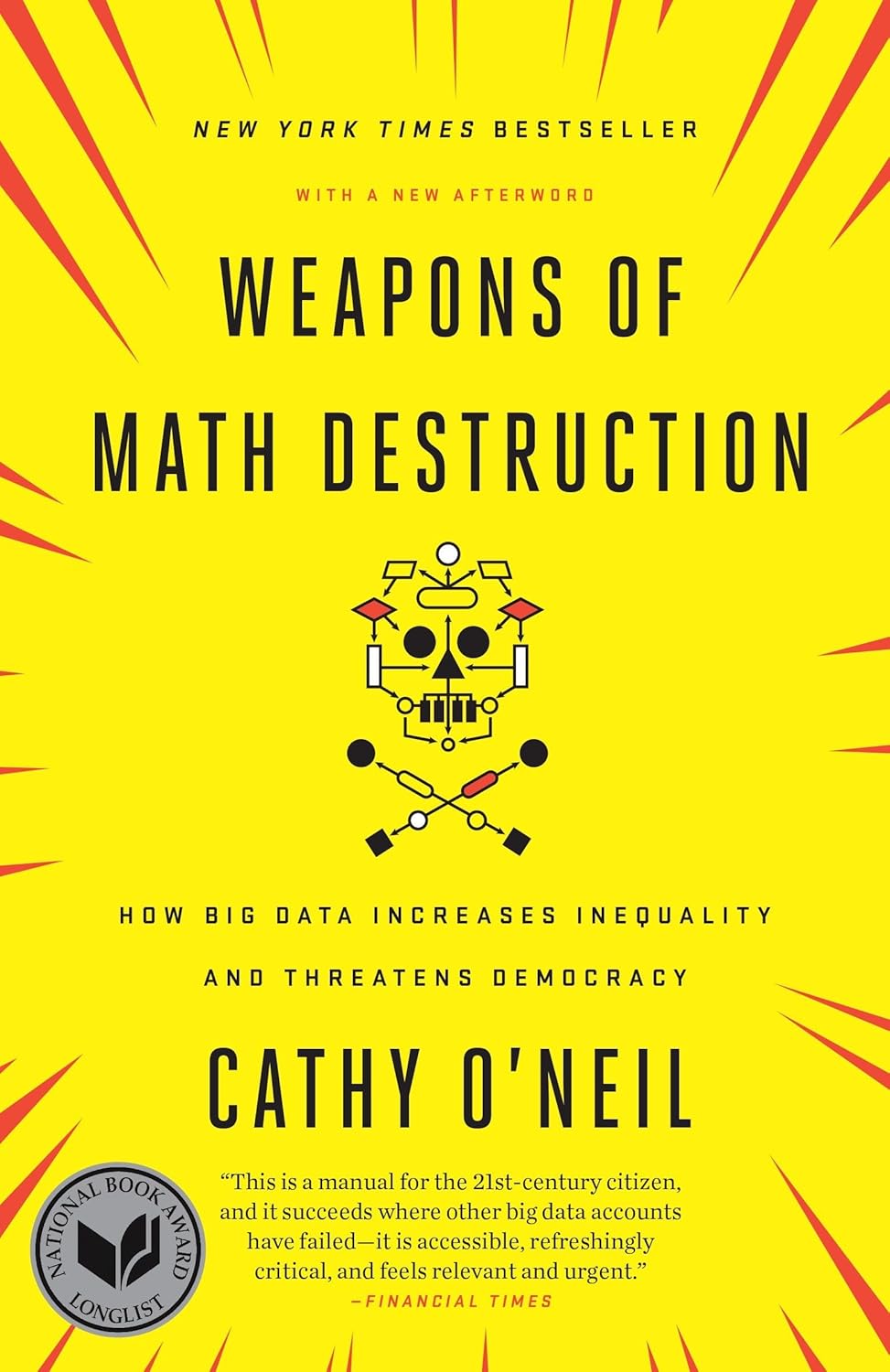
How opaque algorithms decide who gets credit, a job or parole — and why they tend to punish the same people.
As an Amazon Associate, Zendoric earns from qualifying purchases; the price does not change for you. · all our recommended books →
We'll send you a confirmation email (double opt-in). Privacy.
OUR THESIS: the abundance society that AI makes plausible will not fail for lack of productivity — if it fails, it will be for lack of distribution institutions and a culture of purpose. The INCOME problem has known, partially tested solutions (basic income pilots work better than their critics feared); the MEANING problem admits no pilot study, and it is the real test of this transition. In between, the short term will be turbulent and asymmetric: we are already measuring it in young workers' employment.
Start with the ghost presiding over this debate: John Maynard Keynes. In 1930, in 'Economic Possibilities for our Grandchildren', he predicted that by around 2030 we would work about 15 hours a week. On the economics he was dead right: productivity grew even faster than he estimated. And yet here we are, four years from his deadline, working 35-45 hours. Economists revisiting his prediction point to several culprits: the human drive to compete and seek status (Richard Freeman calls it Keynes's great blind spot), consumption as an endless ladder — Keynes imagined satiable needs; capitalism invented new ones — and inequality: productivity gains were not shared out as leisure for all, but as income concentrated in few hands. The lesson for the AI era is uncomfortable and central: ABUNDANCE DOES NOT DISTRIBUTE ITSELF. That AI can produce unprecedented wealth says nothing about who will enjoy it, or in what form.
Second piece: what do we actually know about giving people money with no strings attached? More than either extreme of the debate usually admits. The largest US experiment, OpenResearch's study backed by Sam Altman (3,000 people in Texas and Illinois, $1,000 a month for three years), measured a minimal reduction in work — equivalent to a 15-minute daily break — a marked drop in financial stress, spending directed at basic needs, and a rise in entrepreneurial intent, especially among women and Black recipients. Finland (€560/month to 2,000 unemployed people) found better wellbeing and mental health with no deterioration in employment. And GiveDirectly's study in Kenya — the longest ever run, with a 12-year horizon and hundreds of thousands of recipients — finds no evidence of 'laziness' but lasting improvements in income, food security and assets. The couch-potato myth does not survive contact with the data.
Now, the honesty our editorial line demands: the pilots also mark the limits. A thousand dollars a month is a floor against poverty, not a post-work economy. No pilot has tested what happens when an ENTIRE society receives unconditional income funded by AI wealth, nor how prices, housing or migration respond. Critics such as Guy Standing note that Altman's experiment wasn't even a basic income in the strict sense (neither universal nor community-wide). The pilots prove that unconditional cash does not destroy the will to work; they do not prove it can sustain a society. That is the difference between a painkiller and a new circulatory system.
Where would that system come from? Here the debate has become surprisingly concrete over the past two years. GovAI's 'Windfall Clause' proposes that labs commit ex ante to donating a rising share of extraordinary profits if transformative AI sends their earnings soaring (up to half of marginal profits beyond 10% of world GDP). Brookings has published a public-finance framework for the AI age weighing taxes on compute, on tokens and on digital services. And the 'equity tax' idea is gaining traction: AI companies paying tax by issuing shares to a public fund — Alaska Permanent Fund style — that pays a universal dividend and gives the public a governance voice. Our reading: the most interesting proposal is what The Collective Intelligence Project calls PREDISTRIBUTION — not waiting for wealth to concentrate and then redistributing it, but giving the public a stake in AI capital from the start. Because if the twentieth century teaches anything, it is that redistributing ex post against entrenched interests is a battle almost always lost.
But suppose we solve income. There remains the problem no cheque can fix: meaning. And here we should be frivolous in neither direction. Work, in our societies, is not just income: it is the structure of time, identity, belonging and — perhaps most importantly — the feeling of CONTRIBUTING. As argued at Harvard's Ash Center, the model of 'taxing the winners and mailing the losers a cheque' fails not on arithmetic but on anthropology: it turns contributing citizens into recipients, and that erodes dignity even as living standards rise. A society where AI generates immense wealth but leaves millions without a meaningful role is not a success — it is a political time bomb.
That said, we distrust existential catastrophism as much as the economic kind. History offers a powerful counterexample: the leisured aristocracies of every era did not sink into collective depression; they invented art, amateur science, patronage, sport. And the basic income pilots themselves point the same way: freed from survival, people do not switch off — they start businesses, care, study. The meaning problem is real, but it is a problem of TRANSITION and CULTURE more than of human nature. Generations raised in abundance will not inherit our industrial work ethic, just as we did not inherit the dawn-to-dusk ethic of the peasant. The grief will be ours — those of us raised to define ourselves by our jobs.
And is this time different? Historical parallels are the best vaccine against both panic and complacency. In 1800, 75% of the American labour force worked the land; today, under 2% — and farm output is several times higher. That transition was brutal for one generation and liberating for the next: agriculture→industry→services, through the 'displacement cycle' and 'task reinstatement' economists describe. The case that this time is different is also serious: AI automates not a muscle or a task but potentially the full range of cognitive tasks, and if the machine does EVERYTHING better and cheaper, human comparative advantage may find no refuge. Our position: it is too early to buy that conclusion as fact — demonstrated AI today complements more than it substitutes, and diffusion is slower than the marketing promises (Meta itself postponed restructuring after admitting its agents were not replacing tasks at the projected pace) — but too late to dismiss it as fantasy. Intellectual honesty requires holding both ideas at once.
And while we philosophise, the short term is already here, and it is asymmetric, as we have been documenting sector by sector. The Stanford Digital Economy Lab found a 16% relative decline in employment among workers aged 22-25 in the occupations most exposed to generative AI — while their senior colleagues barely felt it — a pattern the Dallas Fed confirms and MIT Technology Review describes as a looming crisis in entry-level work. Mind the nuance, which is where the truth lives: aggregate studies in the US and Denmark still detect no net job destruction, and demand for AI skills in junior roles nearly tripled in a year. It is not 'AI destroys jobs'; it is 'AI is burning the bottom rungs of the ladder' — exactly the pattern we anticipated: back-office and routine work falls first; judgment, relationships and in-person work resist. The immediate risk is not mass unemployment but a generation that cannot find a way in, and a senior-to-junior transmission of knowledge that breaks.
OUR READING, in short: we face three simultaneous transitions running at different speeds. The ECONOMIC one (AI producing ever more value) is moving very fast. The INSTITUTIONAL one (compute taxes, universal dividends, basic income at scale) has barely left the drawing board. The EXISTENTIAL one (rebuilding identity and purpose without employment at the centre) has not seriously begun. The risk scenario is not that AI 'does all the work': it is that the first transition completes decades before the other two, stranding in between a generation with no ladder, no dividend and no story. Keynes failed because he assumed productivity would do the political and cultural work by itself. It didn't then, and it won't now.
IMPLICATIONS. For governments: build the plumbing of distribution BEFORE the wealth concentrates — predistribution, sovereign AI funds, regional-scale income experiments with rigorous measurement — because evidence-based governance requires generating that evidence now. For companies: the entry-level rung is social infrastructure, not just a cost; whoever eliminates it today will have no seniors tomorrow. For individuals: in the short run, the strategy remains moving toward what resists (judgment, relationships, orchestrating AI); in the long run, the question 'what would you do if you didn't have to work?' stops being a dinner-table game and becomes the educational project of a civilisation.
And the horizon — let us not lose it amid all this caution: if we govern distribution well and take purpose seriously, on the other side of this transition lies something genuinely extraordinary — an economy where AI eradicates disease, extends the good life, and generates enough abundance that work becomes, for the first time in our species' history, a passionate choice rather than a sentence. Keynes got the date and the mechanics wrong, but not the direction. May his grandchildren — us — not fail again on distribution: that is the one part of the future that cannot be delegated to the machine.
📚 Go deeper
The same bifurcation seen from the boardroom: strategy, execution and defensive moats to reorganize a business around AI before your competitors do.
A macroeconomic, sector-by-sector X-ray of how AI redraws the global chessboard over the coming decade, with the human factor at the center.
As an Amazon Associate, Zendoric earns from qualifying purchases; the price does not change for you. · all our recommended books →
Sources & references
- NPR — Keynes Predicted We Would Be Working 15-Hour Weeks. Why Was He So Wrong?
- Economica (Wiley) — The 15-Hour Week: Keynes's Prediction Revisited
- CBS News — Here's what a Sam Altman-backed basic income experiment found (OpenResearch)
- Guy Standing (BIEN) — A US Basic Income Experiment that Wasn't (crítica al piloto de OpenResearch)
- University of Helsinki — The basic income experiment in Finland yields surprising results
- GiveDirectly — Early findings from the world's largest UBI study (Kenya)
- IPA — The Effects of a Universal Basic Income in Kenya
- GovAI — The Windfall Clause: Distributing the Benefits of AI for the Common Good
Get the analysis by email · free
One email a day analysing the AI essentials. Free, no spam, unsubscribe anytime.
We'll send you a confirmation email (double opt-in). Privacy.