Can AI Predict the Markets and Make You Rich? The Honest Answer Nobody Wants to Sell You
It's the question that moves the most money—and feeds the most scams. Our answer, backed by data: no, AI won't predict the market and make you rich quick; yes, it can make you a better investor. We explain why this is THE hardest problem, what the quants actually achieve, and where the real value lies for you.
🎬 Our Short
📚 Go deeper
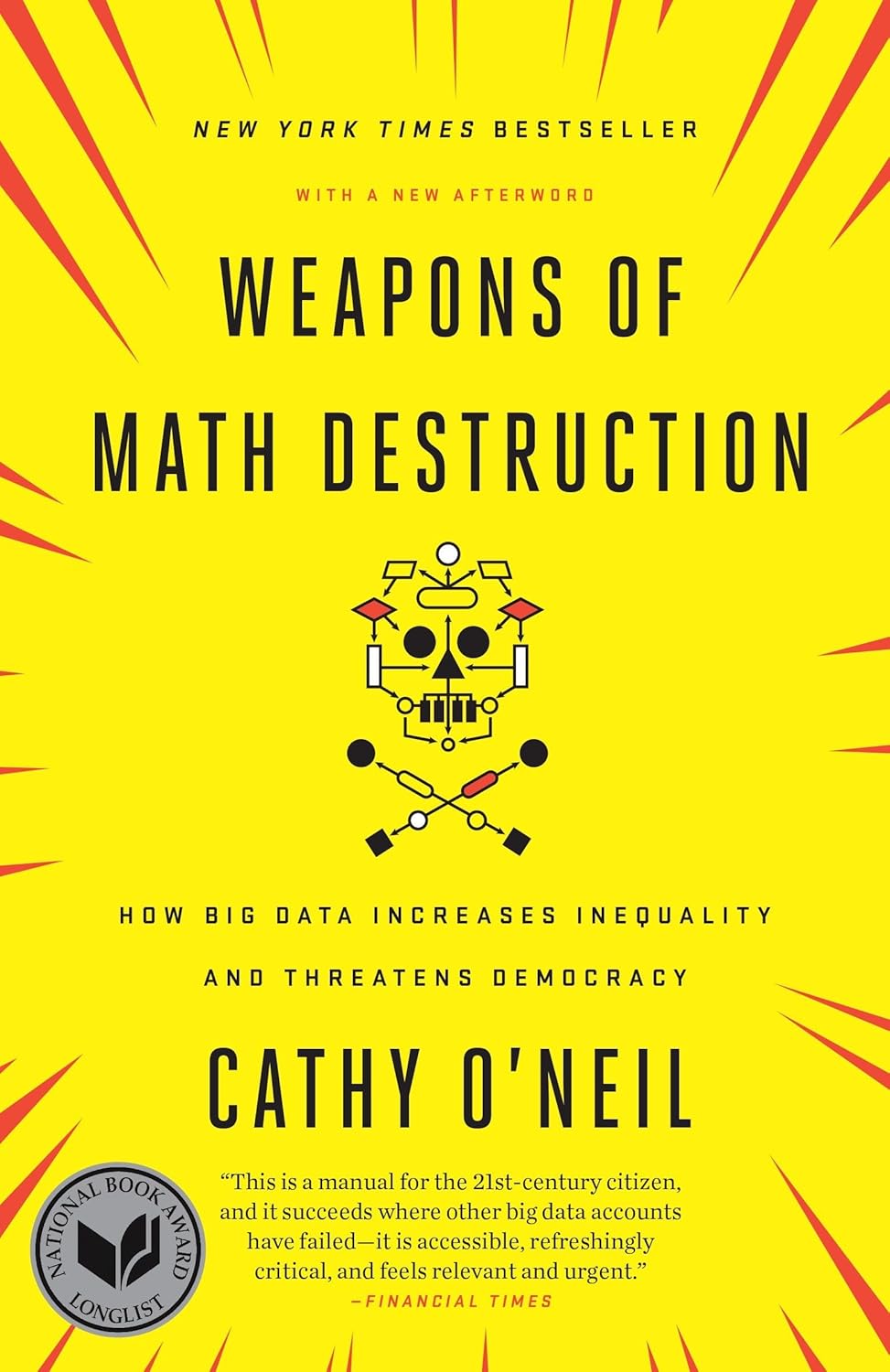
How opaque algorithms decide who gets credit, a job or parole — and why they tend to punish the same people.
As an Amazon Associate, Zendoric earns from qualifying purchases; the price does not change for you. · all our recommended books →
THESIS: AI cannot—and will not, in any sustained, publicly accessible way—'predict the price' to make you rich, because the market is the only system that rewrites itself every time someone predicts it well. What it can do, and already does, is something less glamorous and more valuable: turn an average investor into an informed, disciplined one. Anyone promising you the first is selling smoke; anyone dismissing the second is missing this technology's real dividend.
Start with why market prediction is THE hardest problem in AI—far harder than Go or protein folding. First, efficiency: prices already incorporate nearly all public information, so the available signal is minuscule against the noise. Second, reflexivity: if a model finds a profitable pattern and it gets used, that usage moves prices and erases the pattern; the Go board doesn't change its rules when you learn to win, but the market does. Third, non-stationarity: historical data comes from regimes—interest rates, technology, regulation, psychology—that no longer exist, the cardinal sin for machine learning trained on the past. It's not that intelligence is lacking: the problem devours whatever intelligence is thrown at it.
Academia itself provided the best proof of reflexivity. The Lopez-Lira and Tang study (University of Florida), 'Can ChatGPT Forecast Stock Price Movements?', found that GPT could predict next-day stock drift by reading headlines, especially for small caps and negative news. The other half of the finding, which almost nobody quotes? The strategy's returns decline as LLM adoption rises: the technique's own success makes prices more efficient and eats its edge. That's the market working exactly as theory says: every publicly known gold mine is exhausted the moment it's announced.
What about Renaissance, then? Jim Simons' Medallion Fund is the bot-sellers' favorite counterexample: estimated average returns of 66% gross (39% net) between 1988 and 2018. But its anatomy dismantles the myth rather than confirming it. According to published analyses of the fund, its hit rate is around 50.75% per trade—barely better than a coin flip—executed hundreds of thousands of times per day with obsessive management of transaction costs. Its edge is not 'predicting the price': it's industrial-grade statistics at scale, resting on three conditions no individual can replicate: elite scientific talent under absolute secrecy, proprietary execution infrastructure, and—most tellingly—a self-imposed capital cap (~$10–15 billion, closed to outside investors since the 1990s) because the strategy itself would die if it grew. Translation: real edge in markets is scarce, brutally expensive to build, and doesn't scale. The exact opposite of what a mass-market product needs.
When 'predictive' AI gets packaged for the public, the results speak. The AIEQ ETF, launched in 2017 with IBM Watson technology as its manager, has spent years trailing the S&P 500, with higher volatility, a worse Sharpe ratio and 0.75% fees versus 0.09% for an index fund, according to analyses on Seeking Alpha and elsewhere. That's not an anomaly: it's the physics of the problem. And the 2025–2026 headlines about market-beating 'AI-first' funds—like the 13.7% half-year return attributed to Minotaur Global and its 20 news-reading LLMs—deserve the same scrutiny: self-reported figures, short windows, bull markets—survivorship bias's natural habitat. Our standing editorial rule applies here more than anywhere: demonstrated capability ≠ marketing.
Meanwhile, the question 'can AI make me rich?' has become raw material for the fraud industry—and this is pure short-term risk. In December 2025 the SEC filed charges over a $14 million scheme using fake 'AI investment clubs' that recruited victims via WhatsApp and social media; the CFTC had to publish an advisory whose title is a thesis in itself: 'AI Won't Turn Trading Bots into Money Machines.' The FTC reports over $7.9 billion lost to investment scams in 2025 alone, with a median loss above $10,000 and nearly 30% of cases starting on social media. As we keep saying in these pages: AI's real risk today isn't distant superintelligence, it's the industrialization of fraud. The 'bot that always wins' is to this decade what the Nigerian prince was to the 2000s—with infinitely better production values.
OUR READING: there is a revealing asymmetry in who uses AI for what. The serious quants—Renaissance, Two Sigma, the big multi-strategy shops—don't use machine learning as a price oracle but as a process tool: cleaning data, digesting text, sharpening execution, managing risk. In other words, the best players in the world treat AI as a discipline amplifier, not a crystal ball. Scammers do exactly the opposite. That contrast is, in itself, the entire answer to the question in the headline.
And here is the part both the doomers and the hype merchants miss: for the ordinary investor, AI genuinely is a revolution—just not where they're looking. A March 2026 survey cited by Investing.com found 62% of American retail investors already use AI tools to inform their decisions. Used well—as a tireless analyst that summarizes annual reports, explains a prospectus, compares fees, simulates scenarios and, above all, confronts you with your own biases before you panic-sell or euphoria-buy—AI attacks the true cause of poor retail returns, which was never a failure to predict prices: it was indiscipline, costs and noise. The value isn't in predicting the market; it's in ceasing to be your own worst enemy inside it. With caveats: respondents themselves fear wrong recommendations (38.9%) and herding if everyone follows the same signals (24.2%), and hallucinated financial data remains real. AI is a copilot, not a pilot; verification is still a human job.
IMPLICATIONS. For the saver: three anti-hype filters that never fail. One—if someone truly had an algorithm that predicts the market, they wouldn't sell it to you by subscription: they'd exploit it quietly with capped capital, as Medallion has for thirty years. Two—any promise of 'guaranteed' returns or 'X% per month' is, by statistical definition and often by law, a scam. Three—the right question isn't 'which stock will go up?' but 'do I understand what I own, what it costs me, and will I hold through the next crash?'—and on those three questions AI is an extraordinary, nearly free ally. For the industry: the quant edge is shifting from signal to process (data, execution, risk), favoring scale and infrastructure—another edition of our thesis that the war is won in the plumbing, not just in the smartest model. For regulators: this decade's priority isn't AI that predicts markets (it doesn't exist in sellable form) but AI that manufactures scams at scale—evidence-based governance against the real fraud, not the phantom.
And the long horizon, where this publication plants its flag: the democratization of financial analysis is genuinely good news. Tools that a decade ago required a team of analysts now fit in a subscription—or an open-weight model running on your own machine. That won't make anyone rich overnight—nothing does, and be suspicious of whoever promises it—but it can close part of the financial-literacy gap that separates those who build wealth from those who unknowingly destroy it. In the world of abundance we believe AI is pushing us toward, investing shifts from aspirational casino to patient vehicle for sharing in that prosperity. The wealth AI can give you isn't in predicting the next tick. It's in never needing to.
📚 Go deeper
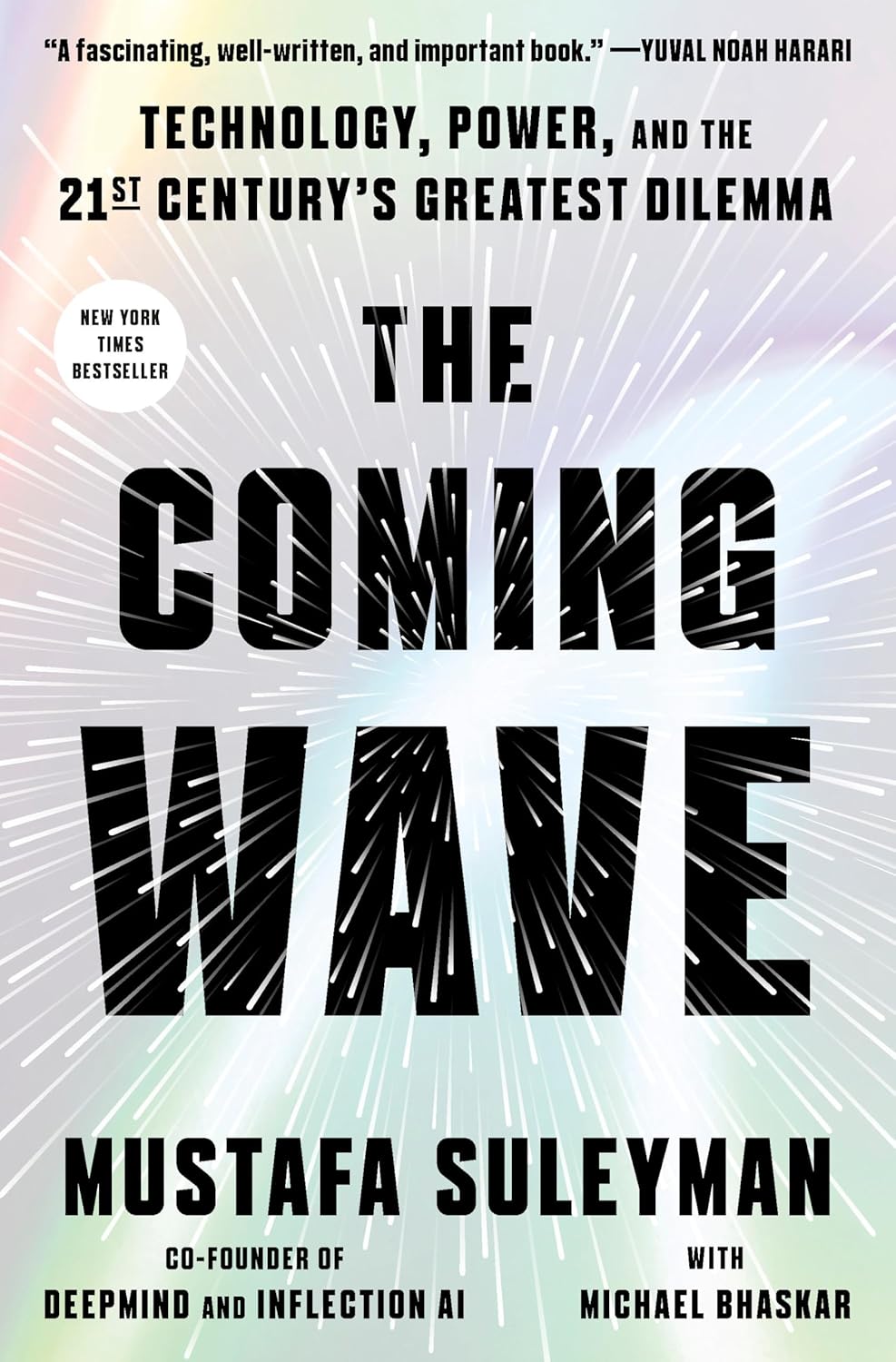
DeepMind co-founder on the dilemma of containing technologies that do not want to be contained.
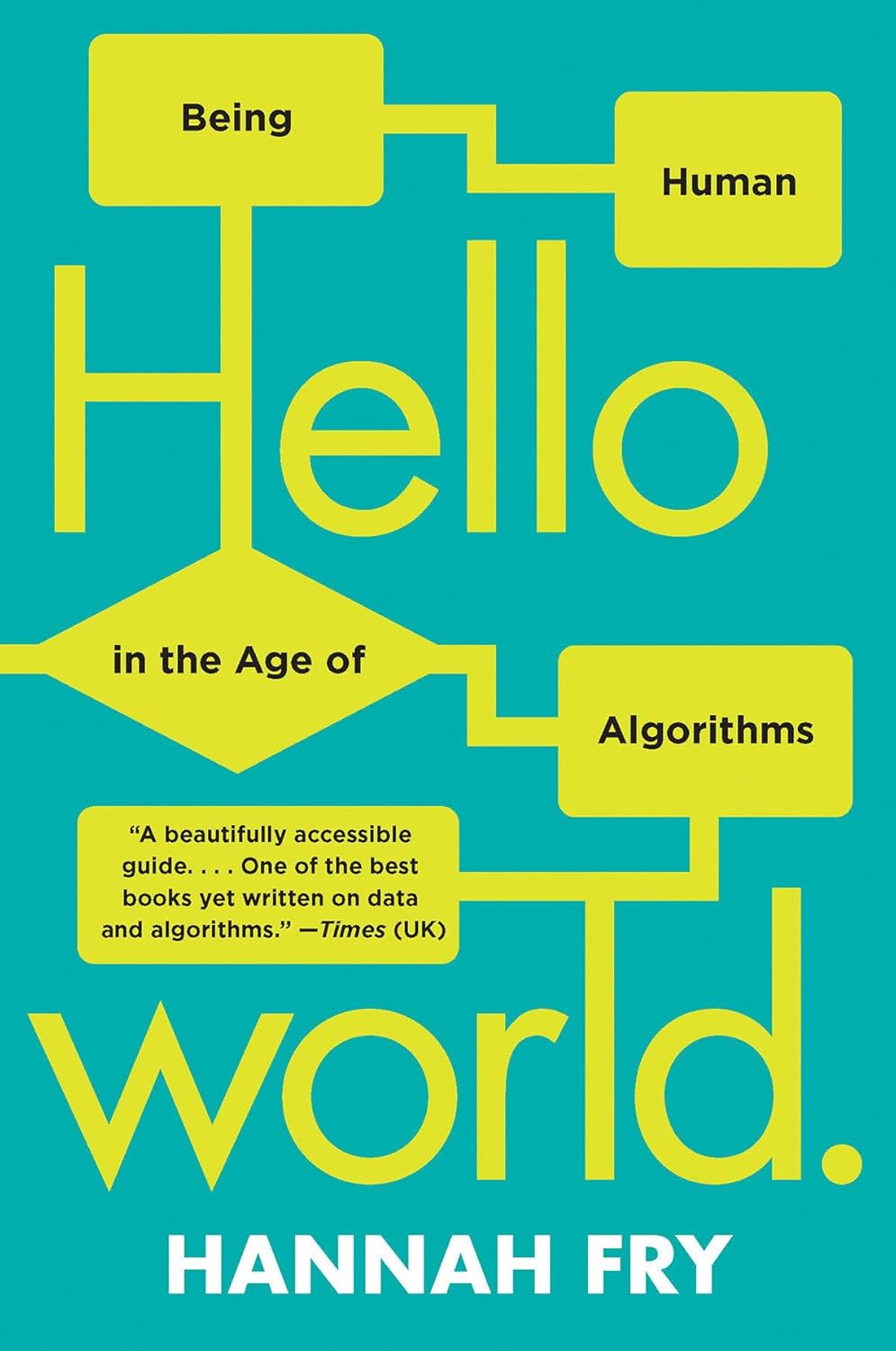
Algorithms in justice, medicine, cars and art, explained with British humor and mathematical honesty.
As an Amazon Associate, Zendoric earns from qualifying purchases; the price does not change for you. · all our recommended books →
Sources & references
- Can ChatGPT Forecast Stock Price Movements? Return Predictability and Large Language Models — Lopez-Lira & Tang (arXiv)
- Why the Medallion Fund is the Greatest Money-Making Machine of All Time — Of Dollars and Data
- Renaissance Technologies: The $100 Billion Built on Statistical Arbitrage
- AIEQ: Sophisticated AI-Driven Strategy That Underperforms — Seeking Alpha
- Customer Advisory: AI Won't Turn Trading Bots into Money Machines — CFTC
- SEC Charges Three Purported Crypto Asset Trading Platforms and Four Investment Clubs (fraude de $14M con 'IA') — SEC
- Artificial Intelligence (AI) and Investment Fraud: Investor Alert — Investor.gov (SEC)
- How Retail Investors Are Using AI in 2026 — Investing.com