The Art of War in the Age of AI: The Fog Doesn't Lift — It Changes Sides
Ukraine is building millions of drones, the Pentagon is betting $54.6 billion on autonomous warfare, and the UN faces its 2026 make-or-break regulatory deadline. We reread Sun Tzu and Clausewitz to understand what algorithms truly change about war — and what they never will.
🎬 Our Short
📚 Go deeper
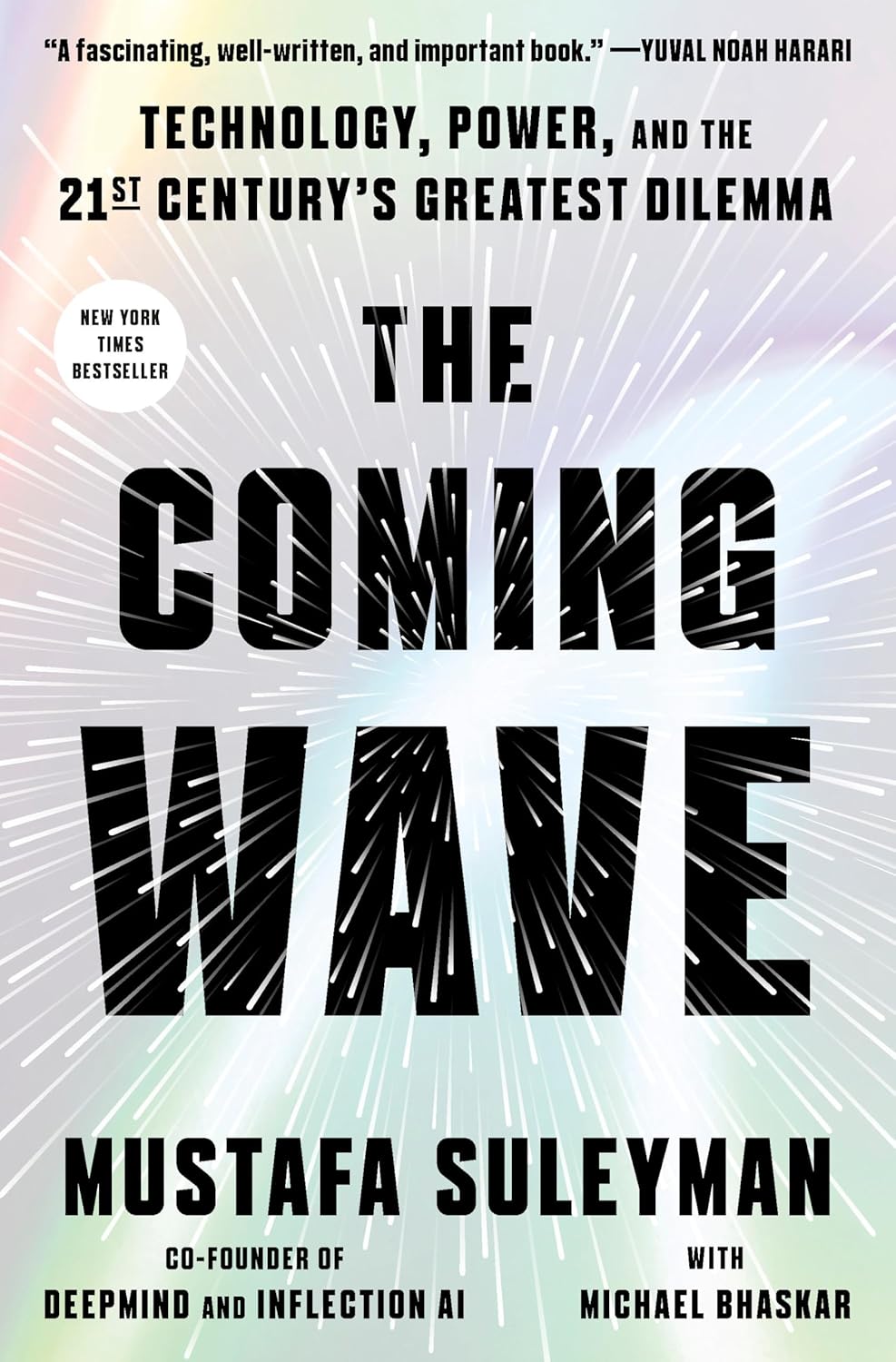
DeepMind co-founder on the dilemma of containing technologies that do not want to be contained.
As an Amazon Associate, Zendoric earns from qualifying purchases; the price does not change for you. · all our recommended books →
OUR THESIS: AI is not changing the nature of war; it is rewriting its grammar. War remains what Clausewitz said it was — a political, human act dominated by uncertainty and friction — but the means of waging it are shifting from muscle to algorithm at a speed governance cannot match. And the decisive battle of this decade will not be fought between drone swarms: it will be fought over a question that looks technical and is actually civilizational — who, or what, decides to pull the trigger. 2026 is, quite literally, the deadline the UN itself has set to answer it.
Let's start with the facts, which are less cinematic than the narrative. Ukraine has become the laboratory of algorithmic warfare: it produces drones at industrial scale — over three million annually across aerial, ground and maritime platforms, projected to reach seven million in 2026 — and companies like The Fourth Law sell autonomy modules costing around $50 that retrofit existing drones and, according to their makers, quadruple strike success rates compared to human piloting under electronic jamming. Russia is responding by fitting its V2U and Shahed drones with Nvidia Jetson processors and computer vision to navigate GPS-denied environments. It is the first war in which software is iterated weekly against an adversary that iterates too.
But mind the nuance, because this is where war marketing parts ways with demonstrated capability: the coordinated autonomous swarm — drones that talk to each other, divide targets and self-reorganize — does not yet exist on the battlefield. Neither Ukraine nor Russia has achieved it. What exists are individual drones with terminal autonomy (they chase the target when the operator loses the link) and machine vision that still confuses soldiers with civilians and loses fast-moving targets. The sector's own engineers estimate human oversight will remain necessary for another ten or fifteen years. As we keep repeating in this house: always separate aspiration from verified fact.
Enter Clausewitz. Silicon Valley's promise applied to defense is the dissolution of the 'fog of war': ubiquitous sensors, data fusion, the transparent battlefield. Our reading is that this promise repeats an old conceptual error. Clausewitzian fog was never a data-shortage problem; it was a problem of human uncertainty — fear, chance, friction, deception. Sensors don't dissipate it; they displace it. When you compress reality into 2D images processed by a neural network, cheap camouflage works again, a plywood decoy eats a hundred-thousand-dollar missile, and a new fog appears: that of the system itself, whose decisions nobody can audit in real time. The fog doesn't lift; it changes sides and changes nature. And an army that believes itself omniscient because its dashboard is full is more fragile, not less, than one that assumes its own blindness.
Sun Tzu, by contrast, emerges strengthened from this era. 'Supreme excellence consists of winning without fighting' is, literally, the manual of contemporary cognitive warfare: hyper-personalized influence operations, generative disinformation at scale, sabotage of the adversary's perception before the first shot. And of automated espionage too: in late 2025 Anthropic documented the first known AI-orchestrated cyber-espionage campaign — attributed with high confidence to a Chinese state-linked group — in which the model executed 80-90% of the attack against some thirty targets, with humans intervening only at key decision points. It confirms a thesis we have held for months: the real and present danger of military AI is not distant superintelligence; it is the industrialization of deception, fraud and intrusion today.
There is, however, an irony Sun Tzu would have savored: AI is structurally bad at the very thing he considered the essence of war. All warfare is based on deception, and machine-learning systems — trained on patterns of the past, hungry for data an adversary can poison — are precisely machines built to be deceived. American military analysts have warned about this for years: the side that understands it will use the rival's AI as an attack surface. Adversarial deception is the twenty-first-century version of the fake campfires.
The most uncomfortable chapter is algorithmic targeting, and it must be told with the rigor it demands. According to journalistic investigations (+972 Magazine, Local Call) and assessments by organizations such as Human Rights Watch, the Israeli military allegedly used decision-support systems in Gaza — Lavender and Habsora — that assigned 'risk scores' to individuals, with up to 37,000 people flagged as suspected militants according to those sources, and minimal human review. Israel disputes that characterization and maintains the systems are analytical tools with final human decision. We cannot independently verify either version. But the legal debate it has opened is objective and enormous: when a human spends seconds validating what an algorithm recommends, is that 'meaningful human control' or control theater? Psychology has documented the answer for decades: it's called automation bias, and no military directive repeals it.
That is exactly the crack through which the US-China race slips. In 2025 the Pentagon buried its Replicator initiative — it promised thousands of cheap drones and delivered hundreds — and replaced it with the Defense Autonomous Warfare Group (DAWG), with a $54.6 billion budget request for FY27: the largest bet on autonomous warfare in history, now focused on swarm-orchestration software rather than hardware. China, meanwhile, advances its 'intelligentized warfare' doctrine: according to specialized press reports, a PLA institution demonstrated in January 2026 a system allowing a single soldier to supervise 200 drones. Our reading, consistent with our analysis of the CNAS report: beware of scoreboards. 'One soldier, 200 drones' is a demo statistic, not a combat one; and Replicator's failure proves that between the PowerPoint and the battlefield lies a valley where most promises die. What is real in both powers is the direction of travel: massive budgets, compressed timelines, and competitive pressure that quietly erodes the human-oversight standard. The US Congress itself is already asking whether Directive 3000.09 — 'appropriate levels of human judgment' — is physically achievable with thousands of simultaneous autonomous systems.
Meanwhile, diplomacy runs its own race against the clock. In 2023, 164 states voted in favor of the first General Assembly resolution on autonomous weapons; Secretary-General Guterres, who calls them 'politically unacceptable and morally repugnant,' set 2026 as the deadline for a legally binding instrument. More than 120 countries back a two-tier treaty: prohibit systems incapable of distinguishing civilians from combatants, and strictly regulate the rest. The United States prefers voluntary codes of conduct; Russia blocks; China plays both hands. The knot is conceptual as much as political: nobody has managed to define 'meaningful human control' operationally, and every power stretches the ambiguity in its own favor.
Our deeper reading: the gravest short-term risk is not the science-fiction 'killer robot' but three far more prosaic things. One, proliferation: a $50 autonomy module is not great-power technology, it is anyone's technology — including non-state actors — and that cannot be controlled by treaties among giants. Two, speed: when both sides delegate tactical decisions to machines operating in milliseconds, the time to de-escalate an incident compresses toward zero; deterrence stability was built on hours of human deliberation, and we are sawing off that branch. Three, gradual erosion: no one will decide one day to 'remove the human from the loop'; each human review will simply get a little faster, a little more perfunctory, until control becomes a legal fiction. War will remain politics by other means; the danger is that the means start setting the tempo of the politics.
That said — and here we hold to our optimism, nuanced and long-term — there are solid reasons to reject the fatalism of 'the race is unstoppable.' First: history shows military technologies have been regulated mid-race — blinding lasers were banned in 1995 before mass deployment; chemical weapons have a verification regime that works reasonably well. Second: the same AI that attacks also defends; Ukrainian interceptors have downed over a thousand Shaheds, and in cybersecurity defensive automation is advancing as fast as offense. Third: algorithmic transparency is technically more verifiable than biology or chemistry — an inspection regime for autonomous systems is hard, not impossible, and governance precedents already exist where the model itself is treated as a controllable strategic asset, as we saw with frontier-model export controls.
And there is a final asymmetry worth keeping in view. Military AI is a byproduct: the same advances in vision, planning and autonomy that guide a kamikaze drone today will tomorrow demine Ukraine's fields — millions of buried mines that would take decades to clear by hand — optimize medical evacuations, verify ceasefires with neutral sensors and, on the horizon we defend in this house, help eradicate disease and generate the abundance that defuses part of war's material causes. Sun Tzu wrote that supreme excellence is winning without fighting; the ambitious yet realistic twenty-first-century version of that maxim is building a world where fighting is ever less profitable for everyone. That is not naivety: it is the only exit strategy that scales.
Practical implications. For governments: 2026 is not a symbolic date; if the treaty doesn't arrive this year, deployment speed will make any future regulation obsolete at birth — and regulating after mass deployment always means regulating the panic, not the capability. For the tech industry: the line between civilian and military no longer exists (a consumer chip flies inside a Shahed), which forces AI companies to assume the responsibilities of geopolitical actors, whether they like it or not. For citizens: demand concrete positions from your representatives on meaningful human control, because it is one of the few issues where global public opinion — 164 votes in favor attest to it — is ahead of its governments. War has always had an art; the task of this decade is to prevent it from becoming an automated process with no author left to hold accountable.
📚 Go deeper
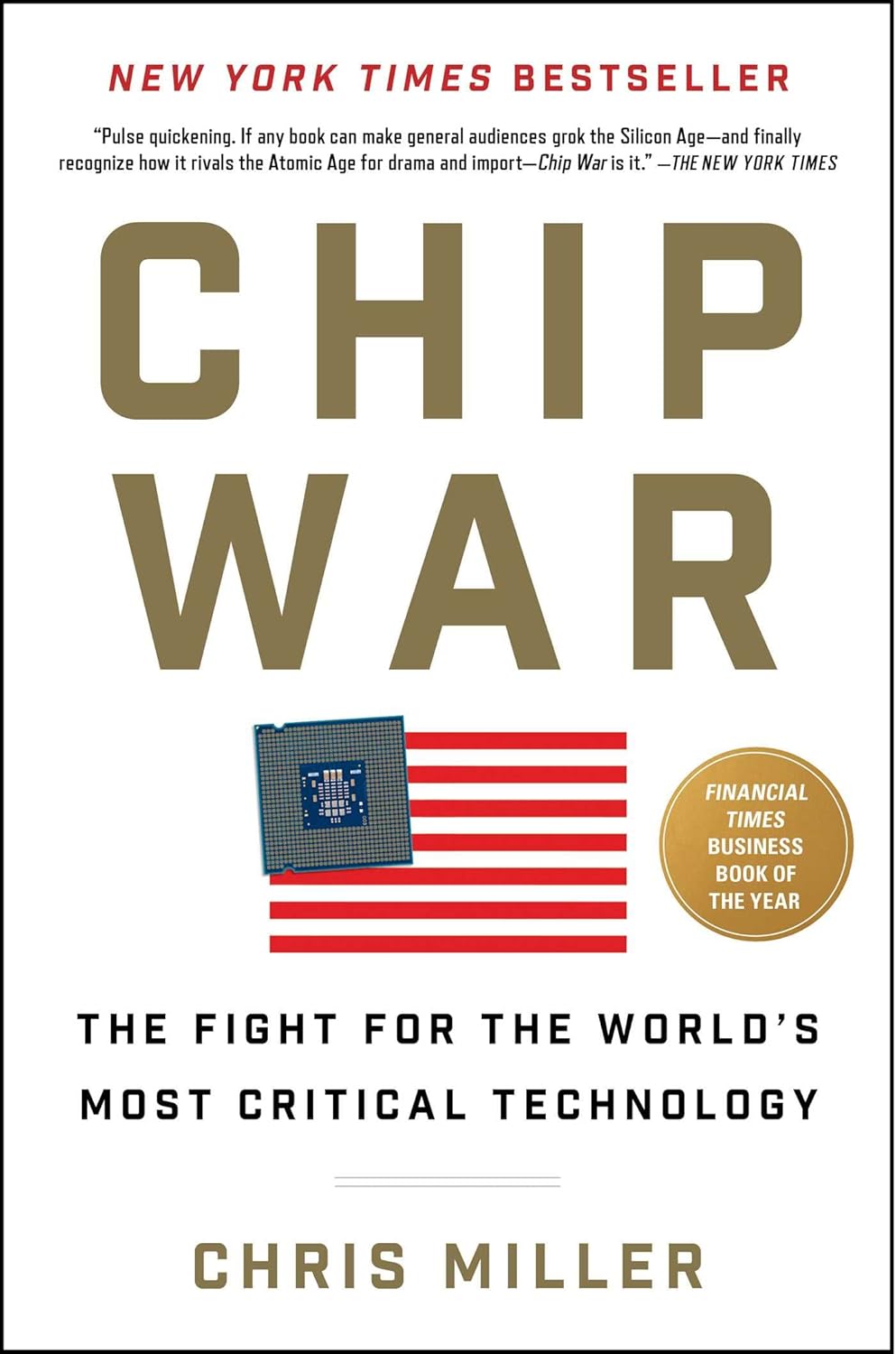
Semiconductors as the oil of the 21st century: history, espionage, and why an island of 23 million people underpins the entire AI economy.

AI as the latest chapter in the history of information networks, from gossip to the printing press to the algorithm.
As an Amazon Associate, Zendoric earns from qualifying purchases; the price does not change for you. · all our recommended books →
Sources & references
- IEEE Spectrum — How Autonomous Drone Warfare Is Emerging in Ukraine
- Defense One — The Pentagon's $54 billion bet on autonomous warfare
- UN News — Guterres: 'killer robots' are politically unacceptable, morally repugnant
- Stop Killer Robots — 164 states vote for the UNGA resolution on autonomous weapons
- Journal of International Humanitarian Legal Studies (Brill) — The Use of 'Lavender' in Gaza and the Law of Targeting
- Anthropic — Disrupting the first reported AI-orchestrated cyber espionage campaign
- ETH Zurich CSS — Clausewitz in the Age of AI
- USNI Proceedings — Sun Tzu Versus AI: Why Artificial Intelligence Can Fail in Great Power Conflict