Kimi K3: China Hasn't Erased America's AI Lead — It Has Turned It Into a Countdown of Months
✨ AI-generated · how it's made
Moonshot AI's new open model wins at coding, nearly matches the best closed models on general intelligence, and raises its prices to elite levels. The takeaway isn't "China now equals the West." It's that the gap stopped being measured in years and started being measured in months. And a lead that lasts months rewrites every rule of the business.
🎬 Our Short
📺 The full analysis on video (with chapters)
📚 Go deeper
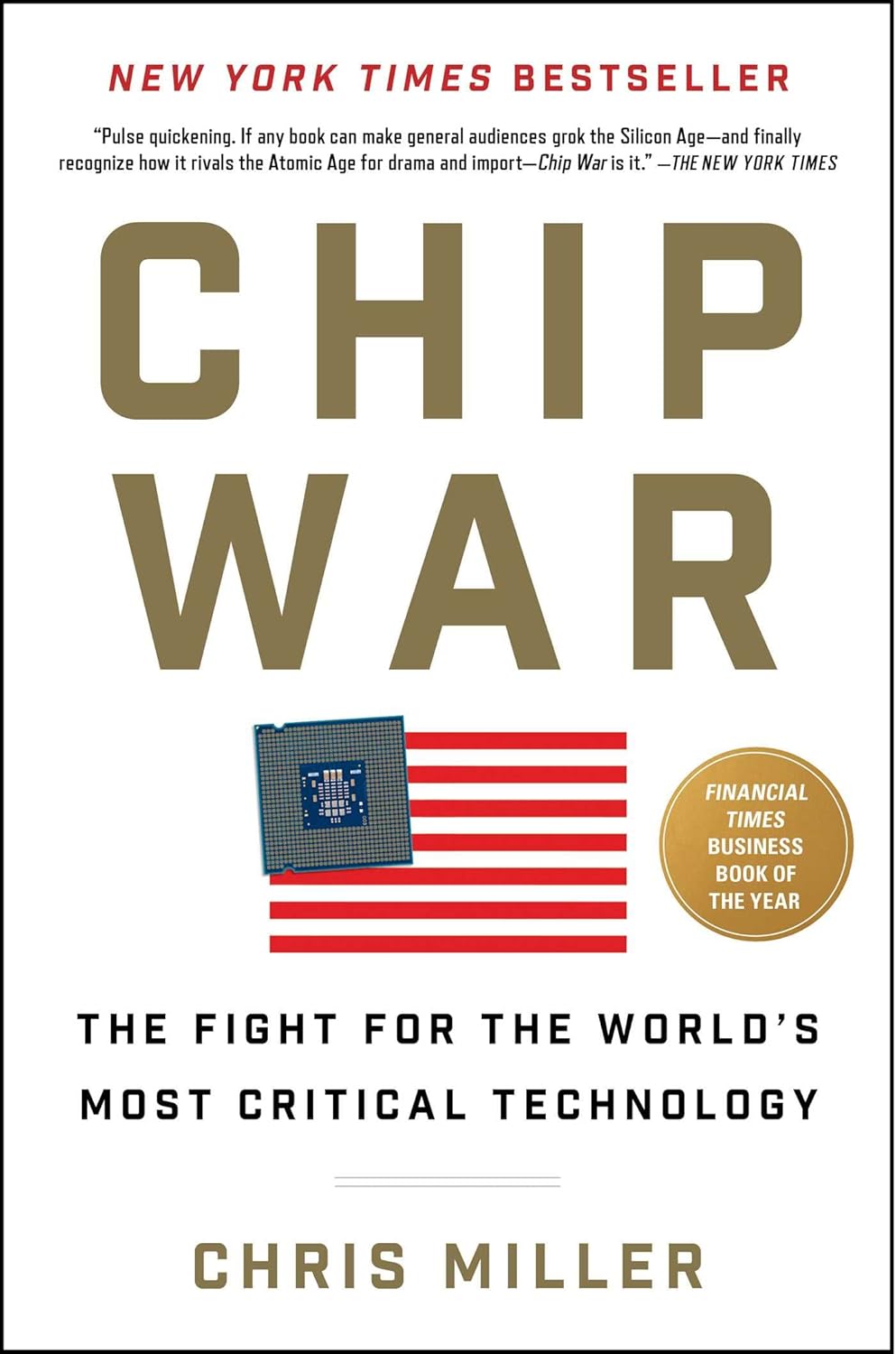
Semiconductors as the oil of the 21st century: history, espionage, and why an island of 23 million people underpins the entire AI economy.
As an Amazon Associate, Zendoric earns from qualifying purchases; the price does not change for you. · all our recommended books →
THE LEAD IS NOW MEASURED IN MONTHS, NOT YEARS. On July 16, China's Moonshot AI unveiled Kimi K3, a 2.8-trillion-parameter model (built on a "mixture of experts" design, which activates only a fraction of the model per query to save compute) with a one-million-token context window and multimodal input. The headlines were blunt: "China erases America's AI lead." Our reading is cooler and, we think, more useful. According to the Epoch Capabilities Index, an independent measure of capability over time, Chinese models have trailed the U.S. frontier by an average of seven months since 2023, with a minimum of four and a maximum of fourteen. For Kimi K3, that same index puts the lag at roughly 4.4–5.3 months. The number matters for what it means: China hasn't caught the U.S., but the distance has compressed to fit inside a single quarter. No Chinese model has yet surpassed OpenAI's o3, released in April 2025, per Epoch. The lead is still there. It just has a short expiration date now.
WHAT THE INDEPENDENT BENCHMARKS SAY. It pays to separate marketing from measurement, and here the outside data is clear. On the Artificial Analysis Intelligence Index —a composite score that aggregates many reasoning tests— Kimi K3 scores 57 and ranks fourth among 189 models. It sits just behind Claude Fable 5 (around 60) and GPT-5.6 Sol (around 59), and ties or slightly edges Claude Opus 4.8 (56). That's a tight fourth place, not a technical draw with number one. Where it does lead is front-end web coding. On the LMArena Frontend Code Arena —a ranking where developers vote blind on which model best solves the same task— K3 debuted first with 1,679 points, ahead of Fable 5, which it beats 76% of the time in head-to-head duels. It jumped 17 spots from its predecessor and topped six of the seven sub-categories. On agentic tasks (GDPval v2) it reaches an Elo of 1,668, strong but still below Fable 5's 1,760. The picture is consistent with what we've argued: Anthropic and OpenAI still lead the hard frontier; China is no longer a year behind but right on their heels, and in specific niches —coding— out in front.
THE END OF CHEAP CHINESE AI. This is the twist almost nobody saw coming. For two years, China's pitch was price: decent capability at rock-bottom cost. Kimi K3 tears up that script. Its API costs $3 per million input tokens and $15 per million output (a token is the smallest unit of text the model processes). Its predecessor, K2.6, officially cost $0.95 for input and $4 for output. In other words, input pricing roughly tripled and output nearly quadrupled. Moonshot has priced its model up to Western elite levels. Even so, measured per completed task it stays competitive: about $0.94 per task on the Artificial Analysis index, versus $1.04 for GPT-5.6 Sol and $1.80 for Opus 4.8 —roughly half of Anthropic's model. "Cheap Chinese AI" as a category is fading at the frontier. What emerges is something else: price parity with near-frontier quality.
OUR READING: THE FRONTIER IS A PERISHABLE ASSET. Here is the most provocative idea in the debate. On the Moonshots podcast (episode 272, with Peter Diamandis, Emad Mostaque, Alex Wissner-Gross, Dave Blundin and Salim Ismail, July 18), Salim Ismail argued that a lead in models no longer lasts years or months but weeks: companies don't even finish evaluating one model before the next ships. That's an opinion, not a data point, and we treat it as such. But it fits what we see. If the lead expires that fast, value stops living in owning "the smartest model" and moves to the architecture layer that lets you swap models without friction. Whoever builds a product locked to a single provider loses; whoever can swap the engine every few weeks wins. That same discussion leaned on a sharp analogy: pharmaceutical generics. The U.S. pays the R&D —the frontier token premium— and the rest of the world soon gets the "generic" at a huge discount. We find it a useful metaphor, with one key caveat: in pharma the generic arrives when the patent expires, years later; here it arrives in months, and sometimes the "generic" is open source. That accelerates diffusion, but it also erodes the return for whoever paid for the research. That is the real economic problem the industry hasn't solved yet.
NO MAGIC, NO MERE COPYING. K3's published architecture hides no tricks: it is a recognizable transformer — mixture of experts, linearized attention and the muon optimizer, developed with UCLA — executed with great craft. In the same Moonshots debate, Alex Wissner-Gross drew the uncomfortable conclusion for Western labs: once a formula is known to work, that «existence proof» cuts a follower's R&D by roughly 90-95% with no need to copy anything. It is a relevant counterpoint to the distillation accusations circulating since launch — still unproven, and the July 27 open weights will allow scrutiny. And one detail in Moonshot's own announcement was read on the podcast as a warning: the company says K3 took part in designing the chip for its next generation and its own inference kernels (the low-level software that runs the model). If a model speeds up the hardware and software that will train its successor, the countdown we describe does not just run: it feeds itself.
OPEN WEIGHTS AND THE COUNTDOWN. Moonshot has promised to publish K3's full weights —the downloadable model you can run on your own infrastructure— around July 27. The specific license isn't confirmed, so don't assume it will be fully free for commercial use. If it holds, it would be the most capable open model ever released, and that is, fundamentally, good news: it lowers cost, spreads control, and gives technological sovereignty to those who can't pay for closed providers. It's the democratizing force we've flagged for a while. It also reshuffles the geopolitics of compute. Chip export controls aimed to slow China; the observable result is that China is shipping near-frontier quality in the open and forcing everyone to compete on the "plumbing" —integration, distribution, governance— rather than on the standalone model.
IMPLICATIONS. In the short term, honesty demands naming the problems: a frontier that expires in months squeezes margins, concentrates advantage in whoever integrates best, and a capable open model also cheapens misuse —fraud, disinformation— that we already watch closely. None of that is sugarcoated. In the long term, though, the direction is the one we defend: more competition and more openness mean better tools, cheaper, in more hands. And those tools are what bring closer the horizon that truly matters —accelerating science, attacking disease, generating abundance— so that more and more people can work on what they love. The conclusion, then, is neither triumphalist nor catastrophist. It is this: the U.S. is still ahead, but its lead has gone from a moat to a stopwatch. And governing that countdown well —who controls the technology, under what rules— matters far more than who wins this week's benchmark.
📚 Go deeper
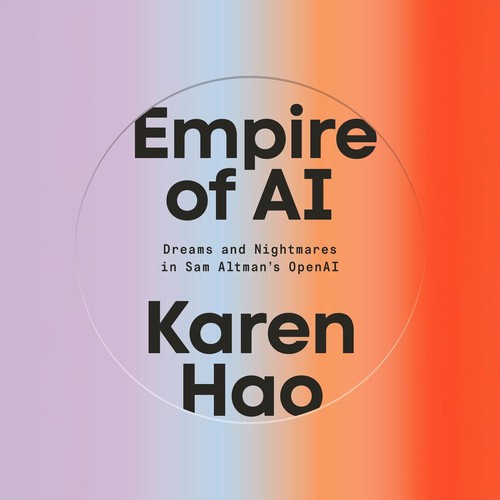
The definitive piece of investigative journalism on OpenAI: 260+ interviews, the clash between safety and speed, and the attempted firing of Sam Altma
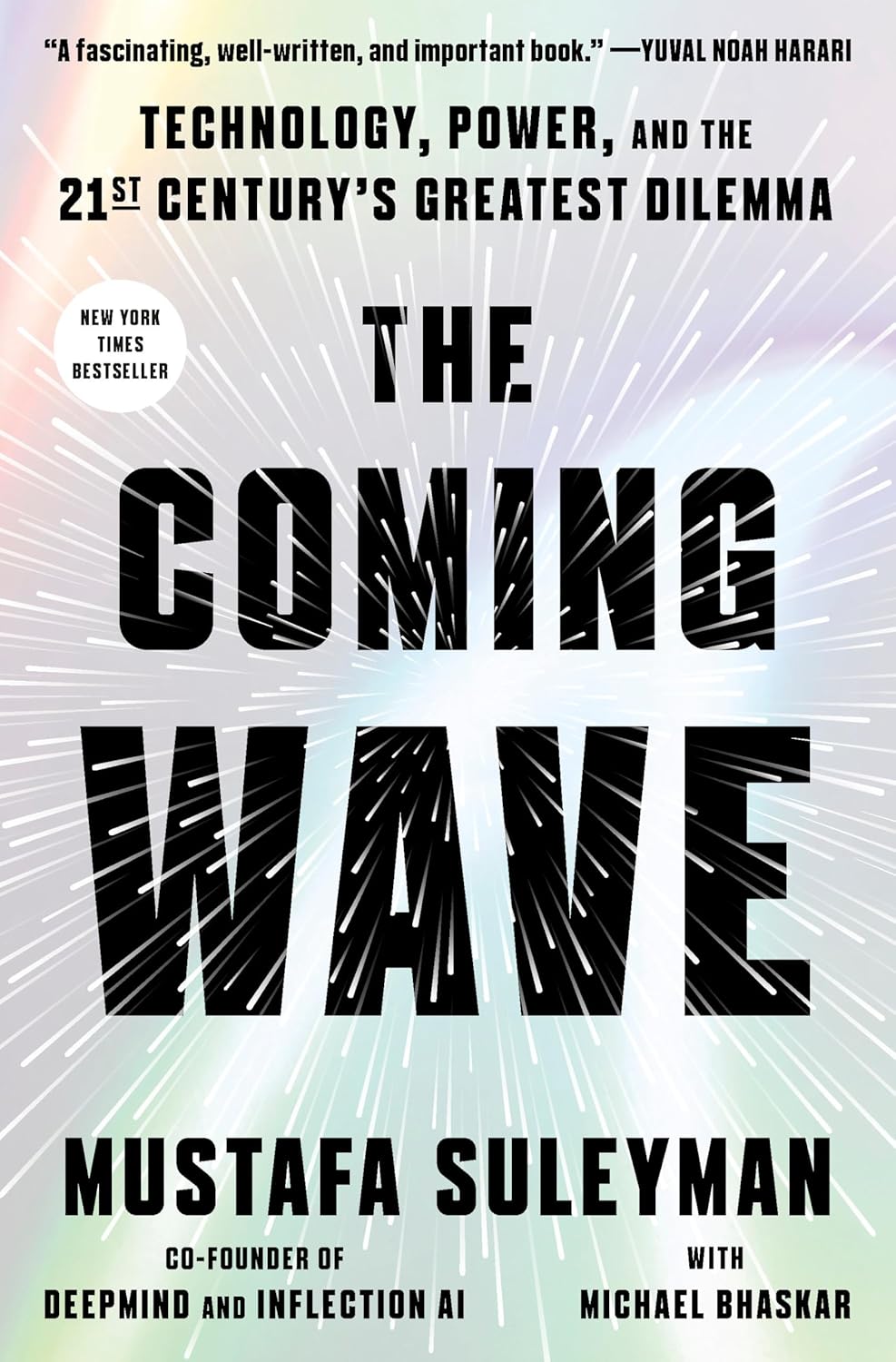
DeepMind co-founder on the dilemma of containing technologies that do not want to be contained.
As an Amazon Associate, Zendoric earns from qualifying purchases; the price does not change for you. · all our recommended books →
Sources & references
- China's Moonshot AI releases Kimi K3, the largest open-source model ever, rivaling top U.S. systems — VentureBeat
- Kimi K3 — Intelligence, Performance & Price Analysis — Artificial Analysis
- Kimi's open model K3 nears GPT-5.6 Sol and Fable 5 while signaling the end of super cheap Chinese AI — The Decoder
- Chinese AI models have lagged the US frontier by 7 months on average since 2023 — Epoch AI
- China's 2.8-trillion-parameter Kimi K3 beats Claude Fable 5 in Frontend Code Arena — Tom's Hardware
- China just erased America's AI lead — Axios
- Moonshot Unveils Kimi K3 AI Model, Narrowing Gap With US Rivals — Bloomberg
- Moonshots with Peter Diamandis — Podcast (ep. 272, 18 July 2026)